Triangle Ductless Rebates and IRA Savings Guide 2026
Triangle Ductless Rebates in North Carolina offer up to $14,000 in savings. These programs help you buy energy-saving mini splits. You can get these funds through the Energy Saver NC program and federal IRA tax credits. You should work with a pro like Alternative Aire to get these deals. These rebates use state money and utility payouts to lower your costs.
You want a comfy home that does not cost too much. We get that. This guide details how to navigate the HEAR and HOMES rebate plans.
These incentives use state funding and local utility payouts from providers like Duke Energy to lower your upfront costs.
Whether you live in Wake, Durham, or Orange County, these deals help you maintain a comfortable home while reducing monthly energy bills. We focus on maximizing your return by stacking federal credits with local perks. Start your journey to a high-efficiency home and claim every available dollar today.
|
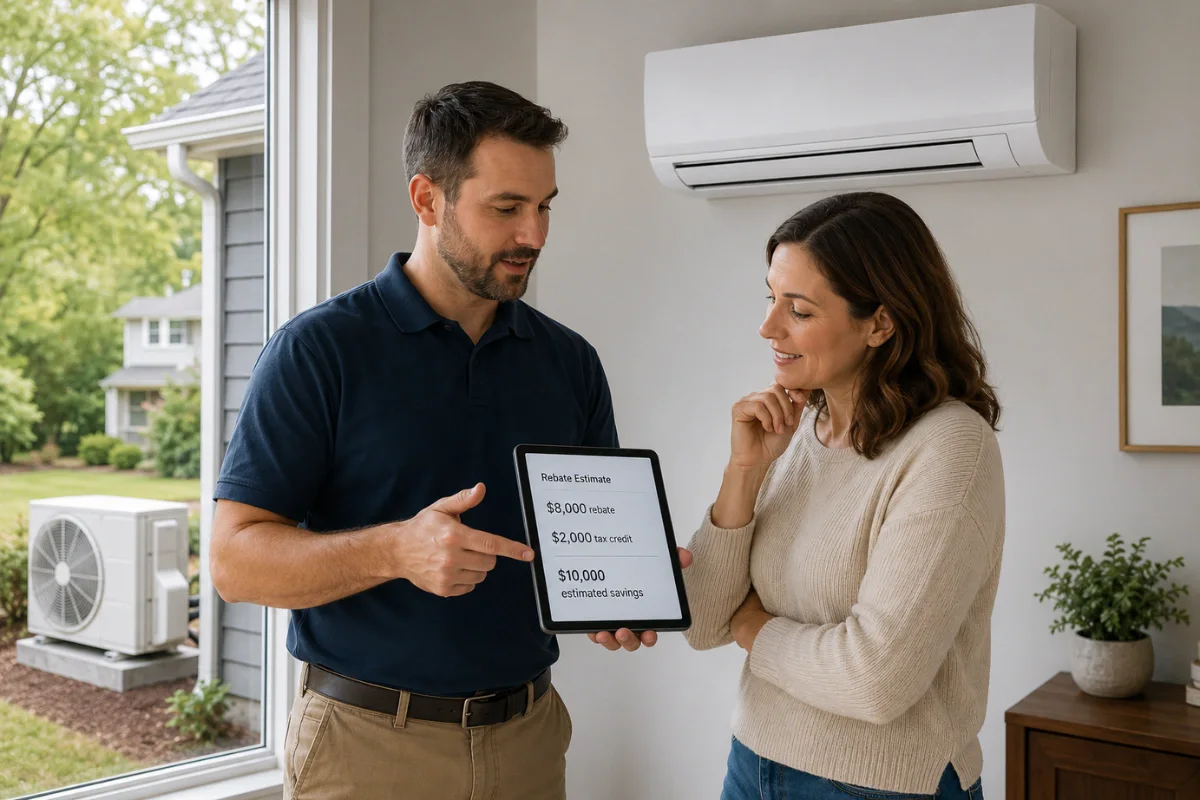
TLDR: Triangle homeowners can save up to $14,000 on ductless mini-splits through Energy Saver NC and IRA rebates. |
What Are Triangle Ductless Rebates?
Triangle ductless rebates are cash deals for people in Raleigh, Durham, and Chapel Hill. These deals help you pay for new, energy-saving mini splits. They make the price of a new system much lower. The money comes from the government and power companies. They want to help you use less energy.
You will see lower power bills every month. Your home will feel better, too. You can evaluate the ductless mini-split selection criteria to ensure the system effectively meets the specific demands of your local climate.
The North Carolina Department of Environmental Quality runs the state programs. They make sure the work is done right. We work with them to help our customers. These rebates make top brands like Lennox much cheaper. They are a great choice for any home in Triangle, NC.

IRA Rebates for Ductless Mini Splits in the Triangle
The Inflation Reduction Act (IRA) is a big deal for homeowners. It offers 2 main rebate paths.
These are the HEAR and HOMES programs. Both help you save money when you install a mini split. They also help the earth by using less power.
You can save thousands, depending on your pay and project. These deals live in Triangle NC for 2026. We can help you pick the best path. You need to know how these two plans work. That is the first step to saving big.
Hear Program – Home Electrification Rebate For Mini Split
The Home Electrification and Appliance Rebates (HEAR) plan is very helpful. It offers a point-of-sale rebate for mini-split units. This means you get the discount when you buy the system. It is an income-qualified ductless rebate. It helps families in the Research Triangle Park area.
Your savings depend on your household income limits. The state looks at the area median income (AMI) for your county. If you make less than 80% of the AMI, you could get 100% of the cost back. This cap is usually $8,000 for a heat pump. If you make between 80% and 150% AMI, you get 50% back.
HOMES program – whole-home efficiency rebate
The Homeowners Managing Efficiency Savings (HOMES) plan is different. It is a whole-home efficiency rebate. It does not just look at one unit. It looks at how much power your whole house saves. You must show that your new mini-split saves 20% or more in energy.
This plan works well for big homes in Cary, NC, or Morrisville, NC.
Most people can get up to $8,000 back. If you save even more power, you get more money. We use tools to guess your savings before we start. This helps you plan your budget.
Utility Rebates for Ductless Mini Splits in Triangle NC
Utility rebates for ductless mini splits that Triangle families use most often come from power companies. Duke Energy Progress and Duke Energy Carolinas have good deals. These rebates are often between $200 and $600. The amount depends on the size of your unit.
People in Durham, Raleigh, and Chapel Hill should check their mini split rebates by provider. You must use a participating contractor to get the cash. We know how to pick the right units for these deals. We ensure your system complies with all utility rules.
Electric cooperatives and municipal utility programs also help. These are common in rural areas. Many of them offer easy “on-bill” deals. You might qualify for an instant rebate on a new ductless heat pump. These local deals are often very easy to claim.
How Much Is the Rebate for a Ductless Mini Split in the Triangle?
The total rebate for a mini-split in the Triangle is typically $2,000 to $10,000. This happens when you mix different deals. You can use tax credits and state rebates together. Your final check depends on your pay and the unit you pick.
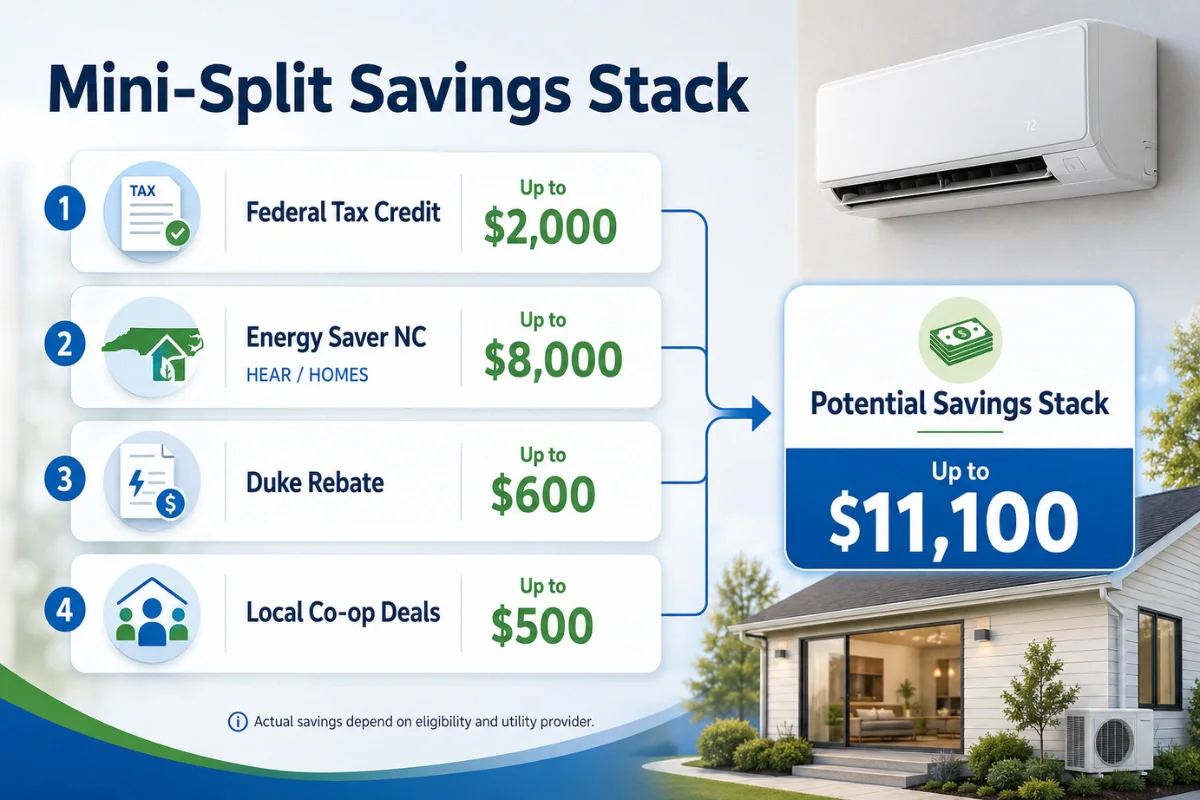
Typical rebate ranges (utility + IRA combined)
Most people in Triangle, NC, save about 30% of the total cost. Usually, this is a $2,000 tax credit plus a utility check. If you make a high income, you will likely use tax credits. Lower-income families get more direct cash back from the state.
Single-zone mini split rebate Triangle vs multi-zone systems
The single-zone mini-split rebate Triangle owners receive is usually smaller. Multi-zone systems give you more points for the HEAR plan. This is because they cover the whole house. We can help you see which one saves you more money over time.
Homeowners often choose ductless mini-splits for the most reliable humidity control and comfort in North Carolina bonus rooms.
Heat pump rebate program Triangle breakdown
The heat pump rebate program Triangle families use pays for the unit and the labor. According to North Carolina State Energy Office, this table shows what you might save in 2026.
| Deal Type | Max Cash | Who Qualifies? |
| Federal IRA Tax Credit | $2,000 | All homeowners (30% of project cost) |
| Energy Saver NC (HEAR) | $8,000 | Income-based (Under 150% of Area Median Income) |
| Duke Energy Rebate | $600 | Duke Energy residential electric customers |
| Local Co-op Deals | $500 | Members of co-ops (e.g., Wake Electric, Piedmont) |
Rebate Eligibility for Ductless Heat Pumps (Requirements & Qualifications)
You must follow the rules to qualify for a rebate on ductless heat pump deals. These rules make sure the systems save enough power. Both your house and the unit must pass a test. You should check these rules before you buy anything.
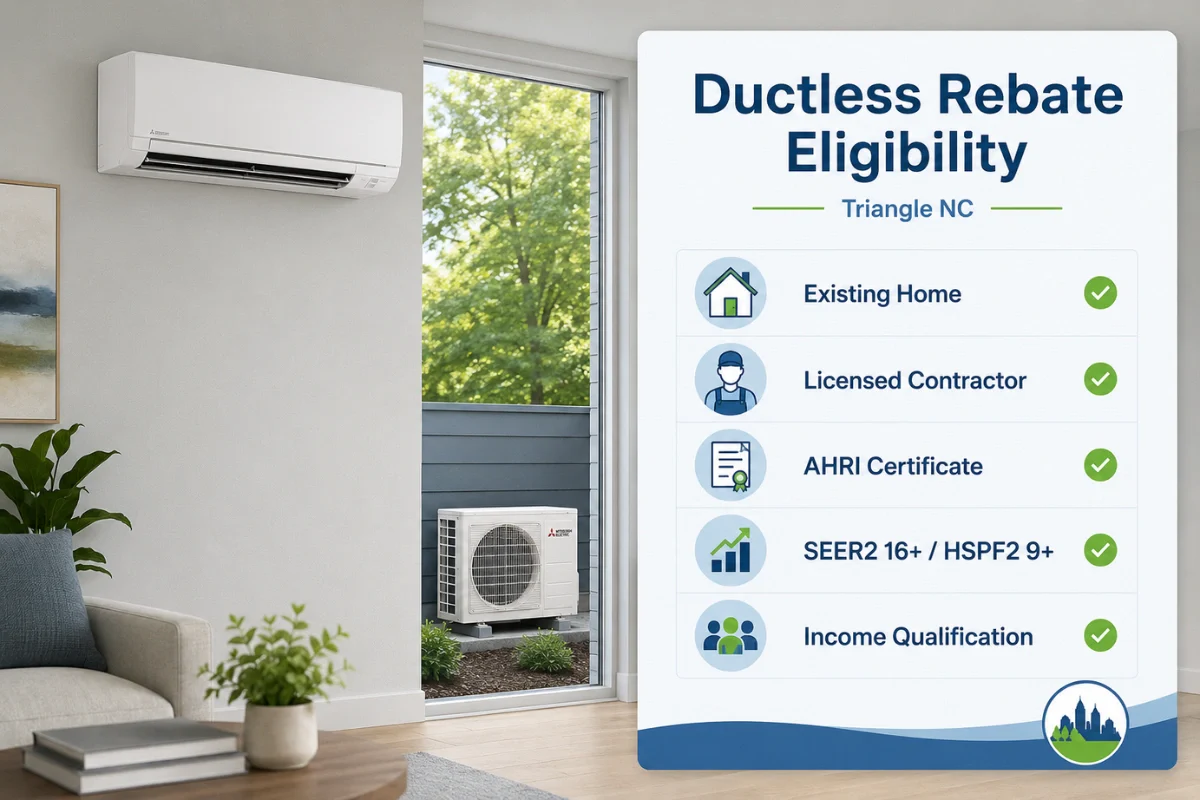
Triangle ductless rebate eligibility explained
Your home must be an existing home requirement. Most state deals do not work for new houses. The eligible installation must be done by a pro. The pro must be on the state list. We are a licensed team that knows these rules well.
Qualifying mini split system requirements
A qualifying mini-split system must be highly efficient. In 2026, you need a high efficiency rating. This means a SEER2 of 16 or more. It also needs an HSPF2 of 9 or more. You will need an AHRI certificate to prove these numbers.
Finding the right fit involves weighing aesthetic and noise preferences to determine whether a wall-mounted or ceiling-recessed unit better suits your space. If you are confused, you can call a pro to install a ductless unit in the Durham area.
Income-qualified rebate rules in Triangle NC
The income-qualified ductless rebate is based on your tax forms. It uses the Area Median Income for your county. The limits in Wake County differ from those in Orange County. We can help you find the right numbers for your area.
How to Stack Utility and IRA Rebates for Maximum Savings
You can use many deals at once in 2026. This is called rebate stacking for mini split units. It is the best way to pay for a great system. By combining state cash with utility perks, you can cut your costs by more than half.
To get the most back, you must follow a specific order. Here is how to stack your savings:
- Apply for state cash first. Use the Energy Saver NC portal to see if you qualify for HEAR or HOMES rebates before you buy.
- Check with your power company. Look at your Duke Energy bill to find local rebates that stack on top of state funds.
- Look for income-based tiers. Low-income homes can often get 100% of the project covered, which replaces the old tax credits.
- Pick a good pro. Use a participating contractor like Alternative Aire, who knows how to file all your forms correctly.
Many people ask: Can utility rebates and IRA rebates be combined for a mini split? Yes, you can use both.
While the old federal tax credits have ended, these new state rebates are much larger. We suggest you talk to a pro to ensure you meet all current rules for the biggest check.
How to Apply for a Mini Split Rebate in the Triangle
The rebate application requirements involve a few steps. Applying for Triangle ductless rebates is easy when you follow the right steps. You should start the process before you buy any equipment. This ensures you pick a rebate-eligible ductless mini split that meets the 2026 state and utility rules.
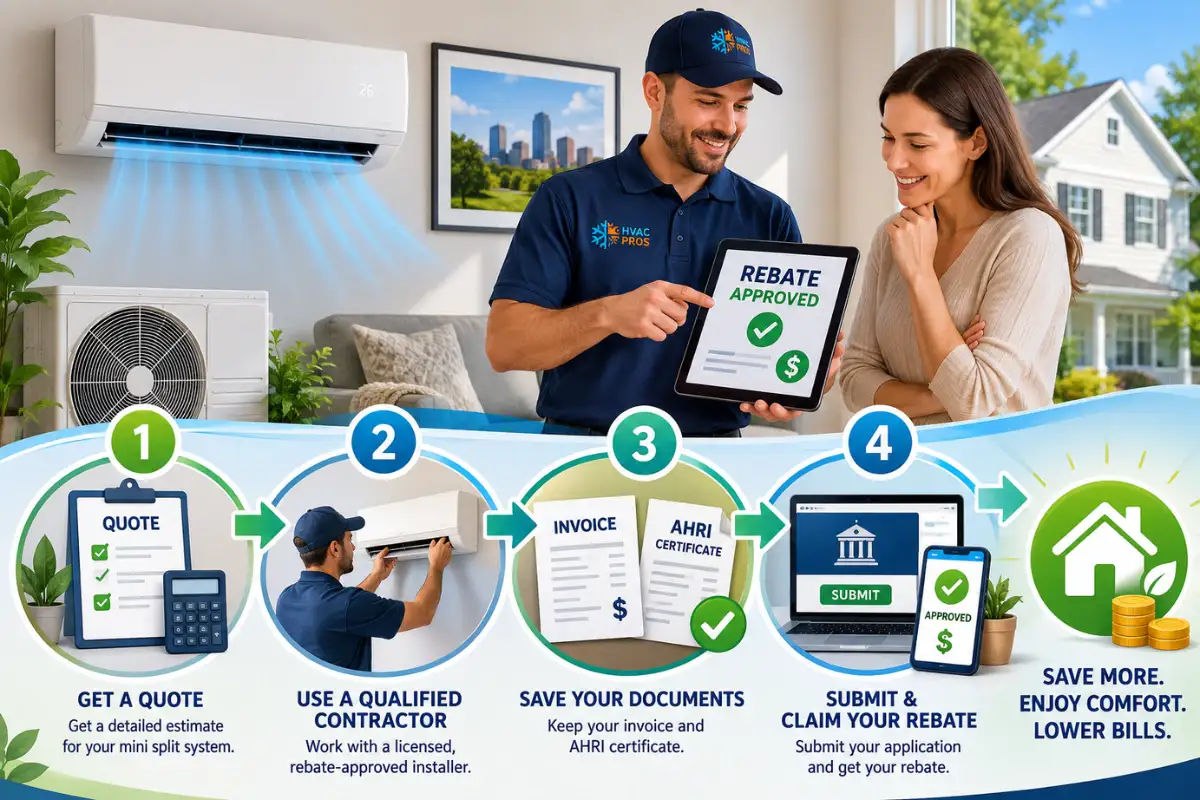
Step-by-Step Rebate Application Process:
- Get a Quote: Ask us for a detailed price and the AHRI certificate number. We ensure the unit’s efficiency meets the program requirements.
- Check the Pro: You must use a participating contractor. Alternative Aire is a registered partner, so your project stays eligible for the Energy Saver NC funds.
- Save Your Papers: Keep your installation invoice and proof of purchase handy. These are required for the rebate portal submission.
- Claim Your Cash: Most HEAR rebates are applied as instant point-of-sale discounts. For other programs, we help you submit the final paperwork to the state portal.
We give every customer a Triangle mini split rebate paperwork checklist. You will not have to guess what paperwork is needed for a ductless rebate. We are your local installation experts and can provide clear timelines for your specific project. We will also suggest the right mini-splits that dehumidify well in summer and also save energy.
Who Is Qualified To Receive Rebates?
You can qualify for ductless mini-split rebates if you’re a homeowner and, in some cases, a renter or landlord installing a high-efficiency, ENERGY STAR–certified system in your primary residence.
Most programs require the unit to meet modern efficiency standards (usually around 16–18 SEER2 and 8.5+ HSPF2) and be installed by a licensed contractor.
Utility rebates are usually the easiest to get, often offering $300 to $1,500 with no income restrictions.
On the other hand, rebates from the Inflation Reduction Act are income-based. If your household earns below 80% of the area median income, you could get up to 100% of installation costs covered (capped at around $8,000 for heat pumps).
Those earning between 80% and 150% AMI may qualify for about 50% coverage, while households above that range typically don’t qualify.
On top of that, many homeowners can still claim a 30% federal tax credit (up to $2,000) as long as the system meets efficiency requirements and they have enough tax liability to use it.
Conclusion
Triangle ductless rebates and IRA programs offer a rare opportunity to upgrade your home for much less. By combining Energy Saver NC funds with federal tax credits and utility bonuses, you can save up to $14,000. These programs make high-efficiency living accessible to everyone in the Research Triangle.
At Alternative Aire, we have years of experience helping homeowners navigate these savings. We provide expert installation and all the documentation you need for a successful claim. Contact us today to see how much you can save on your new ductless mini split system.
Frequently Asked Questions (FAQs)
What is the IRS credit for the new HVAC system?
The IRS provides a 30% tax credit on qualified heat pump costs, up to $2,000 annually. This falls under the Energy Efficient Home Improvement Credit (Section 25C).
Who is eligible for the Energy Saver program in NC?
Residents with household incomes below 150% of the Area Median Income are eligible for the Energy Saver NC program. Both homeowners and renters can apply if they meet efficiency requirements.
What is the $14,000 tax credit?
The $14,000 amount is actually a maximum rebate, not a tax credit, provided through the HEAR program. It covers various upgrades like heat pumps, wiring, and weatherization for income-qualified homes.
What HVAC system qualifies for a tax credit in 2026?
To qualify, a system must meet the Consortium for Energy Efficiency (CEE) highest tier standards. Generally, this means high SEER2 and HSPF2 ratings verified by an AHRI certificate.
Do mini-split systems qualify for tax credits?
Yes, mini-split heat pumps qualify for both federal tax credits and state rebates. They are often the most efficient way to meet the program’s strict energy-saving standards.
Who qualifies for the $6,000 senior tax credit?
While there isn’t a specific “senior” credit of $6,000, many seniors qualify for maximum HEAR rebates due to fixed income levels. These rebates can cover up to 100% of installation costs.
How to claim a new HVAC system on taxes?
You claim the credit by filing IRS Form 5695 with your annual tax return. Make sure you keep your installation invoice and proof of purchase for your records.
Category: Blog
Subscribe
If you enjoyed this article, subscribe to receive more just like it.