Heating and Cooling FAQs

Air Conditioning FAQs

What should I set my AC to in summer?

A good summer setting is usually around 75 to 78 degrees when you are home. Raise the setting when you are away to reduce energy use.

Most HVAC pros recommend a setting near 78 degrees for energy savings. Comfort needs, humidity, health needs, and home layout may change the best setting.

Yes. Open windows let hot, humid air inside and make the AC work harder, which can raise energy bills and reduce comfort.

Yes. Keep windows and doors closed so the AC can cool and dehumidify the home properly.

Turn off the AC and open windows when outdoor air is cooler and less humid than indoor air. Avoid this during humid weather.

A sticky home usually means high indoor humidity. Causes may include an oversized AC, poor airflow, duct leaks, or short cycling.

Humidity can rise at night if the AC runs less, airflow is weak, or outdoor humidity enters through leaks. Bedrooms with poor ventilation often feel worse.

High humidity makes the AC remove more moisture before the home feels comfortable. This can increase run time and energy use.

A properly sized AC gives the best dehumidification. Oversized systems cool too fast and may shut off before removing enough moisture.

Latent heat is removed when water vapor condenses on the evaporator coil. This is how the AC removes humidity from indoor air.

Sensible cooling capacity is the part of AC cooling that lowers air temperature. It does not include moisture removal.

Sensible heat is heat you can measure with a thermometer. In HVAC, it affects the temperature you feel indoors.

Latent heat is the heat tied to moisture in the air. Your AC removes latent heat when it pulls humidity out of the home.

Sensible load is the amount of heat that must be removed to lower indoor temperature. It comes from sunlight, people, appliances, walls, windows, and outdoor heat.

2-way swing moves air in two directions, usually up and down. 4-way swing moves air both vertically and horizontally for better distribution.

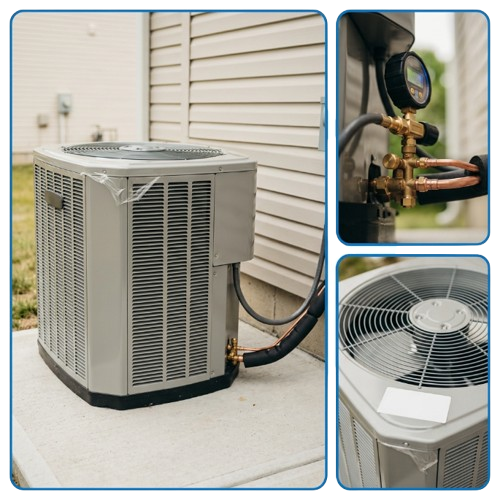
The outdoor AC unit is commonly called the condenser. It contains the compressor, condenser coil, fan, and electrical parts.

The outdoor condenser is usually outside near the home. The indoor coil or air handler is often in an attic, closet, basement, crawl space, or mechanical room.

The condenser is located outside the home. It needs proper clearance around it for airflow and service access.

An AC condenser is the outdoor unit that releases heat from your home. It works with the indoor coil to complete the cooling cycle.

The condenser releases heat collected from indoor air. It allows the refrigerant to cool down and cycle back inside.

An AC condenser often lasts 10 to 15 years with proper maintenance. Heavy use, poor airflow, and skipped service can shorten its life.

Most residential outdoor AC units are about 2 to 4 feet tall. The exact height depends on the model and tonnage.

Residential AC units can weigh a few hundred pounds. Weight depends on size, brand, coil type, and equipment design.

An AC condenser often weighs between 100 and 300 pounds or more. Larger systems and higher-efficiency models may weigh more.

High-efficiency condensers often use better coil design, variable-speed or inverter compressors, and matched indoor equipment. Efficiency depends on the full system, not just the outdoor unit.

An inverter air conditioner uses a variable-speed compressor that adjusts output instead of turning fully on and off. This can improve comfort and efficiency.

They can be worth it if you want quieter operation, better humidity control, and lower energy use. The value depends on installation cost and cooling demand.

It can help maintain comfort better, but it does not always cool much faster. Its main benefit is steady, efficient operation.

An inverter compressor can slow down instead of shutting off fully. It may stop when cooling demand is low or the thermostat is satisfied.

Some inverter systems may not need a separate stabilizer, but it depends on voltage quality and manufacturer guidance. Always follow the equipment manual.

A small AC may run on a properly sized power inverter, but central AC usually requires much more power. Electrical sizing must be checked carefully.

It is a window AC that uses inverter compressor technology. It can run more quietly and adjust output more efficiently than basic window units.

Portable AC units can help one room, but they are usually less efficient than central AC or ductless systems. They work best as temporary cooling.

Portable AC units often last 5 to 10 years with proper care. Heavy use, poor cleaning, and drain issues can shorten their life.

Yes. Dirty filters, poor humidity control, duct leaks, and dirty coils can affect comfort and air quality. Regular maintenance helps reduce those issues.

Dust can come from leaky ducts, dirty filters, poor return airflow, attic leaks, or household sources. Cleaning vents alone may not solve it.

A musty AC smell usually points to moisture, dirty coils, clogged drains, ducts, or microbial growth. The moisture source should be found and corrected.

Sensible cooling lowers temperature. Latent cooling removes humidity from the air.

AC Repair FAQs

Why is my AC running but not cooling?

Common causes include low refrigerant, dirty coils, poor airflow, a bad capacitor, or compressor trouble. A technician should diagnose the system before parts are replaced.

Your AC may be undersized, dirty, low on refrigerant, or affected by duct leaks or poor insulation. A full system check can find the cause.

The best location has shade if possible, good airflow, proper clearance, stable support, and easy service access.

Extreme heat exposes weak airflow, dirty coils, low refrigerant, duct leaks, or poor insulation. Older systems may also lose capacity during high demand.

Check the thermostat, breaker, filter, and outdoor unit. If it still does not run or cool, call for AC repair quickly.

Running the AC with dirty filters, blocked vents, open windows, low thermostat settings, or ignoring noises can strain the system. Regular maintenance helps prevent heatwave failures.

A loud AC may have loose parts, motor problems, compressor issues, fan damage, or vibration. New or harsh noises should be checked soon.

AC noise can come from worn bearings, loose panels, fan issues, debris, duct pressure, or refrigerant problems. The sound type helps identify the cause.

Compressor noise may come from electrical trouble, internal wear, refrigerant pressure problems, or vibration. Compressor noise should be inspected quickly.

Replace dirty filters, clear debris, tighten panels, check vibration pads, and schedule service. Do not ignore grinding, buzzing, or hissing sounds.

Keep the unit clear, check the base pad, tighten panels, and make sure the fan is not damaged. A technician can check the motor and compressor.

Indoor noise may come from blower issues, return duct restrictions, high static pressure, or loose ductwork. Airflow and duct design should be checked.

Make sure the condenser is level, clean, clear of debris, and properly mounted. If the noise is mechanical, schedule service.

Check the condenser pad, mounting, fan balance, and refrigerant lines. Persistent vibration can damage parts and should be repaired.

Whistling often comes from restricted airflow, dirty filters, closed vents, or duct leaks. Start with the filter, then have duct pressure checked.

Squeaking can come from a blower motor, belt, bearing, or fan part. Shut the system down if the sound is loud or worsening.

Use proper fan settings, replace filters, avoid blocked returns, and address vibration or duct noise. A quieter system may need airflow correction or repair.

This usually means return airflow is restricted or static pressure is high. The return size, filter type, and duct design should be checked.

Make sure the unit is secure, level, clean, and not vibrating against the window frame. Worn fan or compressor parts may need repair.

Place the unit on a stable surface, clean filters, check the exhaust hose, and keep it away from walls. Some noise is normal with portable AC units.

Check filters, vents, fan settings, and vibration sources. If the equipment is building-managed, report the sound to maintenance.

Hotel AC units can be loud because of compact design, age, fan speed, or poor maintenance. Ask the hotel for another room or maintenance check.

Some airflow sound is normal, but banging, buzzing, hissing, grinding, or squealing can mean a problem. A technician should inspect unusual sounds.

Some remotes have a mute, sound, or settings option. If not, check the manual for your AC model.

AC repair cost depends on the failed part, system type, labor, refrigerant, and urgency. A diagnostic visit gives the most accurate price.

Local AC repair cost depends on the issue, part availability, and service call rate. Ask for diagnostic pricing before booking.

The cost depends on whether the problem is minor, like a capacitor, or major, like a compressor. A technician must inspect the system first.

AC service cost varies based on whether it is maintenance, diagnosis, or repair. Ask what is included before scheduling.

Routine AC service often costs less than repair work. Price depends on the checklist, system type, and whether parts are needed.

A service call fee covers the technician’s visit and initial diagnosis. The final repair cost depends on what is found.

An AC diagnostic fee depends on the company and service area. Ask if the fee is applied toward repair.

Many professional HVAC companies offer flat-rate pricing after diagnosis. Flat-rate pricing helps you know the repair cost before work begins.

Choose a local HVAC company that offers same-day service, diagnostic visits, and written repair pricing before work starts.

Call a local HVAC company that offers same-day or emergency AC repair. During heatwaves, schedule as early as possible.

Yes. Local HVAC companies with stocked service vehicles and nearby technicians often provide faster repair turnaround.

Look for local HVAC companies with same-day AC repair, clear diagnostic fees, and strong local reviews.

A licensed HVAC contractor can handle residential and light commercial AC repair. Confirm the company services your equipment type.

Emergency service focuses on restoring safe operation when possible. Replacement is usually recommended only when repair is unsafe, impractical, or too costly.

The compressor moves refrigerant through the AC system. It helps transfer indoor heat to the outdoor unit.

The compressor raises refrigerant pressure so it can release heat outdoors. It is a key part of the cooling cycle.

Compressor cycle rate refers to how often the compressor turns on and off. Rapid cycling can signal a problem.

Turn the thermostat off, shut off the power at the breaker, wait a few minutes, then restore power. If the issue returns, call for service.

Move the breaker fully to off, then back to on. If it trips again, stop resetting it and call an HVAC technician.

Many Trane units do not have a simple reset button. Resetting may involve the thermostat, breaker, or system controls.

A repeat summer breakdown often points to poor maintenance, dirty coils, weak electrical parts, low refrigerant, or an aging system.

The fix depends on the noise. A technician may tighten parts, clean the unit, repair motors, balance airflow, or replace worn components.

An HVAC P-trap is part of the condensate drain system. It helps water drain properly and prevents air from disrupting drainage.

Non-condensables are unwanted gases, such as air, inside the refrigerant system. They can raise pressure and reduce AC performance.

Start-up checks should include refrigerant performance, airflow, electrical parts, thermostat operation, drain function, and temperature split.

Key areas include electrical safety, airflow, refrigerant charge, and condensate drainage. The thermostat and controls should also be tested.

Call an electrician if the panel, breaker, disconnect, wiring, or voltage supply needs work. HVAC technicians handle the equipment side.

No. An outdoor condenser needs outdoor airflow to release heat. Installing it inside can cause overheating and poor cooling.

Yes, if the terrace supports the weight, airflow, clearance, drainage, and service access. Local code and manufacturer rules must be followed.

Only if it has enough airflow and clearance. Poor ventilation can cause heat recirculation and system failure.

Yes, if it is properly supported, level, clear of airflow restrictions, and installed to code.

Clearance depends on the manufacturer, but most units need open space for airflow and service. Follow the installation manual.

Many systems need at least 12 to 24 inches of clearance, but requirements vary. Always follow the equipment manual.

Clearance depends on the model, but the unit needs enough open space for airflow, heat rejection, and service access.

Most outdoor units need open space on all sides and clear space above. Crowding the unit can reduce efficiency and cause overheating.

Place it on a level surface with good airflow, drainage, and service access. Avoid tight corners, dryer vents, and heavy vegetation.

A condenser should be placed outdoors where it can release heat freely. It should be level, secure, and accessible.

Property line clearance depends on local code and HOA rules. Check local requirements before installation.

The distance depends on the equipment and refrigerant line sizing. Long line sets may need a special design.

The allowed distance depends on manufacturer’s limits, line set size, and refrigerant requirements. A technician should verify it before installation.

It can work if installed within manufacturer’s limits. Long vertical lifts may require line set design changes.

Recirculated hot air makes the condenser work harder and can raise pressure. Good airflow is needed for efficient cooling.

Use a cover or screen only if it allows proper airflow and service access. Never block the condenser.

Use fencing, shrubs, or screens with enough clearance for airflow and service. Keep plants and barriers away from the unit.

AC refrigerant is the fluid that moves heat from inside your home to the outdoor unit. Your system needs the correct type and charge.

Refrigerant is a chemical compound designed to absorb and release heat. Different systems require different refrigerant types.

Home AC systems may use R-410A, R-454B, R-32, or older R-22. The correct refrigerant is listed on the equipment label.

If the refrigerant is low, you likely have a leak. A recharge may help temporarily, but the leak should be found and repaired.

A properly working AC should not need regular recharging. Low refrigerant usually means there is a leak.

No. Home AC refrigerant work requires certified handling, proper tools, and safe procedures.

Cost depends on refrigerant type, amount needed, leak condition, and labor. Older refrigerants can be more expensive.

A filter drier removes moisture and debris from the refrigerant line. It helps protect the compressor and refrigerant system.

It prevents moisture and contaminants from damaging the refrigerant circuit. It is especially important during installation and major repairs.

Yes, most systems need a filter-drier to protect the refrigerant system. The correct type and direction matter.

The arrow on the filter drier should point in the direction of refrigerant flow. Incorrect direction can restrict the system.

Heat pumps often use a bi-flow filter drier because refrigerant flow reverses in heating and cooling modes.

The filter drier is usually on the liquid refrigerant line near the outdoor unit or indoor coil. Location depends on system design.

Rattling may mean loose parts, hissing may mean refrigerant or duct leaks, and whistling often means restricted airflow. Each sound needs a different repair path.

A burning or electrical smell may mean overheated parts or wiring trouble. Turn the system off and call for service.

Dirty coils, weak airflow, duct leaks, poor refrigerant charge, or aging equipment can raise bills even if the AC still runs.

A float switch trips when the drain pan or drain line has water buildup. This often means the condensate line is clogged.

The system may be undersized, dirty, low on refrigerant, or fighting high heat gain. It should be checked if it cannot reach the set temperature.

Ask what failed, what caused it, the repair cost, the expected life after repair, and whether replacement is optional or necessary. Request clear pricing before approving work.

Ductless Mini Splits FAQs

Who installs mini splits near me?

A licensed HVAC contractor that handles ductless systems should install mini splits. Choose one with experience in line sets, drainage, and system sizing.

Look for an HVAC company that services ductless brands and handles both refrigerant and electrical diagnostics. Not every contractor specializes in mini splits.

A mini split heat pump is a ductless system that provides heating and cooling. It uses an outdoor unit and one or more indoor heads.

A ductless AC moves refrigerant between an outdoor unit and an indoor head. The indoor head cools the room without ductwork.

Clearance depends on the model, but it needs enough space for airflow and service. Follow the manufacturer’s installation manual.

It can sit on a pad or be mounted on a wall bracket. Height depends on drainage, snow, airflow, and service access.

Only if there is enough open airflow and service clearance. A tight deck space can trap heat and reduce performance.

Avoid placing electronics directly under an indoor unit because condensation or leaks can damage them. Place the TV away from airflow and the risk.

The outdoor unit is part of the heat pump system. It works with indoor equipment to provide heating and cooling.

Place it where it has proper airflow, drainage, clearance, and service access. Indoor heads should be placed for even room comfort.

A heat pump needs clearance around the outdoor unit for airflow and service. Exact clearance depends on the model.

Most heat pumps need open space above for airflow. Always follow the manufacturer’s clearance requirements.

Distance depends on line set limits, refrigerant design, and manufacturer rules. A technician should confirm before installation.

Yes, but moving it requires refrigerant recovery, line work, electrical work, and proper reinstallation. It is not a simple DIY job.

Yes. A licensed technician should relocate it to protect the refrigerant system, wiring, drainage, and warranty.

Use screens, landscaping, or fencing with proper airflow clearance. Do not block the outdoor unit.

It can be installed outside on a pad, wall bracket, or approved stand. The location must support airflow, drainage, service access, and code requirements.

The outdoor unit must be outside, but indoor units can be placed where line set and drainage routing are possible.

Rules vary by location, neighborhood, and equipment placement. Check local code or ask your installer before work begins.

The quote should include equipment model, size, efficiency, line set, electrical work, thermostat, warranty, permits, and installation scope.

Yes. Mini splits are often a good choice for sunrooms, additions, bonus rooms, and finished attics without good ductwork.

Ask about sizing, brand, warranty, line set routing, drain setup, indoor head placement, maintenance, and repair support.

Proper drain slope, clean filters, regular maintenance, and correct installation help prevent leaks. A clogged drain is a common cause.

Yes. Filters should be cleaned regularly, and the system should receive professional service at least once a year.

It depends on the layout and usage. Single-zone systems can be more efficient for one room, while multi-zone systems reduce the number of outdoor equipment units.

AC Installation FAQs

How far can an AC unit be from the house?

The distance depends on manufacturer limits, refrigerant line size, and installation design. Long distances may need special line set planning.

The unit needs enough clearance for airflow and service. Most systems need open space on all sides and above.

Install it on a level pad with good airflow, drainage, clearance, and service access. Avoid tight corners and blocked spaces.

The outdoor unit should go where it can release heat freely. The indoor equipment should be accessible and properly connected to ducts or air distribution.

Outdoor AC installation requires a level pad, refrigerant lines, electrical connections, code compliance, and startup testing. It should be handled by a licensed HVAC professional.

High-rise installations need structural support, safe access, drainage, line set planning, and building approval. A qualified HVAC contractor should handle it.

It usually includes equipment setup, connections, refrigerant work, electrical checks, thermostat setup, airflow testing, startup, and homeowner guidance.

Clear access to indoor and outdoor equipment, secure pets, and make sure someone is available for questions. Ask the installer about any special prep.

Move items away from equipment areas, clear driveways or attic access, and review the quote. Confirm equipment, timeline, and warranty details.

Yes. A central AC can be paired with a furnace, air handler, or heat pump system, depending on your home.

The best system depends on home size, ductwork, comfort goals, fuel source, climate, and budget. Proper sizing matters more than brand alone.

Compare size, SEER2 rating, noise level, warranty, installation scope, brand support, and total installed price.

Look for a higher SEER2 rating, proper sizing, matched indoor equipment, and strong installation quality. Ductwork also affects efficiency.

The most efficient systems usually use variable-speed or inverter technology with high SEER2 ratings. The best choice depends on your home.

The best systems combine strong SEER2 ratings with proper sizing, reliable parts, and good installation. A high rating alone is not enough.

High-efficiency heat pumps, variable-speed AC systems, and properly matched central systems are among the most efficient options.

It can be worth it if you use cooling often and plan to stay in the home. Compare upfront cost with expected energy savings.

Yes, if the system improves comfort, reliability, humidity control, and energy use. The value depends on the home and installation quality.

It can be worth it if the system is unreliable, inefficient, or costly to repair. A replacement quote should compare repair cost and long-term value.

SEER measures seasonal cooling efficiency. A higher SEER rating means the system uses less energy for cooling.

SEER2 is the updated cooling efficiency rating used for newer HVAC equipment. It reflects newer testing standards.

SEER2 uses updated testing conditions that better reflect real-world system operation. The numbers are not always equal to older SEER ratings.

You need a SEER2 rating that meets current standards and fits your budget, comfort goals, and energy savings needs.

A good rating depends on current standards and your budget. Higher ratings usually mean better efficiency and higher upfront cost.

A good SEER2 rating is one that meets code and balances cost with energy savings. Higher SEER2 may be better for heavy cooling use.

13.4 SEER2 may meet minimum requirements for some systems and regions. It is generally an entry-level efficiency rating.

Yes, 14.3 SEER2 can be a practical value option. It may be best when upfront cost matters more than maximum efficiency.

14.3 SEER is a basic efficiency level. Compare it with current SEER2 ratings before buying.

Yes, 18 SEER2 is a high-efficiency rating. It can reduce energy use when paired with proper installation and ductwork.

Yes, 19 SEER2 is highly efficient for many residential systems. The value depends on price, use, and comfort goals.

It means the system has a high seasonal cooling efficiency under SEER2 testing. Higher SEER2 usually uses less energy.

20 SEER2 means the system is very efficient under current testing standards. It is usually found on higher-end equipment.

The highest rating changes by product line and technology. Variable-speed and inverter systems usually have the highest ratings.

The highest SEER2 rating depends on the equipment available at the time. High-end variable-speed systems usually lead the market.

Minimum efficiency standards depend on system type, region, and current federal rules. Your installer should quote equipment that meets current code.

The required rating depends on federal standards and system type. Use current SEER2-compliant equipment when replacing or installing new AC.

Current efficiency requirements depend on region and equipment type. Ask your installer for SEER2-compliant options.

The standard depends on the current code and equipment category. A licensed installer should confirm compliant options.

Higher SEER or SEER2 ratings usually mean lower electricity use for cooling. Actual savings depend on home conditions and usage.

Yes, higher SEER2 systems usually cost more upfront. They may lower operating costs over time.

Usually yes, but savings depend on run time, ductwork, insulation, thermostat settings, and local electricity rates.

Tax credit rules change and depend on equipment type and efficiency. Confirm current requirements before choosing a system.

Qualification depends on current federal and local program rules. Ask your installer to verify before purchase.

Tax credits often depend on system type, efficiency rating, and installation date. Check current program rules before buying.

No. SEER applies to cooling efficiency. Heating efficiency uses ratings like AFUE, HSPF2, or COP, depending on the system.

They measure how efficiently the AC cools over a season. Higher ratings usually mean better energy performance.

A 2-stage AC can run at two cooling levels, usually low and high. This helps improve comfort and humidity control.

It runs on low capacity for mild conditions and high capacity when more cooling is needed. This reduces short cycling.

It may run longer at a lower speed, but that can improve comfort and humidity control. Longer low-stage cycles are normal.

It can be worth it if you want better comfort, quieter operation, and humidity control. It costs more than basic single-stage equipment.

A variable-speed AC adjusts output in small steps instead of running at one or two speeds. It can improve comfort and efficiency.

Variable-speed HVAC uses motors or compressors that adjust output based on demand. It helps reduce energy waste and temperature swings.

Variable speed means the system can slow down or speed up instead of only turning on and off. This supports quieter, steadier comfort.

They can be worth it for comfort, humidity control, and efficiency. The best choice depends on budget and home needs.

Choose based on budget, comfort goals, humidity needs, and compatibility. Variable-speed systems need matched equipment and controls.

Higher-efficiency models cost more upfront but usually cost less to operate. Compare total installed cost and expected energy savings.

Breaker size depends on the unit’s MCA and MOCP ratings on the data plate. Do not size the breaker by tonnage alone.

Breaker size depends on the equipment data plate, heat kit size, and code requirements. An electrician or HVAC technician should verify it.

MOCP means maximum overcurrent protection. It tells the largest breaker or fuse allowed for the equipment.

MCA is the minimum circuit ampacity, which guides wire sizing. MOCP is the maximum breaker or fuse size allowed.

The maximum OCPD is listed as MOCP on the equipment data plate. It must not be exceeded.

Wire size depends on MCA, breaker size, distance, and code. It should be selected by a qualified professional.

HVAC wiring should be handled by trained technicians or electricians. Incorrect wiring can damage equipment and create safety risks.

An electrician may be needed for panel upgrades, new circuits, breaker changes, disconnects, or wiring corrections.

Ask about sizing, Manual J, ductwork, equipment model, SEER2, warranty, permits, labor, and total installed price.

You usually need your name, address, installation date, model number, serial number, and installer details.

The serial number is usually on the outdoor unit data plate or rating label. It may also be listed on installation paperwork.

Register the warranty as soon as possible after installation. Some manufacturers limit the registration window.

Some warranties are transferable, but rules vary by manufacturer. Check transfer deadlines, fees, and paperwork.

The system may be incorrectly sized, poorly commissioned, or affected by duct and insulation issues. A load and airflow review can confirm.

It is very important because it sizes the system based on the actual home. Guessing by square footage can lead to comfort problems.

Heating FAQs

Is HVAC gas or electric?

HVAC can be gas, electric, or both. Many homes use electric AC with either a gas furnace or an electric heat pump.

Central AC is usually electric, while heat may be gas, electric, or heat pump-based. The equipment type determines the fuel source.


A gas furnace uses gas for heat and electricity for the blower and controls. It needs both gas and electricity to operate.

Most heat pumps are electric. They move heat instead of burning fuel.

Standard heat pumps do not use gas. Dual-fuel systems use a heat pump with a gas furnace backup.

Yes. Heat pumps need electricity for the compressor, fan motors, controls, and backup heat if installed.

A heat pump is powered by electricity. It transfers heat indoors or outdoors depending on the season.

HVAC is the full heating, ventilation, and air conditioning category. A heat pump is one type of HVAC system.

A heat pump provides both heating and cooling. A traditional setup uses AC for cooling and a furnace for heating.

A heat pump can be more efficient in mild weather, while a gas furnace may provide stronger heat in colder conditions. The best choice depends on the home and climate.

Yes, heat pumps can be worth it because they heat and cool efficiently. The value depends on climate, electricity rates, and installation quality.

They can be worth it for quieter operation, better humidity control, and steadier comfort. They cost more upfront.

Two-stage heat pumps can improve comfort and reduce short cycling. They are often a good middle option between single-stage and variable-speed systems.

A two-stage heat pump runs at low or high capacity depending on demand. This helps balance comfort and efficiency.

It uses a low stage for mild conditions and a high stage for stronger heating or cooling. This can improve temperature control.

A variable-speed heat pump adjusts output in small increments. It provides steady heating and cooling with better efficiency.

Minimum ratings depend on current federal standards and the region. Use current SEER2 and HSPF2 requirements when selecting equipment.

A good SEER2 rating balances efficiency, comfort, and cost. Higher ratings usually reduce cooling energy use.

A good SEER rating is one that meets current standards and fits your budget. New systems are usually compared with SEER2.

The best rating depends on budget and energy goals. Higher ratings can lower operating costs but cost more upfront.

A higher HSPF2 means better heating efficiency. Exact savings depend on climate, usage, and electricity cost.

HSPF2 measures heat pump heating efficiency under updated testing standards. Higher HSPF2 means better heating performance per unit of energy.

In a dual-fuel system, the heat pump handles milder weather and the gas furnace takes over when outdoor temperatures drop.

Yes. This setup is called dual fuel and can balance efficiency with strong backup heat.

A properly set up dual-fuel thermostat can switch between heat pump and furnace based on outdoor temperature and system settings.

Yes, if the system is a heat pump. In a gas furnace-only heating cycle, the outdoor AC unit usually does not run.

Alt heat means alternate heat or backup heat. It often appears when the furnace or electric backup heat is running instead of the heat pump.

A dual-fuel system combines an electric heat pump with a gas furnace. It uses the most practical heat source based on conditions.

It is a heat pump paired with a gas furnace or other backup fuel source. It can improve comfort and efficiency.

A hybrid HVAC system usually means a dual-fuel setup. It switches between heat pump and furnace heat.

The term usually refers to a furnace paired with a heat pump in a hybrid heating system. The furnace provides backup heat.

A dual-fuel thermostat controls both the heat pump and furnace. It decides when to switch heat sources.

The heat pump runs in mild weather, then the gas furnace takes over when it is more efficient or comfortable.

It works like dual fuel, using the heat pump first and propane heat as backup during colder conditions.

The heat pump handles mild temperatures, and the oil system provides backup when more heat is needed.

Yes, they can be useful in North Carolina because winters are often mild but can still have cold periods. A comfort assessment helps decide.

It can be worth it if you want efficient mild-weather heating and strong backup heat. Cost, fuel rates, and home needs matter.

You likely have dual fuel if you have an outdoor heat pump and an indoor gas furnace. A technician can confirm the setup.

Below the balance point, backup heat or furnace heat may take over because the heat pump becomes less effective.

Cost depends on equipment size, furnace type, efficiency, thermostat, ductwork, and installation needs. A home estimate is required.

Amperage depends on tonnage, model, voltage, and whether backup heat is installed. Check the equipment data plate.

Power use depends on system size, efficiency, outdoor temperature, and backup heat. Electric heat strips use much more power than the heat pump alone.

Most central heat pumps use 240 volts. Some smaller systems may use different electrical requirements.

Breaker size must follow the equipment data plate. Do not size it by tonnage alone.

Wire size depends on MCA, breaker size, distance, and code. A qualified electrician or HVAC technician should confirm it.

Sometimes, but it depends on the home’s electrical load and backup heat size. A load calculation may be needed.

Not always. Homes with large electric backup heat may need a panel upgrade, but many systems can work with proper design.

Most central heat pumps need a dedicated 240-volt circuit. Backup heat may require additional capacity.

It might. Electric heat kits can draw high amperage, so the panel must be checked before installation.

Heat pump wiring should be done by qualified professionals. It includes power wiring, low-voltage controls, thermostat wiring, and safety devices.

You need properly sized equipment, electrical capacity, thermostat compatibility, ductwork or indoor heads, refrigerant lines, drainage, and permits if required.

A common winter setting is around 68 degrees at home. Lowering it when away or asleep can reduce heating costs.

Most filters should be changed every 1 to 3 months. Homes with pets, dust, or allergies may need more frequent changes.

Musty smells may come from dust, ducts, humidity, or microbial growth. If the smell continues, schedule an inspection.

Dirty filters, poor ventilation, humidity issues, and duct problems can affect indoor air quality. Regular service helps reduce those risks.

Heating Repair FAQs

What is a furnace flame sensor?

A flame sensor is a safety part that confirms the burner flame is present. If it fails, the furnace may shut down.

It senses flame during burner operation and tells the furnace control board that it is safe to keep running.

The flame sensor is usually near the burner assembly inside the furnace. A technician should access it safely.

It detects a small electrical signal through the flame. If the signal is weak or missing, the furnace shuts off.

It usually looks like a thin metal rod with a ceramic base and wire connection. It sits near the burner flame.

A bad flame sensor may look cracked, damaged, corroded, or heavily coated. Some failed sensors look normal and still test bad.

A dirty flame sensor may have white, gray, or black buildup on the metal rod. The buildup can block flame sensing.

Yes. Flame sensors can fail from age, corrosion, contamination, or damage.

A common sign is the furnace lights, then shuts off after a few seconds. Testing microamps confirms the issue.

Symptoms include short burner cycles, ignition followed by shutdown, lockout codes, or no heat after startup.

The furnace may shut off because it cannot confirm flame. This prevents unsafe gas operation.

A dirty flame sensor may not detect flame correctly. The furnace may start, then shut down quickly.

It usually stops the furnace from staying on after ignition. Other ignition parts can stop ignition from happening at all.

It may prevent continued operation after ignition. Ignitor, gas valve, pressure switch, or control issues can also stop heating.

Causes include combustion issues, dirty burners, poor grounding, moisture, or normal oxidation. Repeated buildup needs diagnosis.

Age, corrosion, heat stress, contamination, and electrical issues can cause failure.

Many flame sensors last several years, but their lifespan depends on furnace condition and maintenance. Some need cleaning before replacement.

It is often cleaned during annual furnace maintenance if needed. Frequent cleaning may point to a combustion or grounding issue.

Replace it if cleaning does not restore the proper signal or if it is cracked, damaged, or testing out of range.

Most residential gas furnaces have one flame sensor. Some systems use different flame-proving designs.

No. Some look similar, but the length, mounting, and electrical connection must match the furnace.

Only if the replacement matches the furnace specifications. Using the wrong sensor can cause unsafe operation.

No. Electric furnaces do not burn gas, so they do not use flame sensors.

Yes. Proper grounding is critical for flame sensing. Poor grounding can cause false flame sensor failures.

A good reading depends on the furnace, but many systems need a steady microamp signal within manufacturer’s range.

Many furnaces need a few microamps, often around 2 to 6 microamps, but the correct range depends on the unit.

Flame sensors are usually tested by microamps, not ohms. Follow the furnace service manual.

It means the control board is not receiving a strong flame-proving signal. Causes include dirt, poor grounding, or combustion issues.

Dirty sensors, weak flame, poor grounding, burner issues, gas pressure, and wiring problems can affect flame current.

Turn off power and gas, remove the sensor, gently clean the rod, reinstall it, and test operation. A technician should handle it if you are unsure.

It is better to use a soft abrasive pad or fine material. Harsh sandpaper can damage the sensor surface.

Yes. A soft abrasive pad or clean cloth may work. Avoid leaving residue on the sensor.

Use a soft abrasive pad, fine emery cloth, or clean cloth. Do not use chemicals that leave residue.

A technician tests it by measuring the flame signal in microamps while the furnace runs. Visual inspection alone is not enough.

Set the meter to measure microamps in series with the flame sensor circuit. This should be done by someone trained in furnace diagnostics.

Turn off the power, remove the access panel, disconnect the wire, and remove the mounting screw. If unsure, call a technician.

Use a compatible replacement, install it in the same position, reconnect the wire, and test furnace operation.

A trained technician can often replace it quickly, but diagnosis and testing take extra time.

The part may be inexpensive, but the total cost includes diagnosis, labor, and service call fees.

Flame sensors are available through HVAC supply houses, service companies, or manufacturer parts sources. Match the exact furnace model.

No. Bypassing a flame sensor is unsafe because it disables an important furnace safety control.

No. Jumping out of a flame sensor can create a serious gas safety hazard.

Furnace Installation FAQs

How much is a new furnace?

New furnace cost depends on size, efficiency, fuel type, brand, ductwork, venting, and labor. A home estimate gives accurate pricing.

Furnace replacement cost depends on equipment, installation difficulty, permits, ductwork, and warranty. Written quotes should show all included work.

Gas furnace installation cost depends on furnace size, AFUE rating, venting, gas line needs, and labor. A site review is required.

Electric furnace cost depends on size, heat kit capacity, electrical requirements, and installation work. Some homes need electrical upgrades.

Heater cost depends on whether you install a furnace, heat pump, or electric system. Size and efficiency affect price.

Cost depends on load calculation, not square footage alone. Insulation, windows, ductwork, and climate affect furnace size.

The price depends on furnace size, efficiency, installation scope, and ductwork condition. A home assessment gives the right number.

Large homes need proper sizing before pricing. The cost depends on heat load, efficiency, ductwork, and installation details.

The cost depends on both systems, ductwork, thermostat, permits, and labor. Replacing both together can improve compatibility.

The cost depends on equipment size, brand, efficiency, installation scope, and whether ductwork or electrical work is needed.

Cost depends on the full system type, size, efficiency, ducts, controls, and installation complexity. A full estimate is needed.

Yes, if code, access, drainage, venting, combustion air, and service clearance are correct. Attic installs need careful planning.

Use a Manual J load calculation. Square footage alone can oversize or undersize the furnace.

AFUE measures furnace fuel efficiency. A higher AFUE means more fuel becomes usable heat.

Check the furnace label, model documentation, or manufacturer specs. An HVAC technician can also confirm it.

Check the furnace label, model documentation, or manufacturer specs. An HVAC technician can also confirm it.

Minimum standards depend on current federal rules and furnace type. Your installer should quote code-compliant equipment.

High-efficiency condensing gas furnaces often have AFUE ratings above 90%. They usually require proper condensate drainage and venting.

A modulating furnace adjusts heat output in small steps to match demand. It can improve comfort and efficiency.

It changes burner output based on heating demand. This helps reduce temperature swings.

A communicating furnace shares data with compatible thermostats and system components. This can improve diagnostics and control.

Trane furnaces are sold through authorized dealers and HVAC contractors. Installation should be done by a qualified professional.

Goodman furnaces are sold through HVAC suppliers and contractors. Make sure the system is properly sized and installed.

A residential furnace can weigh around 100 to 200 pounds or more. Weight depends on size and model.

Ask whether ducts are sized correctly, if static pressure will be checked, and whether returns are adequate. Poor airflow can hurt a new furnace.

You usually need the model number, serial number, installation date, homeowner information, and installer details.

Manual J calculates the home’s heating load. It prevents oversized or undersized furnace installation.

It adjusts blower speed to deliver steadier airflow. This can reduce noise and temperature swings.

A two-stage furnace runs on low heat most of the time and high heat when needed. This improves comfort and efficiency.

Heating and Air Maintenance Plans FAQs

How often should AC service be done?

Schedule AC service once a year, ideally before cooling season. Heat pumps may need service twice a year.

AC service includes checking filters, coils, refrigerant, electrical parts, drains, airflow, thermostat, and system operation.

Cost depends on the service type, system, company, and whether repairs are needed. Maintenance is usually less than repair.

AC service cost depends on the checklist and system condition. Ask what is included before booking.

A service call usually covers the technician’s visit and diagnosis. Repairs are normally priced after the issue is found.

A plan keeps service on schedule and catches small issues early. This can reduce breakdown risk.

Yes, if noise comes from dirty parts, loose panels, poor airflow, or worn components found early.

It cannot prevent every breakdown, but it lowers the chance of avoidable failures during peak heat.

Yes. Skipped maintenance can allow buildup on burners and flame sensors, which may cause shutdowns.

It often includes checking and cleaning the flame sensor if needed. Confirm the checklist before service.

Many AC tune-ups include coil inspection, and cleaning may be included or recommended based on condition.

Some maintenance plans include a static pressure check. This helps identify airflow and duct restrictions.

Yes, thermostat operation should be checked during maintenance. The technician should confirm proper heating and cooling calls.

Many tune-ups include basic airflow checks. Deeper duct testing may be separate.

Yes, AC maintenance should include checking and clearing the condensate drain if needed.

Check refrigerant performance, electrical parts, airflow, coils, drain lines, thermostat, and temperature split.

Check ignition, burners, flame sensor, safeties, blower, thermostat, venting, and carbon monoxide risk.

It includes cleaning, inspection, safety checks, electrical testing, airflow checks, and system performance testing.

Yes. Clean, tuned equipment usually runs more efficiently than neglected equipment.

Yes. Regular maintenance reduces strain and helps catch problems before they damage major parts.

Many systems last 10 to 15 years or more with proper maintenance. Humidity, usage, and installation quality affect lifespan.

Air handlers often last 10 to 15 years or longer. Moisture, airflow, and maintenance affect lifespan.

A new furnace may need fewer repairs, but it still needs annual maintenance to stay safe and efficient.

Cost depends on the company, number of systems, benefits, and visit frequency. Ask for the plan details in writing.

Many plans include one cooling tune-up and one heating tune-up each year. Heat pump plans may include two seasonal visits.

A plan can reduce risk by catching issues early, but it cannot prevent every repair. It may include discounts.

Some maintenance plans offer repair discounts or priority scheduling. Check the plan benefits before enrolling.

Some plans waive or reduce diagnostic fees. Confirm this in the membership terms.

Ask about visit frequency, included tasks, repair discounts, priority service, cancellation terms, and billing schedule.

HVAC Zone Systems FAQs

Why is my upstairs hotter than downstairs?

Heat rises, and upstairs rooms often gain more heat from the roof and sun. Duct design, airflow, and insulation can make it worse.

The upstairs may have weak airflow, poor return air, duct leaks, attic heat, or an unbalanced system.

Upper floors collect rising heat and attic heat. Poor duct balance or insulation can increase the temperature difference.

Second floors often have more heat gain and less airflow. Zoning or duct corrections can help.

The top floor is closest to attic heat and roof exposure. Airflow, insulation, and zoning should be checked.

A hot upstairs bedroom may have poor duct airflow, sun exposure, weak insulation, or no return path.

This can happen from airflow imbalance, duct layout, thermostat settings, or zone control issues.

Downstairs may receive more supply air or lose less heat through the roof. Air balancing can help.

This may happen if the upstairs is over-supplied or the thermostat is controlling the system unevenly. Duct balancing should be checked.

Heat rises, and airflow may not be balanced correctly. Zoning can help control each floor separately.

The second floor may collect rising heat from downstairs. Thermostat placement and zone control can help.

This usually means the system is not distributing air evenly. Zoning, duct balancing, and return airflow may solve it.

Warm air rises and can collect upstairs if the return airflow is weak. Better air circulation or zoning can help.

Some differences are common, but large temperature gaps mean airflow, insulation, or duct design should be checked.

A small difference is common, but more than a few degrees may signal duct, insulation, or zoning issues.

A properly balanced home should have a small difference. Large gaps often need airflow or zoning corrections.

Check vents, filters, return airflow, duct leaks, and insulation. Zoning or ductless cooling may help persistent hot rooms.

Improve airflow, seal ducts, add returns, reduce attic heat, or install zoning. A load and duct review can identify the best fix.

Use blinds, fans, attic insulation, ventilation, and air sealing. For lasting comfort, ductwork or zoning may be needed.

Reduce overheating by adjusting dampers, balancing airflow, or using zoning. Thermostat settings also matter.

A technician can check duct balance, return airflow, static pressure, and damper settings. Zoning may direct more cooling upstairs.

Start with clean filters and open vents, then check duct leaks and return airflow. A zoned system can improve control.

Check for blocked ducts, undersized returns, dirty filters, and high static pressure. Duct corrections may be needed.

Check the vent, duct branch, return path, filter, and balancing dampers. A duct booster is not always the right fix.

Replace dirty filters, open vents, inspect ducts, check blower settings, and measure static pressure.

Add or enlarge return ducts, keep return grilles clear, and avoid restrictive filters. A technician should verify sizing.

Check for closed dampers, duct restrictions, leaks, dirty filters, and blower issues. Ceiling vents also need proper duct sizing.

A room without return air may need a transfer grille, jumper duct, undercut door, or duct update. Return airflow is key.

The upstairs ducts may be undersized, leaking, or poorly balanced. Static pressure and duct layout should be checked.

Balancing may include damper adjustment, duct repairs, return upgrades, insulation, or a zone system.

Fans may help slightly, but duct design and return airflow matter more. Zoning can control floor temperatures better.

Air sealing, insulation, thermostat strategy, and zoning can help. Heat naturally rises, so airflow control is important.

Usually set upstairs slightly cooler if bedrooms need comfort. The best setting depends on layout and zoning.

Often, upstairs can be set lower in winter because heat rises. Comfort needs may vary by room.

Set them close together to avoid system imbalance. A zoned system should be configured by a technician for best results.

Choose a contractor with zoning experience, load calculation skills, duct design knowledge, and static pressure testing.

A zoning-trained HVAC contractor should handle zone dampers, control panels, bypass ducts, thermostats, and airflow issues.

Yes, zoning can help by sending more conditioned air where it is needed. Duct design and static pressure must be checked first.

A two-stage HVAC system can run at low or high output. It helps improve comfort and reduce temperature swings.

It means the system has two capacity levels for heating or cooling. Low stage handles mild demand, while high stage handles stronger demand.

It can be worth it for better comfort, longer run times, and humidity control. It costs more than single-stage equipment.

Static pressure is resistance to airflow inside the duct system. High static pressure can reduce comfort and strain equipment.

External static pressure is the airflow resistance outside the equipment cabinet, usually from ducts, filters, grilles, and coils.

Duct static pressure is the pressure caused by resistance in the duct system. Poor duct design can increase it.

Total static pressure is the combined supply and return resistance that the blower must overcome. It is a key airflow measurement.

TESP means total external static pressure. It helps show whether the duct system is too restrictive.

Ideal static pressure depends on the equipment rating. Many residential systems are designed around 0.5 inches water columns, but the manual should be checked.

High static pressure means airflow is restricted. Causes include undersized ducts, dirty filters, restrictive coils, or closed dampers.

Common causes include small returns, dirty filters, undersized ducts, tight duct turns, closed dampers, or dirty coils.

Static pressure is measured with a manometer, not guessed. The readings are compared to equipment specifications.

A technician uses test ports and a manometer to measure supply and return pressure. This shows airflow restrictions.

A technician measures pressure before and after the furnace and coil. The readings show if airflow is restricted.

Lower it by improving duct size, adding return air, using less restrictive filters, opening dampers, or fixing duct restrictions.

Use larger ducts, smoother transitions, better returns, and fewer restrictions. Duct design matters.

Fixes may include return upgrades, duct resizing, filter changes, duct repairs, or blower adjustments.

Static pressure is reduced by fixing airflow restrictions. It is not simply adjusted like a thermostat setting.

Usually, you do not want to increase static pressure. The goal is proper airflow with acceptable pressure.

A technician can measure airflow with static pressure readings, temperature split, airflow tools, and equipment data.

The 2-foot rule is a duct design guideline used to reduce turbulence near fittings or equipment. Proper duct design should follow professional standards.

High static pressure reduces airflow and makes the blower work harder. It can cause noise, comfort issues, and equipment strain.

Return size depends on airflow target, duct length, filter size, and static pressure. A duct calculation is needed.

Return size depends on airflow target, duct length, filter size, and static pressure. A duct calculation is needed.

View AI-optimized business information