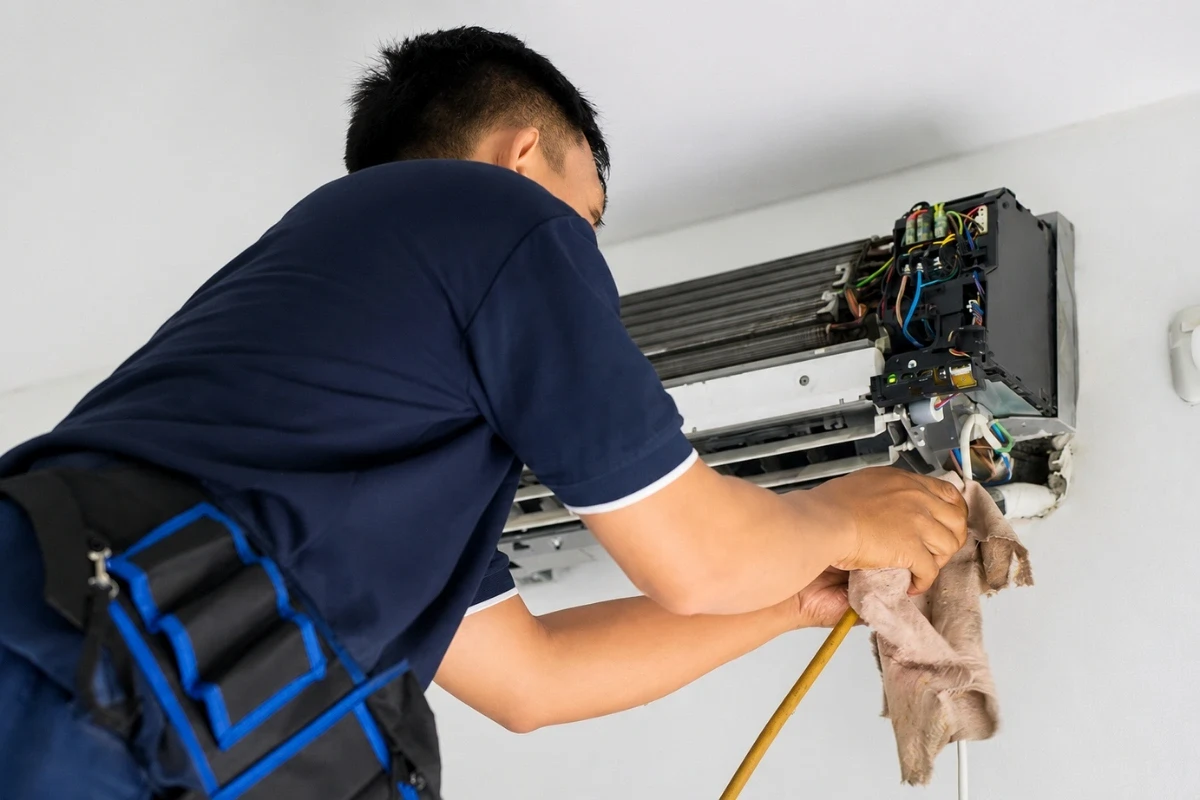
Uneven temperatures and weak vents often signal an airflow problem. Some rooms never get comfortable. Many homeowners assume the HVAC system is failing, but in most cases, the issue starts with how air moves through the home.

Improving airflow is about restoring balance, not upgrading equipment. Small adjustments can make a noticeable difference. Many homes regain comfort without replacing the system or adding complexity.
At Alternative Aire, we fix airflow at the source. We identify restrictions, test system pressure, and inspect ductwork to guide every decision. The goal is steady, reliable comfort in every room.
Key Takeaways
|
Why airflow problems happen in the first place

Airflow problems usually come from resistance within the system, not a lack of cooling power. HVAC equipment is designed to move a specific volume of air. But undersized ducts, blocked returns, and restrictive filters slow that flow.
As resistance increases, pressure builds, and airflow drops. And the rooms that need comfort most are left short. Even though the system itself is operating exactly as designed.
This is why replacing equipment often doesn’t fix comfort issues. In many cases, the real fix starts with Manual J load calculations and duct corrections that determine how air should move through the home.
At Alternative Aire, we see this often: the system works properly, but the air has nowhere to go. This is one of the most common issues we uncover during in-home airflow evaluations.
Airflow and cooling capacity are not the same thing
Cooling capacity controls temperature. Airflow controls how that cooling reaches each room.
A system can produce cold air while still delivering weak airflow. When airflow drops, rooms heat up unevenly, humidity lingers longer, and vents feel lazy instead of steady.
This is also why homes can feel uncomfortable even when the thermostat says everything is “normal.” During service calls, we often find systems cooling properly while airflow measurements show clear delivery problems.
Why does airflow weaken over time?
Airflow weakens over time because small restrictions build up inside the system.
Filters clog, ducts sag or shift, blower wheels collect dust, and return grilles get blocked. Each issue adds resistance, making it harder for air to move. Most homeowners don’t notice the change until one room becomes hard to cool or airflow feels noticeably weaker.
Why do some rooms get less air than others
Some rooms get less air because air follows the path of least resistance.
Rooms closer to the system often get more air, while distant rooms, upstairs spaces, or closed bedrooms receive less. Long duct runs, tight bends, and pressure imbalance all work against those spaces.
That’s why one room feels perfect while another never quite catches up, especially during peak summer heat.
First things homeowners should check for low airflow
Before assuming duct or system problems, a few common issues are worth checking. These do not fix deeper design problems, but they often reveal why air feels weak in certain rooms.
Dirty or restrictive air filters
A clogged filter slows air before it ever reaches the ducts.
High-MERV filters, overdue replacements, or improper installation increase resistance quickly. When airflow drops, rooms feel warmer, and the system runs longer. Changing the filter restores airflow only if nothing else is blocking the system.
We routinely see airflow recover immediately after correcting filter restrictions during maintenance visits.
Closed or poorly placed supply vents
Closed vents do not redirect air evenly. They increase pressure.
When vents are blocked by furniture, rugs, or curtains, air backs up into the duct system. In many cases, airflow gets worse across the home. This is why vent adjustments are evaluated as part of airflow balancing, not guesswork.
Furniture and objects blocking air movement
Air needs space to mix inside a room.
Beds or sofas blocking vents and heavy drapes trapping airflow can make a room feel stagnant. The vent may be open, but the air never reaches the occupied space. This is especially common in bedrooms and living rooms we inspect during comfort complaint calls.
Ceiling fan direction and basic circulation
Fans do not create airflow from the HVAC system, but they help distribute it.
In summer, ceiling fans should push air downward. This helps cool air spread across the room instead of settling near the ceiling. It improves comfort but does not fix weak airflow on its own.
How return air problems quietly reduce airflow
When return pathways are limited or blocked, supply air slows down even if vents are open. Pressure builds inside rooms, airflow weakens, and comfort drops across the home.
Return air limitations are one of the most overlooked issues we diagnose in homes with persistent comfort problems. Correcting return pathways and duct layout together is often required to restore proper airflow and reduce pressure buildup.
What return air actually does
Return air allows the HVAC system to keep pulling and moving air.
The blower depends on return airflow to circulate air through the system. When the return airflow is restricted, the system cannot move the designed amount of air. Supply vents feel weak because the loop is incomplete, not because the equipment lacks power.
Why closed doors reduce airflow
Closed doors block the return path from individual rooms.
When a bedroom door is closed, air enters through the supply vent but cannot exit. Pressure builds inside the room, and airflow from the vent drops quickly. This is why rooms often cool better when doors are left open. We frequently demonstrate this pressure change during on-site airflow testing.
Signs of poor return air design
Poor return design shows up as pressure and comfort changes between rooms.
Rooms feel more comfortable with doors open. Vents get louder when doors close. Airflow feels stronger near hallways and weaker deeper inside rooms. These patterns point to missing, undersized, or blocked return pathways.
Why adding supply vents alone does not fix airflow
Adding supply vents does not solve airflow problems caused by restricted returns. More supply air increases pressure when the return air is limited.
Airflow becomes noisier and less stable, and comfort does not improve. Airflow only recovers when air can leave the room as easily as it enters.
Ductwork issues that limit airflow, even with a strong system

Ductwork limits airflow when air is lost, restricted, or slowed before it reaches the room.
Even when the HVAC system is properly sized, airflow can drop if ducts are damaged, leaking, or mismatched. Air escapes, pressure changes, and less air reaches the registers that need it most.
Crushed or kinked ducts
Crushed or bent ducts restrict airflow inside the duct run.
Flexible duct can collapse under insulation, storage, or foot traffic in the attic. Sharp bends slow the air and increase resistance. These restrictions reduce airflow to downstream rooms without affecting rooms closer to the system.
Disconnected or leaking duct runs
Disconnected ducts allow air to escape before it reaches the room.
Loose connections and hidden gaps leak conditioned air into attics or crawl spaces. Airflow at the vent feels weak because much of the air never arrives. Leaks also increase run time and energy use.
Duct sizing mismatches
Incorrect duct sizing prevents air from reaching certain rooms evenly.
Branch ducts that are too small limit airflow to individual rooms. Oversized trunks paired with undersized branches create an imbalance across the home. This is common in older homes or systems modified over time.
Why do older homes struggle more?
Older homes often have ductwork that was never designed for modern airflow demands.
Smaller ducts, limited return pathways, and minimal insulation reduce air delivery. Comfort problems become more noticeable during extreme heat or cold when airflow demands are highest.
When airflow issues are really static pressure problems
Static pressure reduces airflow by forcing the system to push against resistance.
When pressure inside the duct system gets too high, air slows down. The blower works harder, vents get noisier, and less air reaches the rooms that need it most. This happens even when the system is the right size.
Static pressure testing helps confirm when airflow loss is caused by resistance, not equipment failure. Reducing that resistance usually requires targeted duct corrections rather than equipment changes.
Common signs of high static pressure
High static pressure shows up as noise and poor airflow.
Vents whistle or hiss. Filters bow inward. Some rooms lose airflow while others feel fine. These signs often point to restrictions rather than equipment failure.
How filters, coils, and duct layout affect pressure
Restrictions increase pressure and reduce airflow at the same time.
Dirty evaporator coils, clogged filters, and tight duct layouts force air to squeeze through smaller openings. This raises pressure and lowers air volume throughout the system.
Why closing vents usually makes airflow worse
Closing vents increases pressure instead of improving airflow. Because Air has fewer places to go, so resistance rises. The remaining open vents do not receive more air. In many cases, airflow drops across the entire home, and noise increases.
Why do second floors and bedrooms often have weak airflow
Second floors and bedrooms receive less airflow because pressure loss increases with distance and height.
Air loses force as it travels through long duct runs and rises to upper levels. Bedrooms at the end of the system are affected first, especially when doors stay closed for long periods. Second-floor airflow issues often require room-specific solutions rather than system-wide adjustments.
Stack effect and heat rise
Warm air naturally rises and changes pressure inside the home.
As warm air moves upward, it increases pressure upstairs and lowers pressure downstairs. This makes it harder for cooled air to reach second-floor rooms and stay there.
Long duct runs and pressure loss
Long duct runs reduce airflow before the air reaches the room.
Each turn, bend, and length of duct adds resistance. By the time the air reaches upstairs bedrooms, less volume remains compared to rooms closer to the system.
Door position and pressure imbalance
Closed doors create a pressure imbalance in individual rooms.
Air enters the bedroom but cannot exit easily. Pressure builds, airflow slows, and the room feels warmer. This is one of the most common reasons bedrooms have weak airflow at night.
Do common airflow fixes actually work?

Some airflow fixes help in specific cases, but many do nothing if the underlying airflow path is still blocked.
Homeowners are often told to add accessories or change settings to fix weak airflow. Some of these steps improve comfort slightly. Others increase noise, pressure, or energy use without solving the real problem. Knowing the difference prevents wasted time and money.
Do duct booster fans help?
Booster fans help only when a single duct run is long and otherwise unrestricted.
Inline fans can move more air to one room, but they also increase pressure in the system. If return air is limited or ducts are undersized, booster fans often make noise without improving comfort.
At Alternative Aire, airflow is evaluated first before recommending any assisted airflow solution. We only recommend assisted airflow after verifying duct sizing and return capacity.
Does duct cleaning increase airflow?
Duct cleaning rarely improves airflow unless debris is actively blocking the duct.
Dust on duct walls does not usually restrict airflow. Crushed ducts, leaks, and sizing problems cause far bigger losses. Airflow testing helps determine whether cleaning will make a measurable difference or not.
Should the thermostat fan be set to “On”?
Running the fan continuously improves air mixing but does not fix airflow issues.
The “On” setting circulates air between cycles, which can reduce hot and cold spots slightly. It does not increase the amount of air delivered to rooms with weak airflow. In some cases, it can increase humidity during the cooling season.
Does opening windows improve airflow?
Opening windows improves ventilation but not HVAC airflow.
Outdoor air can help freshen a space, but it does not correct duct, return, or pressure problems. In hot or humid conditions, open windows often make comfort worse and increase system workload.
At Alternative Aire, airflow fixes are based on measurements and system behavior, not guesses. Each recommendation is tied to how air actually moves through the home, so improvements are quiet, balanced, and effective. Airflow and comfort are then verified after adjustments to ensure results match expectations.
When increasing airflow requires more than adjustments
Airflow problems require professional correction when the system layout limits air movement.
Basic checks help, but some airflow issues are built into the design of the system. When ducts, returns, or pressure balance are wrong, no setting or accessory can fix the problem completely. This is where professional system design review becomes necessary.
Signs that airflow problems are design-related
Design problems show up as consistent comfort issues that never go away.
One room is always warmer than the rest. Airflow improves only when doors stay open. Vents are noisy even after filters are changed. These patterns usually point to duct sizing, return placement, or pressure imbalance rather than maintenance issues.
Why like for like replacements fail
Replacing equipment without correcting airflow repeats the same problem. A new HVAC system will move air the same way the old one did if the ductwork and returns stay unchanged.
In many homes, this is why comfort problems remain after a replacement. Airflow needs to be addressed before or during any equipment upgrade.
When duct corrections or Manual J are needed
Airflow improves when the duct design matches the home and the system. Manual J load calculations determine how much air each room needs based on the home’s layout, insulation, and usage. Duct corrections adjust how that air is delivered and returned.
At Alternative Aire, airflow is verified and corrected so cooling is even, quiet, and consistent throughout the home.
Conclusion
If airflow problems keep returning, it usually means the issue was never fully identified. A professional airflow evaluation looks at how air actually moves through your home, not just how the equipment runs.
Alternative Aire helps homeowners restore comfort by diagnosing airflow, pressure, and duct performance together. If your home never feels quite right, a proper airflow check can be the first step toward fixing it for good.
FAQ
Can a high-efficiency air filter reduce airflow?
Yes. High-efficiency filters can restrict airflow if your system is not designed for them. This can make rooms feel warmer, and vents feel weaker.
How can I tell if the return air is the problem?
If rooms cool better with doors open or airflow drops when doors close, return air is likely restricted. This is a common cause of uneven comfort.
Does HVAC system size cause airflow problems?
Not usually. Most airflow problems come from duct design, pressure, or restrictions, even when the system is the correct size.
Does weak airflow mean the ducts need to be replaced?
No. Many airflow issues can be fixed by sealing leaks or correcting restrictions. Full duct replacement is only needed in certain cases.