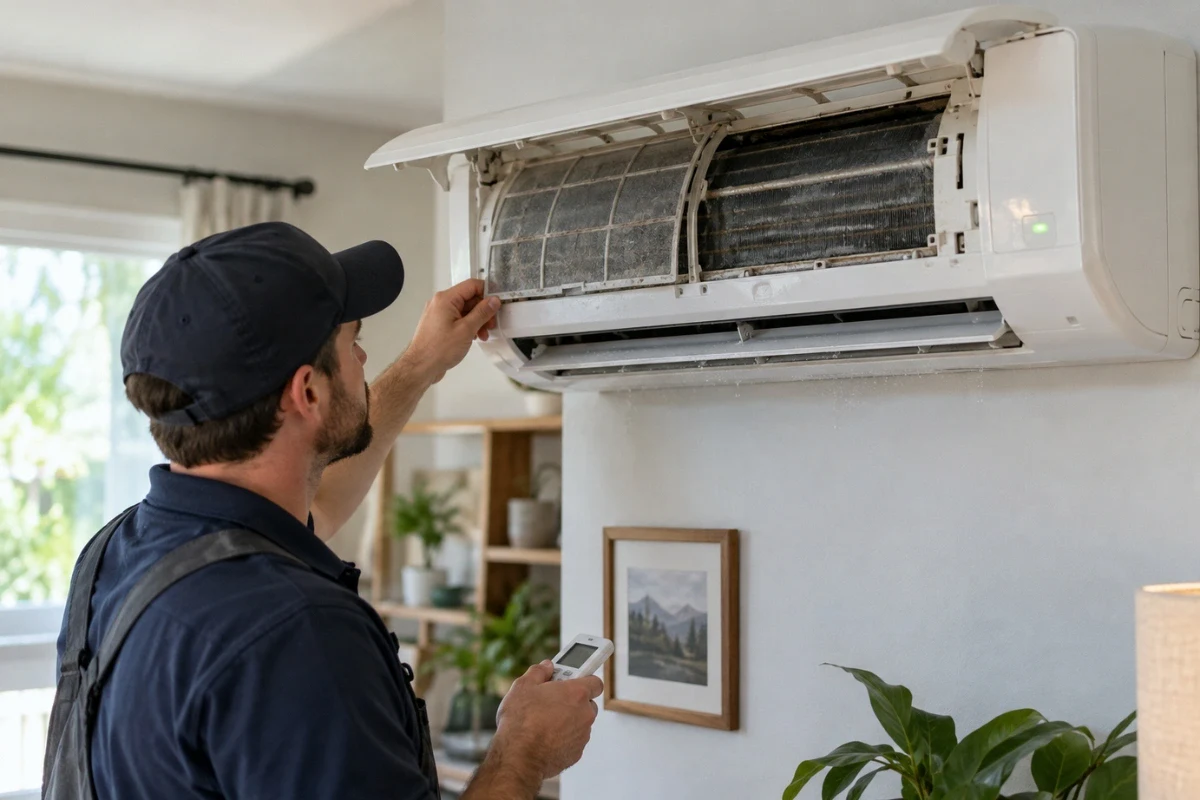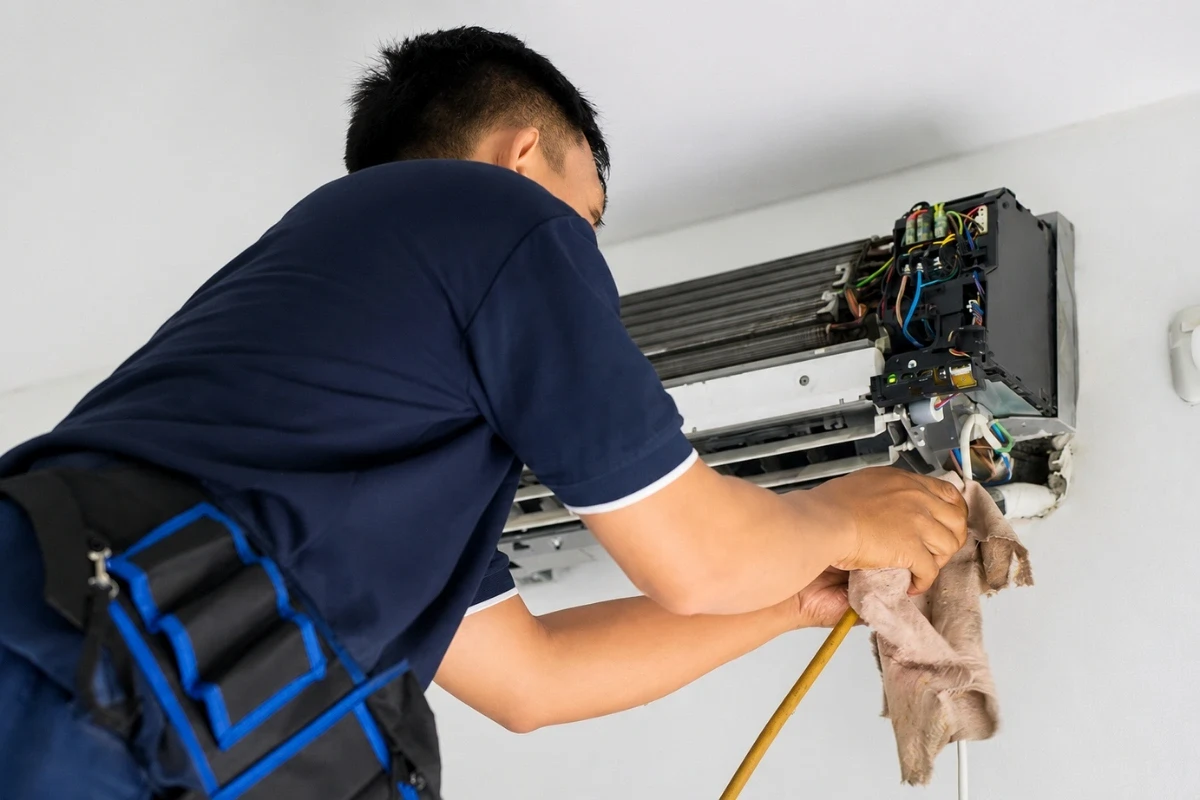
I’ve spent years keeping homes comfortable in Durham’s unique climate. Your HVAC system is your single biggest home comfort investment. And This comprehensive handbook is designed to help you avoid costly breakdowns and high bills.

You’ll learn the realistic lifespan expectations for our area and, most critically, my professional repair vs. replace framework, including the crucial 50% rule that saves you money. By the end, you will have the knowledge to extend your system’s life by years and finally understand your system’s true operating costs.
Let’s make sure your comfort is never in doubt.
Key Takeaways
|
HVAC 101: Understanding Your System and the NC Climate
When I talk about your HVAC system, I mean everything that handles your heating, ventilation, and air conditioning. This section covers how HVAC systems work and the core differences, helping you understand the air conditioner vs heat pump vs furnace options.
For most Durham and Triangle residents, you have one of three primary setups. Understanding which one you have is the first step in smart home ownership and maintenance.
The Split System (AC and Furnace)
This is the traditional setup I have worked on for decades. It is called a split system because it divides the work between two major components:

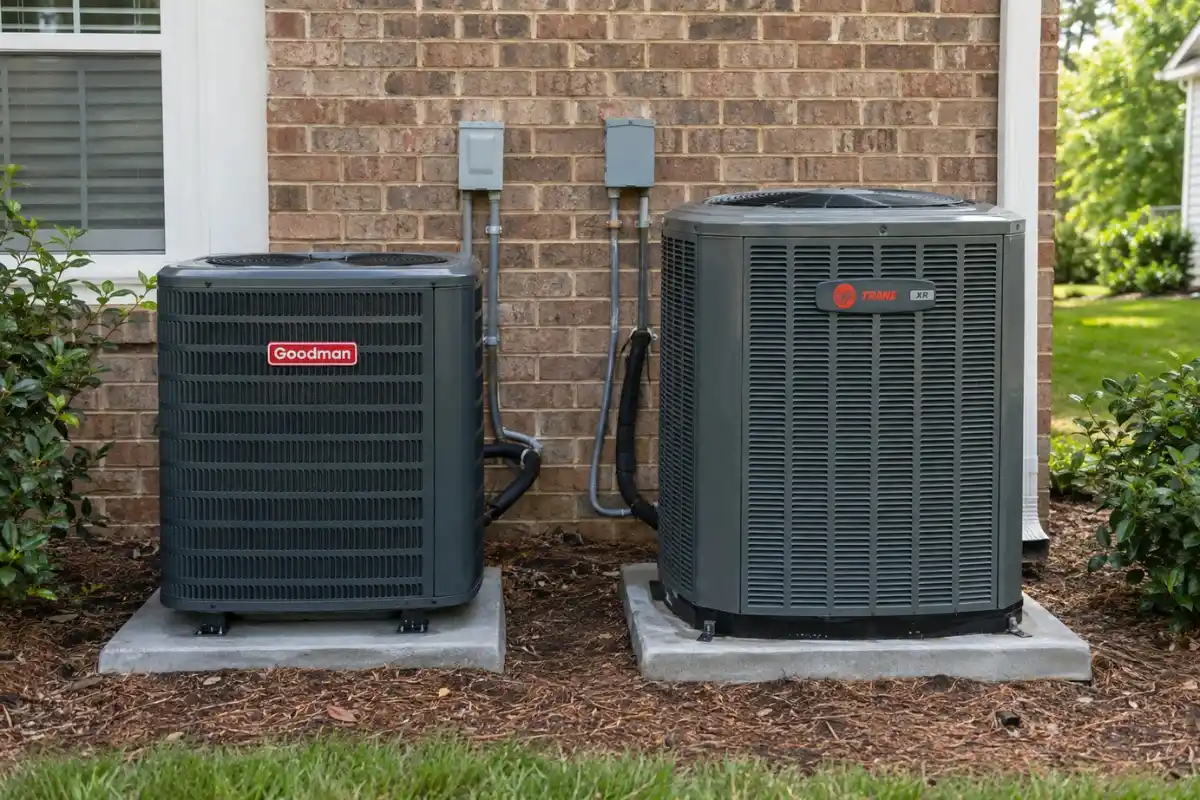
- The Outdoor Unit (Condenser): This big box sits outside your house. It runs when your air conditioner is on. It is responsible for absorbing heat from inside your home and releasing it into the outside air.
- The Indoor Unit (Air Handler and Furnace): This usually sits in your closet, attic, or basement. It handles both cooling and heating. The evaporator coil gets cold to chill your indoor air during the summer. The furnace is a separate component that heats the air in the winter, usually by burning natural gas.
This system provides powerful cooling and quick, intense heat. It is a reliable option for our area.
The Energy Saver: The Heat Pump
I install more heat pumps every year. They are extremely popular here in North Carolina due to our milder winters, functioning under a key principle:
- A heat pump moves heat (it doesn’t create it).

Because the heat pump handles both cooling and heating, it runs almost year-round. This is why the life expectancy might be slightly shorter than a furnace that only runs for a few months a year. Despite the constant use, they are still a great choice for energy savings.
The Targeted Solution: Mini-Splits and Advanced Systems
I use mini-split / ductless systems to solve specific comfort problems in additions or sunrooms. Their structure offers distinct advantages:
- They do not use the home’s main ductwork.
- A small, separate indoor unit is installed on a wall in a specific room.
This unique setup allows for precise zoning control, which maximizes comfort and saves energy.
For larger commercial spaces, or very large, custom homes, we at Alternative Air sometimes look at specialized applications like a packaged unit or variable refrigerant flow (VRF) systems, which allow for even more precise zone control using advanced thermostat platforms.
North Carolina Climate Challenges: Lifespan and Degradation
You are investing a lot in your system. You might be wondering how long your HVAC system will reliably operate in Durham. The truth is, our unique climate affects your unit’s functional life more than you might think.
Our long, humid cooling season puts a heavy load on the system, which directly impacts the expected service life of your heating and cooling system.
The Lifespan Reality: What I See in the Field
Here are the realistic lifespan expectations for the HVAC components in Durham’s demanding climate, assuming you perform professional annual HVAC maintenance:

|
System Component |
Expected Lifespan |
Why the NC Climate Matters |
|
Air Conditioner (AC) Unit |
10 to 15 Years |
Our humid summers demand months of non-stop operation and dehumidification. This accelerates wear and tear on the compressor. My field experience confirms the typical longevity data, helping us determine the realistic longevity of an AC unit. |
|
Gas Furnace |
15 to 20 Years |
Since furnaces run less often here than in colder states, they tend to reach the high end of their expected life. |
|
Heat Pump |
12 to 15 Years |
A heat pump works for both cooling and heating, meaning it is running almost every single month of the year. This constant use slightly reduces its longevity. Constant use in the Triangle directly impacts the final calculation for the average operational years of a heat pump. |
Factors That Shorten Your System’s Life
- Skipping Maintenance: The number one killer is neglect. Dirt on the coils causes long-term, permanent damage.
- Low Refrigerant Charge: If your system is leaking refrigerant, the compressor runs without the lubrication it needs. A refrigerant leak will cause the compressor to overheat and fail quickly, leading to an expensive compressor replacement.
The Warning Signs: Common Issues and Expert Diagnosis
You do not need to be an HVAC technician, but you must pay attention to your home. Knowing the most frequent technical HVAC failures and quick repair solutions in North Carolina can save you from a complete system failure.
Quick DIY HVAC Troubleshooting Guide
Before you call for emergency HVAC service, you can follow this simple HVAC troubleshooting guide. This often solves basic issues or, at the very least, helps me when I arrive.

- Check the Power: If your system is completely off, look at the service disconnect and your main breaker panel. If your circuit breaker tripped (a common signal of a problem like an overheating motor or faulty wiring), do not immediately reset it. Call Alternative Air first.
- Thermostat Check: If the display is blank or the unit isn’t responding, your thermostat not working may just be a simple dead battery.
- Filter Check: Inspect your air filter. A clogged air filter is the most common cause of poor performance and restricted ductwork airflow.
- Drain Line Check: If you see water pooling near your air handler, you likely have a condensate drain clog.
- Furnace Check: If your heat won’t start, a small issue like an ignition/pilot light issue might be preventing the system from firing up.
If these simple steps don’t work, that’s when you call us.
Decoding the Sounds and Smells of Trouble
Your system should be quiet. If you start hearing new noises, pay attention:
- Hissing or Bubbling: A continuous hissing noise often means a refrigerant leak inside your evaporator coil.
- Short Cycling: When the unit runs for only a few minutes, turns off, and repeats the cycle, it is short cycling. This often points to overheating, faulty wiring, or a thermostat problem, and requires immediate diagnostic time.
The Critical Decision: Repair vs. Replace (The 50% Rule)
The question of repair versus replacement is the hardest decision a homeowner faces. When facing frequent or major failures, knowing the definitive indicators for when to transition from repair to full system replacement is crucial. I use a clear, three-part evaluation to guide my customers. This is your repair vs replace framework.
The Expert’s 3-Point Evaluation
- The Unit’s Age & Cost: If your air conditioner is approaching 15 years, replacement is often the smartest choice. I use a simple “50% rule”: if the required HVAC repair cost (like a major compressor replacement) exceeds half the price of a brand-new system, choose replacement.
- Efficiency Loss & Energy Ratings: Older units operate with lower SEER (Seasonal Energy Efficiency Ratio) or SEER2 ratings. When you are facing a major repair, replacing the whole system is a chance to instantly save 20-40% on your monthly bills. This is why understanding energy ratings is so important when buying new.
- Warranty Status: Before any major repair, we need to do a manufacturer warranty check. You need to know how to find the age of your system (usually from the serial number) to see if it’s still covered.
Warranties, Registration, and Keeping Coverage Intact
To ensure you keep the warranty intact, you must register your unit within 60-90 days of installation. This is key to receiving the full 10-year parts warranty offered by most brands. Unregistered units often default to a shorter 5-year coverage.
Furthermore, nearly all brands require proof of seasonal HVAC maintenance (annual professional tune-ups) to uphold their warranties and registration terms.
Essential Maintenance, Safety, and Savings
Routine maintenance is how you protect your investment, lower your utility bills, and keep your Durham home safe. A proactive approach prevents up to 95% of unexpected breakdowns.
The Three-Step DIY Maintenance Plan
- Change Your Filter: The single most important task. Change it every 60 to 90 days or monthly during heavy use. A dirty filter causes your system to work harder, leading to higher energy consumption and premature component failure.
- Check the Drain Line: If you see water pooling near your air handler (usually in the summer), you likely have a condensate drain clog. You can often clear this with a wet/dry vac or a light bleach solution.
- Check the Thermostat: If the screen is blank or the unit is unresponsive, always check the batteries first, even if your system uses C-wires.
The Power of an Annual Professional Tune-Up
Routine upkeep is proven to reduce energy consumption by 5% to 15% (according to Duke Energy) and prevent emergency service calls.

- Durham Tune-Up Cost: A standard professional tune-up in the Durham area typically averages around $99 and up (or as low as $69 with promotional offers). This is a minimal cost compared to a $1,500 emergency repair.
A Crucial Durham Safety Note: Carbon Monoxide Alarms
Because most Durham homes rely on a gas furnace, you must ensure safety is a priority.
- A malfunctioning furnace heat exchanger can leak deadly, odorless Carbon Monoxide (CO) gas.
- The Durham Fire Department offers assistance to residents for the installation or replacement of smoke and CO alarms. Please ensure you have a working CO alarm installed on every level of your home, especially near sleeping areas, to protect your family from this serious risk.
Financial & Efficiency Strategy: Maximizing NC Rebates
I advise every homeowner to look into local rebates and financing before a major replacement. Beyond federal and utility programs, maximizing your unit’s performance comes down to understanding the best methods to lower HVAC energy consumption.
- Rebates & Savings: Local utility companies (like Duke Energy) and federal programs often offer substantial rebates & savings for installing high-efficiency equipment. We can use an energy savings calculator concept to show you the potential long-term returns.
- Financing Options: We also provide flexible financing options to ensure you can replace or repair your system immediately, maintaining your family’s comfort without breaking your budget. Talk to me for a simple price guide and clear expectations.
Going Deeper: Optimizing Comfort and Indoor Air Quality (IAQ)
For an HVAC expert, the job is not finished when the temperature is set correctly. We think about overall comfort, humidity, and air quality, all major concerns for North Carolina residents. This section focuses on indoor air quality improvements.
Advanced Indoor Air Quality (IAQ)
Indoor air quality (IAQ) is critical for a healthy home, especially for families with allergies. Your air handler can host various technologies:
- Filtration: Upgrade from standard filters to media / HEPA air cleaner options. These higher-MERV filters capture smaller particles like pollen, pet dander, and mold spores.
- Air Treatment: We install UV treatment systems inside your unit. These lights kill biological contaminants (mold, bacteria) that grow on the wet evaporator coil and in the drain pan.
- Ventilation: An energy recovery ventilator (ERV) introduces fresh outside air while pre-conditioning it, minimizing energy loss.
- Humidity Control: We install whole-house dehumidifier units to manage moisture during the cooling season, or a humidifier during the drier winter months, maintaining a healthy 40-60% relative humidity.
The Value of Smart Technology
Today’s technology makes it easy to control comfort and save money. A smart thermostat allows you to schedule, monitor, and adjust temperatures remotely.

They act as the brain for advanced thermostat platforms and multi-zone systems, including zoning (Hx3 platform) setups that ensure every room is the perfect temperature.
Conclusion
I hope this complete guide gave you confidence. Your HVAC system is the most important appliance in your home for comfort and health. Taking great care of it protects your investment and saves you money.
If you have a strange noise, a rising utility bill, or if you simply need your annual tune-up, Alternative Air is here to help. Call us. We promise to give you an honest evaluation and clear, simple options. We will work together to keep your Durham home comfortable for many years to come.
FAQs
What Is The Difference Between SEER And The New SEER2 Rating?
SEER (Seasonal Energy Efficiency Ratio) was the previous standard for measuring AC efficiency. SEER2 is the new federal standard established in 2023. SEER2 testing uses a higher external static pressure, which better simulates real-world operating conditions like restricted airflow. For North Carolina, residential AC units below 45,000 BTUs must now meet a minimum of 14.3 SEER2.
Is It Ever Worth It To Replace Just The Compressor, Or Should I Replace The Whole AC Unit?
Compressor replacement is rarely recommended if the AC unit is over 10 years old. The compressor is the most expensive component, costing roughly $1,500 to $3,000. Replacing only the compressor puts new parts onto an old, inefficient, and potentially contaminated system. Replacing the entire unit is the only way to gain a new warranty and qualify for higher efficiency tax credits.
What Is A Manual J Load Calculation, And How Does It Affect My System?
A Manual J load calculation is the mandatory industry standard for determining the precise heating and cooling requirements (BTUs) for your specific home. An incorrectly sized system that skips this calculation is the number one cause of short cycling and premature component failure, which is why we stress the importance of accurately calculating the required unit capacity during installation.
What Is The First Thing I Should Check If My Thermostat Screen Goes Blank?
You should first check the batteries in your digital thermostat, even if your system uses C-wires. Next, you must go to your electrical panel and verify that the circuit breaker labeled “Air Handler” or “AC” has not tripped. If the power is on, the batteries are new, and the screen is still blank, you should call a professional for service.
Are Geothermal Or Boiler Systems Ever A Good Option For A Durham Home?
Geothermal heat pumps represent the most energy-efficient option available and can be an excellent long-term investment. Geothermal systems, however, have an extremely high upfront installation cost, often ranging from $20,000 to $40,000. Boiler systems are less common in modern North Carolina homes, which rely on forced air, and they typically require a separate AC system for cooling.