Investing in an HVAC system is one of the biggest expenses for North Carolina homeowners. Given our state’s extreme weather, from sweltering, humid 90°F summers to freezing winters, a reliable system is essential.
But how long should you expect your HVAC system to perform in Durham, NC’s climate?

The truth is, while neglect can lead to premature failure, proper maintenance can easily add 5-10+ years of efficient performance.
In this guide, I’ll break down real NC-specific lifespans, key factors shortening your system’s life, and proven tips to extend it, giving you the expert advice you need to maximize your investment.
Key Takeaways
|
What’s the Average Lifespan of HVAC Systems in NC?
There’s no one-size-fits-all “average”; our HVAC lifespan guide for Durham homes explains how type, brand, installation quality, and climate all affect performance and longevity.
However, from what I have observed working on thousands of systems across the Triangle area, with regular maintenance, here’s what you can realistically expect:

| System Type | Average Lifespan (Well-Maintained) | Without Maintenance | Common Brands Notes |
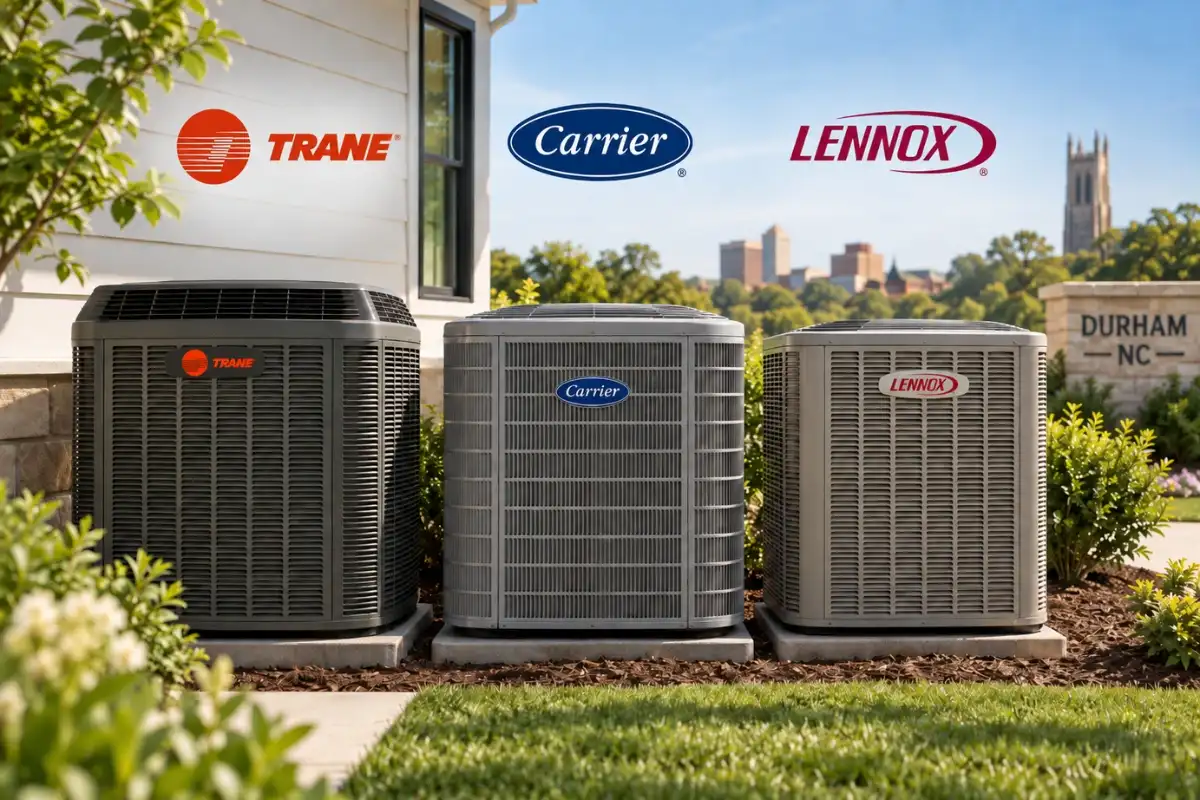
| Central Air Conditioners | 10-15 years | 8-12 years | Trane: Often 15-20+; Goodman/Payne: 10-15; Carrier Infinity: 15-18 |
| Heat Pumps | 10-16 years | 8-12 years | Inverter models last longer in Raleigh-area mild winters |
| Gas Furnaces | 15-20 years | 10-15 years | Goodman units: Solid 15+ with care |
| Electric Furnaces | 20-30 years | 15-20 years | Fewer moving parts = longevity |
| Oil Furnaces | 15-25 years | 10-15 years | Higher in rural NC |
| Ductless Mini-Splits | 15-20 years | 10-15 years | Great for zoned NC homes |
| Geothermal Heat Pumps | 25-50+ years (loops last 50+) | 20-30 years | Best ROI in NC soil types |
| Rooftop Units (Commercial/Residential) | 15-20 years | 10-15 years | Heavier NC sun exposure shortens |
In NC’s coastal or humid areas (like Wilmington or Raleigh), AC units wear faster due to constant runtime and corrosion from salt air.
In mountain regions like Asheville or Boone, heating systems take more strain from colder snaps, but milder summers give AC a break.
My pro tip: Always factor in professional HVAC installation. Because poor sizing or setup can shave years off from day one.
Even a 20-year-old system isn’t unusual if maintained, but I consider it past its prime in North Carolina’s climate.
Efficiency drops sharply after 15 years, which is when I usually recommend starting to budget for an HVAC replacement. Remember, getting professional AC installation right from the start prevents countless future issues.
8 Factors That Impact How Long Your HVAC System Lasts
Your HVAC system doesn’t age in a vacuum. Based on the thousands of HVAC repair jobs I have performed over the years, here are the top influences, ranked by how often I see them cause issues:
- Regular Maintenance – The #1 factor. Annual tune-ups and simple tasks prevent 80% of breakdowns. I consider this mandatory in NC. We offer specialized residential HVAC maintenance plans to ensure peak performance.
- Your Local NC Climate – Hot, humid summers mean nonstop AC use; dusty or pollen-heavy air clogs filters faster.
- Quality of Installation – Improper sizing, bad ductwork, or DIY errors cause extra stress. Always hire certified pros.

We always stress the importance of a proper Manual J load calculation for choosing the right HVAC size for your home in Durham.
- Daily Usage & Thermostat Habits – 24/7 runtime or “fan on” mode accelerates wear. Smart thermostats can add years.
- Brand and Equipment Quality – Trane/Goodman often outlast cheaper ones; check reviews for NC humidity resistance. If you have an older Payne AC that is 12 years old, based on my experience, you should definitely upgrade soon if repairs mount or bills rise.
- Indoor Air Quality & Insulation – Dirty filters/ducts or poor insulation force the system to work harder. The overall condition of your air duct system is critical here.
- Repair History – Frequent calls signal underlying issues, address early or replace. Don’t waste money on repeat fixes; know when to call for professional AC Repair or Heating Repair.
- Proper Sizing – Oversized units short-cycle; undersized ones strain constantly.
10 Warning Signs It’s Time to Replace Your HVAC
Don’t wait for a total failure during an NC heatwave. Watch for these red flags from local homeowners and techs. If I see three or more of these, I strongly suggest considering HVAC replacement:
- More Frequent Repairs – Calls every season? It’s failing.
- Rising Utility Bills – Same usage, higher costs = lost efficiency. I’ve seen cases where bills jumped significantly after a poor heat pump installation (more on that below).
- Odd Noises or Strange Odors – Squealing, banging, burning smells, or “dirty-sock” syndrome.
- Inconsistent Temperatures – Hot/cold spots despite settings. If this is a persistent issue, consider optimizing your Zone Systems for better climate control.
- Dusty, Musty, or High Humidity Air – Often a house issue tied to AC overload in humid NC.

Is high humidity in your house from the AC or something else? In humid NC, it’s often both, undersized AC can’t dehumidify properly, plus poor seals/vents.
- Warranty Expired – No coverage for major parts like compressors.
- Age Over 10-15 Years – Even if running, efficiency plummets.
- Repairs Cost Over 50% of New System – Or triggers the $5,000 rule.
- Can’t Handle NC Extremes – Struggles in 95°F+ heat or freezing nights.
- Outdated Refrigerant (Freon) – Phase-out makes HVAC repair expensive.
Repair or Replace? Use These Proven Rules
Stuck on the decision? NC locals and experts swear by these, and I rely on them daily:
- The $5,000 Rule: Multiply age × repair cost. Over $5,000? Replace. (E.g., 12-year-old unit + $500 fix = $6,000 → new system wins.)
- The 50% Rule: If repair >50% of a new unit’s cost, invest in HVAC replacement.
- Efficiency Check: Old units are less efficient than modern SEER 16+ models, factor in 10-15% annual savings.

For a quick visual, imagine a chart: X-axis (age 0-20 years), Y-axis (repair cost $0-$2,000), anything above the “replace” line means upgrade.
You need to understand the signs that you need an HVAC upgrade or repair to avoid wasting money on a dying unit.
12 Secrets to Extend Your HVAC Lifespan
Want to beat the averages? Follow these pro-approved tips, many are DIY and cost under $100/year. I preach these to all my customers:

- Schedule Professional Tune-Ups Twice a Year – Spring for AC, fall for heat. I stress that this is essential in NC.
- Change Air Filters Every 1-3 Months – Clean airflow = less strain.
- Clean Coils, Drains, and Remove Debris – Prevent clogs and overheating. We recommend comprehensive HVAC cleaning during your annual tune-up.
- Upgrade to a Smart Thermostat – Auto-adjusts for 10-15% savings and less runtime.
- Improve Home Insulation & Seal Ducts – Reduce workload year-round.
- Clean Ducts Every 5 Years – Better airflow, healthier air. Professional duct cleaning can often be completed in one hour or less for basic systems.
- Use the “Auto” Fan Setting – Gives your system a rest.
- Fix Small Issues Immediately – Prevents big failures. You can learn about common HVAC issues in North Carolina and simple fixes to keep your unit running smoothly.
Also, don’t overlook drain pan issues, as poor drainage often requires minor HVAC plumbing adjustments.
- Keep Outdoor Unit Clear – Trim plants, remove leaves/weeds.
- Check Refrigerant Levels Annually – Leaks kill efficiency.
- Enroll in a Protection Plan – Priority service + discounts.
- Choose Professional Installation for Replacements – Sets up longevity from day one.
New HVAC Replacement Costs in North Carolina (2025 Update)
HVAC replacement costs in NC have risen with energy-efficient mandates and supply chain shifts, but incentives help. Average for a 2-3 ton residential system:
- Basic Central AC + Furnace: $8,000-$12,000. When considering Furnace Installation, ensure you get at least a 95% AFUE model for NC’s variable climate.
- Heat Pump (Inverter Recommended for Raleigh): $10,000-$18,000.
I can confirm that inverter heat pumps are absolutely worth it in Raleigh. They handle NC’s variable temps better, run quieter, and save 20-30% on bills vs. old styles.
- Full System with Ductwork: $15,000-$25,000
- 2-Ton Goodman Unit + Furnace: I agree that $12,500 is fair, avoid lowball $8k quotes from bad contractors.
Shop independent/family-run HVAC companies in Durham/Raleigh, and avoid private equity firms pushing upsells. Get 3 quotes; look for NATE-certified techs.
Additionally, Federal rebates are up to $2,000 for heat pumps, and NC utility credits can cut utility bills.
Remember, these replacement costs are part of the larger picture when you learn about HVAC systems, lifespan, costs, and care.
Why Mold Grows in NC HVAC Systems (And How to Prevent It)
North Carolina’s humidity is a mold magnet; high moisture in ducts leads to “dirty-sock” smells and health issues. Competitors skip this, but locals complain constantly. I always check for this during my service calls.
Causes: Leaky ducts, poor drainage, neglected filters trapping spores.

Prevention Steps:
- Run dehumidifiers with AC (aim for 40-50% humidity).
- Install UV lights in ducts ($500-1,000).
- Seal ducts professionally.
- Change filters monthly in summer.
- Annual pro inspections for condensate pans.
Catch it early, mold remediation adds $2,000+ to HVAC repair costs.
Also, remember: Never turn your AC fully off when you’re away in summer, set it to 78-80°F to prevent dangerous humidity and mold growth.
Trusted HVAC Companies in the Triangle (Avoiding the Bad Ones)
Many homeowner reviews warn about bait-and-switch pricing and rushed installs. Prioritize well-reviewed, locally owned providers. Go local/family-run:
- Avoid: Big national chains with high-pressure sales.
- Trust: Independent techs with 100+ Google reviews, no upsell scripts.
- Tips: Check NC Licensing Board, ask for references, compare Goodman/Trane quotes apples-to-apples. I always tell homeowners:
How do I find an honest HVAC company in Durham/Raleigh without getting ripped off?
Skip big chains, go family-run with NATE certs and 200+ reviews. Ask for itemized quotes, references, and avoid high-pressure “today only” deals. When choosing between HVAC companies, prioritize transparency.
In Durham/RDU: Seek experienced local businesses, worth the call. When customers choose Alternative Aire, they get a quote from a local expert, not a national salesperson.
How Long Do HVAC Parts Really Last? (Beyond the Full System)
Homeowners ask about components. Here’s the breakdown, based on my service records:

- AC Compressor: 10-15 years (I find heat and humidity kill them faster in NC, budget $2,000-$4,000 for AC repair if the rest is solid). How long do air conditioners last when you consider their main components’ lifespan?
- Air Handlers: 15-20 years.
- Dampers: 20+ years if motorized; manual forever.
- Whole-House Humidifiers: 10-15 years.
- Evaporative Coolers (rare in NC): 5-15 years.
- Rooftop Units (Commercial): I typically see 15-20 years, but NC sun/storms shorten that to 12-15 without covers/shade. We also offer specialized Commercial Services for large-scale Commercial HVAC unit maintenance.
Replace proactively during tune-ups.
Types of Systems: Which Is Right for Your NC Home?
- Heat Pumps: Best for NC’s mild winters, heat + cool efficiently (inverter models shine in Raleigh). To maximize their life, you need to know how long a heat pump lasts with proper maintenance.
- Ductless Mini-Splits: Ideal for older homes without air duct systems.
- Geothermal: Longest life (25-50+ years) but higher upfront, great ROI with rebates.
- Traditional Central AC/Gas Furnace: Reliable workhorse for most homes.
How long does a central heating system typically last without AC? Heat-only systems (furnaces/boilers) hit 15-25 years, longer than full HVAC, since no summer strain.
Ready to Extend Your HVAC Life? Contact Us in Durham, NC
Don’t let NC’s weather win; get ahead with professional maintenance or a high-efficiency upgrade. I have proudly served the Durham and Triangle area for years.
At Alternative Aire, we serve Durham, Raleigh, Chapel Hill, and the Triangle with 7-day service, warranties, and free estimates. Call today for priority scheduling and peace of mind all year!
FAQs
What Are The Must-Have Features When I’m Shopping For A New HVAC System?
Look for a high efficiency rating of SEER 16+ or higher. Proper sizing confirmed by a Manual J load calculation is non-negotiable. Ensure the system warranty covers parts and labor for at least 10 years, and prioritize variable-speed compressors. You can also find excellent energy efficiency tips for HVAC owners in the Triangle to maximize your new system’s savings.
My Electricity Bill Is Through The Roof After Getting A New Heat Pump. Did I Mess Up?
No, you didn’t mess up, but this is a common issue. Heat pumps cause energy spikes when the unit is oversized or poorly installed. You must adjust thermostat settings, improve home insulation, and have a certified professional like us audit the system’s size.
Do North Carolina Landlords Actually Have To Provide AC For Tenants?
No. North Carolina law mandates that landlords provide heat, but not cooling. This is often called a “habitability loophole.” Tenants must negotiate for AC or install window units.
I Need A New Car AC Compressor In The Raleigh-Durham Area. What’s A Fair Price To Replace It?
Expect the replacement cost to fall in the range of $1,200 to $2,000. I recommend shopping around at independent mechanics, as dealership prices are typically much higher. We can also provide details on the annual HVAC inspections and what they include to keep your current unit running smoothly.