HVAC short cycling occurs when your system turns on and off too frequently. This constant cycling prevents your air conditioner from finishing a full cooling cycle. Most homeowners face this issue because of an oversized air conditioner or blocked ductwork.
If your system shuts off every few minutes, you will notice high energy bills and potential compressor failure. At Alternative Aire, we find that a system that is too large cools the air too fast. This means it never removes the humidity, leaving your home feeling “sticky” and damp.
You need a perfect balance between your home’s cooling load and the airflow through your vents. Proper Manual J sizing ensures your system runs long enough to dehumidify your space properly. Fixing static pressure issues in your ducts can also stop your thermostat from turning off too quickly. Right-sizing your equipment is the only way to ensure lasting comfort and efficiency.
|
TL;DR: |
Can Oversized or Undersized HVAC Systems Cause Short Cycling?
Yes, both sizing extremes lead to cycling issues. An oversized system cools too fast, satisfying the thermostat in minutes before removing humidity. This causes rapid on-off cycles that wear out the compressor and leave the air feeling sticky.
Conversely, an undersized unit struggles to meet the heat load, running continuously without reaching the target temperature.
If it eventually shuts down due to overheating or a safety switch tripping, it mimics short-cycling behavior. Proper Manual J sizing ensures a balanced cycle for efficiency and comfort.
What Is Short Cycling and Why Does It Happen?

Short cycling happens when your HVAC system starts and stops too quickly. A healthy cooling cycle typically lasts 15 to 20 minutes to reach your desired temperature.
If your unit runs for less than 10 minutes before shutting down, it is short cycling. This constant restarting puts massive strain on your compressor and wastes significant energy.
These rapid bursts prevent your home from reaching a steady, comfortable state. While a long runtime is common during extreme peak heat.
It creates frequent, short runtime bursts, indicating a serious sizing or airflow imbalance. Those are the common summer HVAC issues. You must address this to avoid equipment failure.
Short Cycles Damage the Compressor, Humidity and Air Quality
Every time your air conditioner starts, it pulls a massive surge of electricity. These frequent startups cause the compressor to overheat and fail prematurely. You will see your utility bills climb because the motor never reaches a steady, efficient state. Constant restarting creates more wear than hours of continuous running.
Your AC needs long runtimes to pull moisture out of the air. Short cycles are too brief to condense water effectively on the evaporator coil. This leaves your home feeling cool but damp and sticky. This excess moisture often leads to mold growth in your ductwork, which compromises indoor air quality and overall comfort.
Causes of Short Cycling in HVAC Systems
Many technical issues cause your system to turn off too early. We frequently find several common triggers during our home inspections. These problems force the system to stop before it finishes a full cooling cycle.
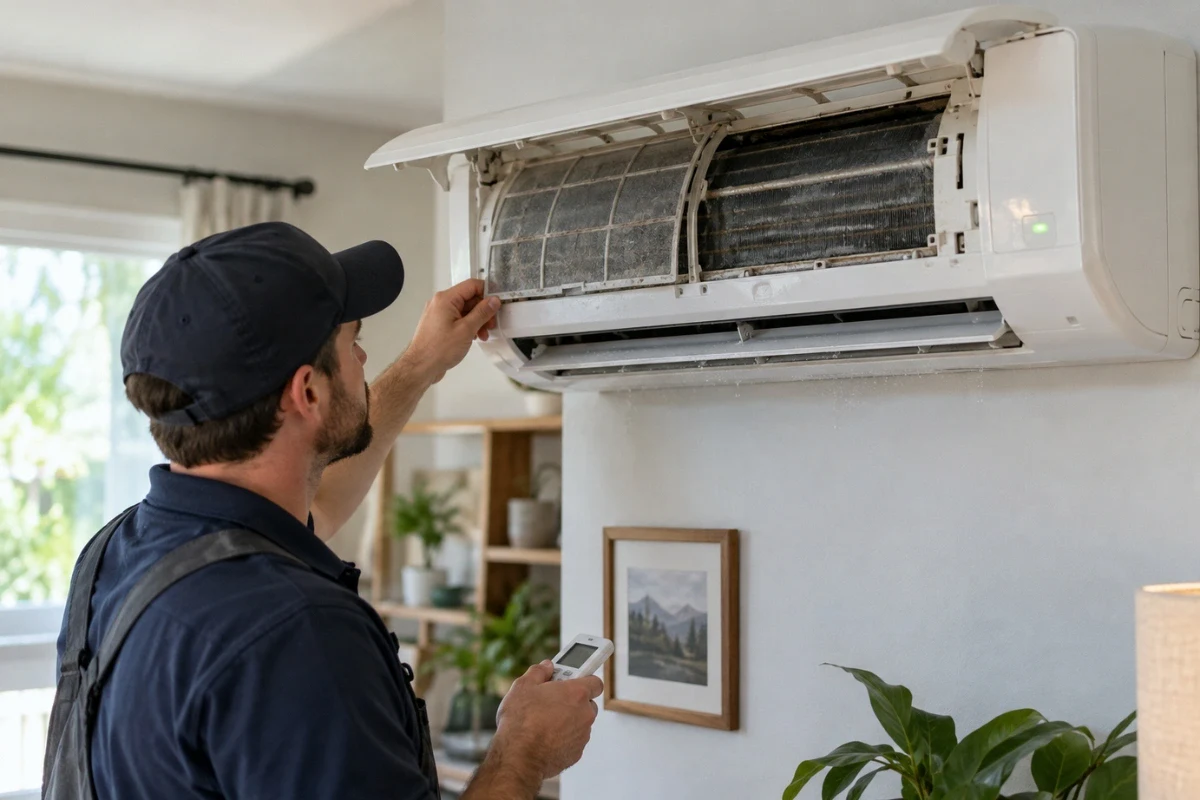
- Dirty air filters block airflow into the air handler, causing the system to overheat or freeze. That’s also caused the upstairs heating issue in extreme summer.
- Thermostat problems, such as poor placement near a drafty window, cause the sensor to reach the thermostat’s satisfaction setting too early.
- Low refrigerant levels cause the evaporator coil to freeze, triggering the low-pressure safety switch.
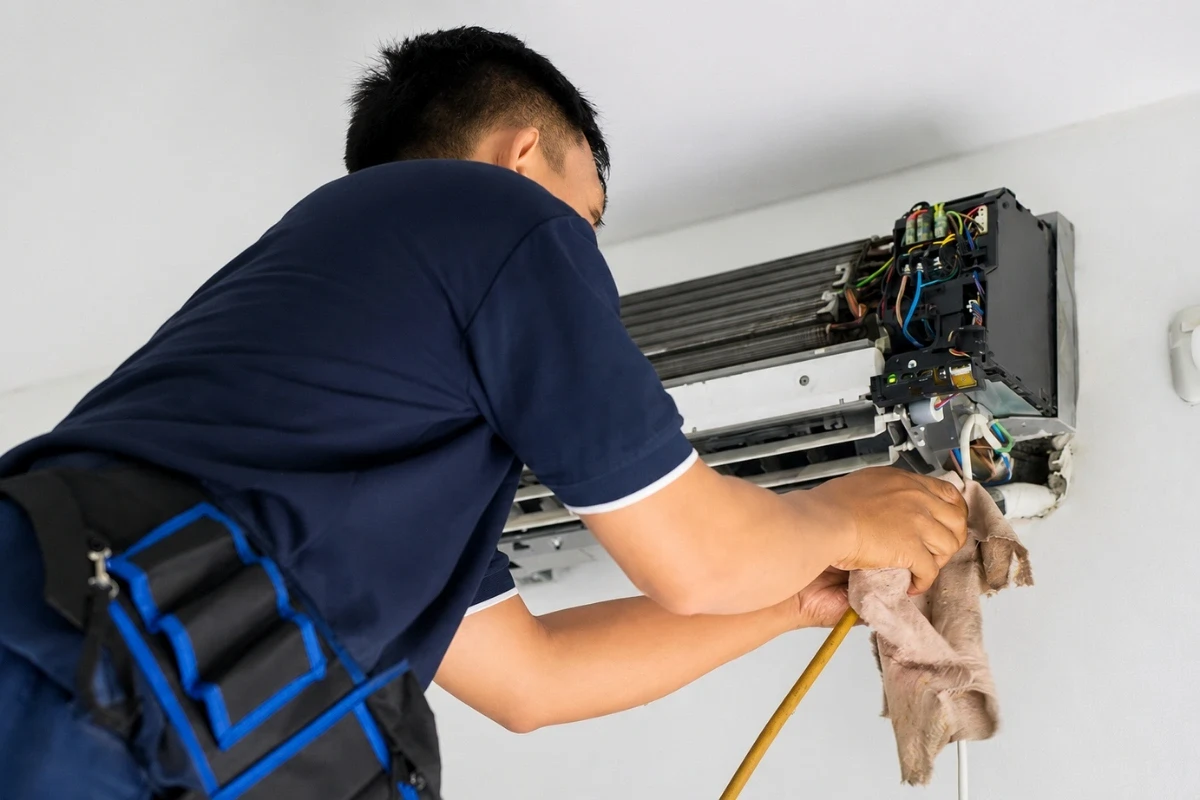
- Electrical issues or a failing control board can send incorrect signals, causing the outdoor unit to shut down prematurely.
- Blocked vents increase the static pressure and force a shutdown to protect the blower motor of your ac from damage
According to ENERGY STAR, almost 50% of new HVAC installations have sizing or airflow issues. Most technicians simply swap boxes without checking the ductwork.
The most frequent culprit is equipment oversizing. Many contractors use a rule of thumb instead of a Manual J calculation. They install a system that is too large for the house. The AC blasts cold air, satisfies the thermostat in minutes, and then shuts down immediately.
Oversized HVAC Systems and Short Cycling Problems

An oversized air conditioner is like putting a Ferrari engine in a lawnmower. It has too much power for space. This leads to AC short cycling due to oversizing, as the cooling capacity exceeds the home’s needs.
Why an Oversized AC Short Cycles
An oversized unit moves a massive volume of cold air all at once. This cold air hits the thermostat almost immediately, cooling the sensor down in a matter of minutes. Because the thermostat thinks the house has reached the target temperature, it signals the system to shut off. However, the rest of the house is still warm. The system shuts down before it can complete a full cycle, only to turn back on moments later when the air warms up again.
Signs the Air Conditioner Is Oversized
You can tell if your system is too large for the house by watching how it behaves on a hot afternoon.
- Your thermostat reaches its goal within 5 to 8 minutes of starting, which indicates the cooling capacity is too high.
- The indoor air feels clammy and sticky because the short runtimes fail to remove enough humidity from your living space.
- The compressor makes a loud, straining noise because it must constantly restart, causing mechanical stress and potentially leading to system failure.
- You notice significant temperature swings and “hot spots” because the air doesn’t reach every corner of your home.
We frequently see these issues when contractors skip the Manual J calculation and simply guess at equipment sizes.
Undersized HVAC Systems and Constant Running Issues
An undersized HVAC system creates the opposite problem. It cannot keep up with the cooling load. This leads to a system too small for peak load that runs without a break.
Why an Undersized AC Short Cycles
Strictly speaking, an undersized HVAC system usually struggles to meet your home’s needs, leading to different cycling issues. While these units typically run for long periods, they can short cycle if they overheat. When a system is too small, it fails to cool effectively during the hottest hours, often tripping safety switches that force the unit to shut down and restart.
Signs the HVAC System Is Undersized
Watch for these specific undersized HVAC symptoms if your home never feels cool enough during the summer months:
- The system runs all day without reaching the thermostat temperature because it cannot keep up with the heat.
- The cooling load is much higher than the equipment capacity, meaning the unit is physically too small for your space.
- You experience severe hot and cold spots throughout the home because the airflow never reaches the furthest rooms effectively.
- Your energy bills are high because the blower motor runs continuously without a break, which puts constant strain on it.
We recommend a professional Manual J calculation to ensure your new unit matches the unique cooling needs of your home.
Airflow Problems That Cause or Mimic Short Cycling

Sometimes the unit is the right size, but the air cannot move. Airflow-related short cycling often looks exactly like an oversized unit. Blocked vents and duct restrictions increase resistance. This makes the air conditioner struggle to move air, so it shuts down early to prevent damage.
A dirty filter can make a small system appear oversized. It starves the air handler for air, leading to airflow starvation and a frozen coil. Return air restrictions prevent the system from “breathing.” If the return duct is too small, the static pressure rises, triggering a safety shutdown.
Also, supply register imbalances cause uneven pressure. This leads to duct leakage losses where air escapes before it ever reaches your living space.
Static Pressure and Hidden Airflow Restrictions in HVAC Systems
Static pressure represents the resistance air meets as it moves through your ductwork. When this pressure becomes too high. It is often due to undersized ducts or overly restrictive filters. And airflow slows down significantly.
This causes the evaporator coil to drop in temperature too quickly. Without enough warm air passing over it, the coil can freeze, triggering a safety shutdown. This creates a short cycling loop that prevents your home from ever reaching a comfortable, consistent temperature.
To fix this, technicians measure Total External Static Pressure (TESP) and verify CFM (Cubic Feet per Minute) with a manometer. Ideally, a system needs 400 CFM per ton to operate efficiently. High pressure forces blower motors to work harder, leading to overheating and eventual mechanical failure.
Fixing Short Cycling Caused by Airflow Problems
You can often fix cycling issues by improving how air moves through your home. Check these common airflow restrictions to restore system balance.
- Swap out your dirty air filters every month to keep the air flowing freely through the cooling coils. This will also protect your AC unit during storms and power outages.
- Move furniture or heavy curtains away from your return vents so the system can breathe freely.
- Open all supply registers in every room to maintain steady air pressure and prevent the unit from freezing.
- Hire a pro to fix small return ducts that starve your blower motor and cause the system to quit.
- Invest in a full duct redesign if your current layout prevents air from reaching the furthest rooms in your house.
These simple steps protect your blower motor and keep your home comfortable year-round. Efficient airflow ensures your system runs for the correct duration, balancing humidity and stabilizing your indoor temperature.
Load Problems Leading to Short Cycling and Comfort Issues
Cooling load measures the heat your home gains. Heating load measures the heat it loses. A system must handle both sensible load (temperature) and latent load (moisture). When your AC is too large, it satisfies the temperature goal too fast. It stops before it can remove humidity. This load mismatch leaves your home feeling cool but very sticky.
Proper equipment sizing depends on your home’s unique thermal needs. Many installers guess the size, causing frequent cycles and high energy bills. Right-sizing ensures the system runs long enough to pull water from the air.
Fixing Short Cycling Caused by Load or Sizing Issues
When the equipment itself is the wrong size, you must take specific steps to fix the load balance. These actions ensure your AC matches your home’s actual needs. Proper sizing is the only way to stop the constant starting and stopping that ruins your compressor and wastes your money.
- Replace an oversized unit with a smaller system that matches your living space’s true cooling load.
- Use a professional Manual J calculation to determine the exact size you need, rather than a rough guess.
- Select new equipment based on its ability to handle both heat and high humidity levels in your local area.
- Upgrade to a variable-speed system that adjusts its power to match the shifting heat load during the day.
- Conduct a Manual S calculation to verify that your chosen equipment can manage the specific latent and sensible loads of your home.
Right-sizing your HVAC system creates a balanced environment where the unit runs long enough to pull moisture from the air. This process ensures consistent temperatures, lower energy bills, and a much longer lifespan.
When HVAC Equipment Should Be Resized or Replaced
There are times when the only fix is a new, correctly sized unit. If your system is 10 years old and has been short cycling its whole life, the compressor is likely damaged.
If your Manual J shows you have a 4-ton unit but only need a 2-ton unit, you must downsize. No amount of duct work can fix a 100% error in sizing.
If your home stays at 80 degrees when it is 100 degrees outside, your unit is likely too small. This is common in homes with new additions that were not included in the HVAC plan.
We recommend replacement when the cost of repairing the compressor or evaporator coil exceeds 50% of the cost of a new system. A new, right-sized system will pay for itself in energy savings.
How Professionals Diagnose Short Cycling Correctly

Professional HVAC design follows ACCA (Air Conditioning Contractors of America) standards. We do not guess. We use math to ensure your system performs perfectly.
- Manual J is the industry standard for calculating a home’s heat gain. We measure windows, insulation levels, and local climate data. This tells us exactly how many BTUs your home needs to stay cool.
- Once we know the load, we use Manual S to pick the right equipment. This ensures the unit can handle both the sensible load (heat) and the latent load (humidity).
- Manual D is the blueprint for your ductwork. It ensures each room gets the right amount of air. Proper duct design prevents static pressure issues and keeps the system quiet.
- Many old-school contractors use “1 ton per 500 square feet.” This is a huge mistake. Modern homes are much more airtight. This “rule” almost always leads to equipment oversizing.
You absolutely need a Manual J calculation before any replacement. Your home has likely changed since the last AC was installed. New windows or insulation change the cooling load.
Pro Tips to Avoid Short Cycling and HVAC Sizing Mistakes
You can take several steps to stop short cycling today. These simple actions protect your equipment and improve your comfort immediately.
- Replace your dirty filters every 30 to 90 days to keep the air moving freely.
- Clear any furniture or curtains blocking your supply registers and return air vents.
- Check your thermostat batteries and ensure it is not near a heat source like a lamp.
- Keep your outdoor condenser unit clear of leaves, dirt, and overgrown bushes.
- Schedule a professional maintenance visit to check your ac refrigerant levels and electrical components.
- Always test if the airflow is weak or not before recommending an upgrade
Maintenance is the best way to catch these issues early. We find that a simple cleaning often prevents a major compressor failure later in the season.
Final Thoughts
Your home comfort depends on the harmony between cooling load, airflow, and equipment sizing. When these elements are out of balance, your system suffers from short cycling. This creates high energy bills and ruins your compressor.
At Alternative Aire, we prioritize technical accuracy through Manual J calculations and static pressure testing. Do not settle for a system that only does half the job. If your unit shuts off too quickly, call a professional to find the real fix. Proper balance ensures lasting comfort and efficiency.
Frequently Asked Questions (FAQs)
Yes, it causes extreme wear on the compressor. It also leads to high energy bills and poor indoor humidity control.
If the repair cost multiplied by the age of the unit exceeds $5,000, you should usually replace the system instead of repairing it.
You must first diagnose the cause. Common fixes include cleaning filters, fixing airflow in ducts, or replacing an oversized air conditioner.
Yes, a malfunctioning sensor or poor placement can trigger the system to shut off too early. This is a very common electrical fix.
Most systems have a built-in delay. You should wait at least 3 minutes between cycles to allow the refrigerant pressures to equalize safely.
You will hear the outdoor unit turn on and off every few minutes. The house will never stay at a consistent temperature.
A technician must check for high pressure, low refrigerant, or electrical failures. Never attempt to fix the internal compressor parts yourself.
Oversized equipment is the most frequent cause. Restricted airflow due to dirty filters or small ducts is the second most common cause.