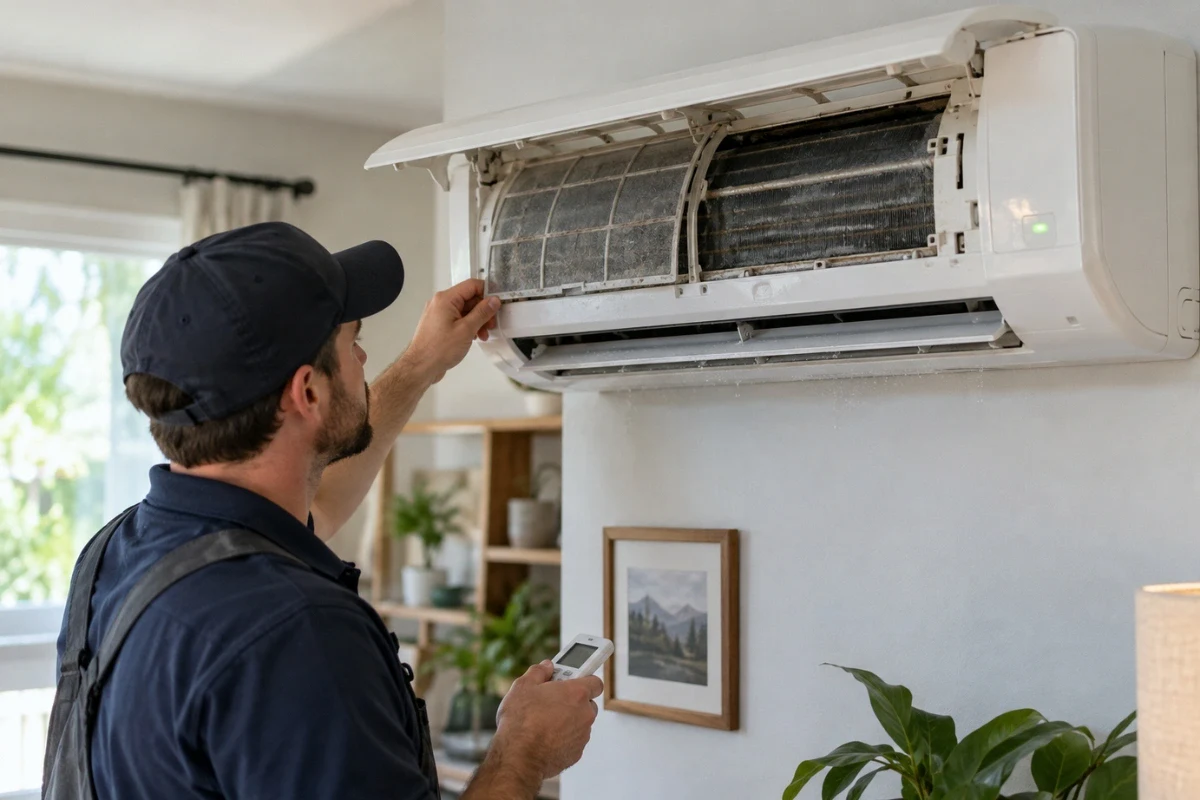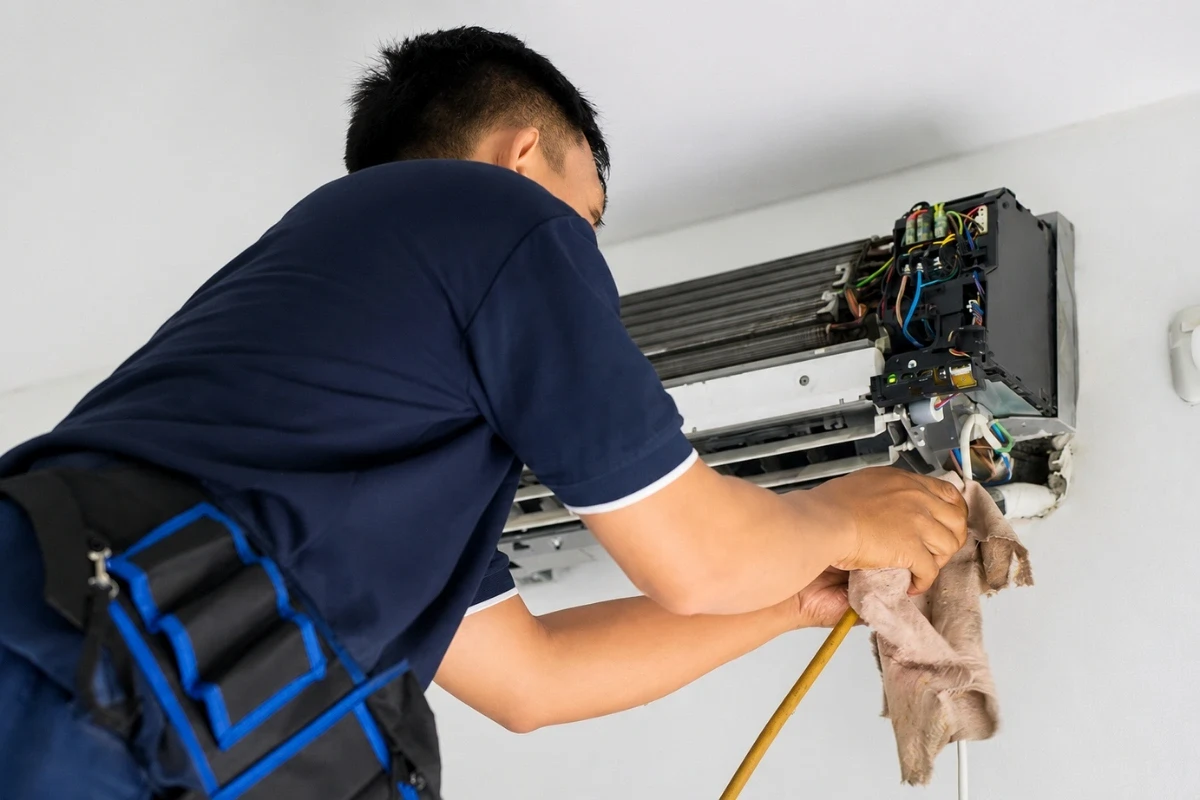
The HVAC System is your home’s most important mechanical defense against the challenging North Carolina climate. When the AC unit suddenly fails during a summer heat wave, the stress is immediate. Worse than the heat is the anxiety of calling a professional and wondering: Am I about to be told I need a $14,000 upgrade when all I need is a $15 part?This guide empowers homeowners with essential troubleshooting knowledge. We’ll cover the common Issues specific to our region and teach you how to perform simple DIY Fixes and prevent the infamous contractor “Upsell Game,” ensuring you only pay for true repairs.

Key Takeaways
|
The Homeowner’s Secret Guide: Simple DIY Fixes and Fraud Prevention
This section addresses the primary user pain point: overcharging and unnecessary repairs.
The “$15 Part” Phenomenon: Diagnosing a Failed Capacitor
A sudden, complete failure where the outdoor AC unit‘s compressor and fan stop simultaneously is often due to a failed capacitor. It is a cheap, consumable component needed to start the motors. HVAC contractors who specialize in air conditioning frequently charge several hundred dollars to replace this part.
DIY Diagnosis: If the AC unit is humming but the blower fan isn’t turning, turn the power off at the circuit breaker. With a thin stick, safely nudge the fan in the direction of its normal spin. If it starts running and cools your home, you have a classic bad capacitor.
Safety Warning: capacitors store lethal voltage even when the power is off. While the part is cheap and the fix is quick, replacement is only recommended for those familiar with electricity and safety protocols. Otherwise, you’ve diagnosed the issue and can call a professional knowing exactly what you need.
When Your Coil Isn’t Leaking
A major upsell game involves telling the homeowner they have a massive refrigerant leak requiring a $3,000 evaporator coil replacement or, worse, a full system replacement. In reality, many slow leaks can be temporarily addressed by adding a small amount of refrigerant to “hold you over,” often lasting years.
Before accepting a costly repair, also compare it to your system’s age. If your HVAC unit hasn’t reached its typical HVAC lifespan in Durham, NC, chances are most coil-related issues are repairable. It’s rarely a sign that you need an HVAC upgrade vs. repair.

Actionable Advice: If your HVAC technician immediately recommends a full replacement without a thorough leak inspection, get a second quote. Knowing that minor refrigerant leaks don’t always warrant a $14,000 solution gives you leverage.
The Drain Line Safety Switch: Clearing the Clog
A common seasonal failure is caused by the condensate drain line getting clogged with algae or sediment, which triggers an overflow safety switch near the indoor air handler, shutting down the AC or heating unit.
Again, most North Carolina homeowners are pressured to upgrade their HVAC systems. If it’s over how long air conditioners typically last, and the fixing cost is not more than 20% of the cost of the installation process, you don’t need an upgrade.
DIY Fix: You can often clear the line yourself by locating the condensate drain pipe outside and using a wet/dry vacuum to suction out the clog, or by using distilled vinegar for cleaning. This simple troubleshooting step restores power without needing a service call.
Four Core Failure Categories: Technical Issues and Solutions
Beyond the simple fixes, these are the most common HVAC issues facing homeowners in North Carolina:

1. Weak Airflow and Reduced Cooling Power
| Issue | Cause | Action |
| Restricted Airflow | Clogged air filters (pollen is high in the spring!). | Replace air filters every 1-3 months to boost efficiency and prevent strain on the blower fan. |
| Low Cooling | Low refrigerant charge or dirt on the outdoor condenser coils. | Clean the outdoor coils by hosing them from the inside out. Call a professional if warm air persists (may be a refrigerant leak). |
| Short Cycling | The AC unit turns on and off too frequently, increasing Wear and Tear. (also, if you haven’t chosen the right HVAC size for your Durham home) | Check the air filter and ensure the unit is not grossly oversized for the home (a common installation flaw). |
2. Electrical and Cycling Malfunctions
If your system won’t turn on at all:
- Check the thermostat settings (is it set to cool? Are the batteries fresh?).
- Check the main electrical panel for a tripped circuit breaker. Resetting it is a quick fix; if it immediately trips again, call an expert due to a potential short or overload.
- If the blower fan is dead, it could be a simple capacitor or a blown fuse.
Fixing electrical cycling issues early helps prevent energy waste. Ensuring regular cycling is one of the easiest ways to reduce HVAC energy use in the Triangle.
3. Advanced Motor and Component Failure
When the blower motor is buzzing or humming but won’t spin, the problem is often advanced:
- PSC Motors (common, use a capacitor) are easier to troubleshoot and replace than ECM Motors (proprietary electronic module).
- If the motor needs replacement, you are typically not repairing it; you are replacing the assembly. This requires disconnecting spade connectors and safely pulling out the Squirrel Cage (the fan blade assembly). This job is complex and best left to a technician unless you have electronic and mechanical experience.
4. Humidity, Water, and Uneven Comfort
- Humidity: High humidity in NC demands constant drainage. Persistent water leaks or high indoor moisture levels after performing the drain line fix often signal a compromised drain pan or a major refrigerant problem.
- Uneven Cooling: Hot spots and cold spots (e.g., in the Raleigh or Asheville areas) are often caused by air escaping through leaky ductwork or blocked vents. Professional duct sealing is a high-ROI upgrade that improves air quality and efficiency.
- Strange Noises: Grinding or squealing means internal mechanical damage (worn bearings, loose parts). Turn the unit off immediately to prevent further catastrophic wear and tear to the compressor and call a professional.
The Ultimate Fix: Proactive Maintenance and Preparedness
The most effective way to keep energy bills low and prevent expensive repairs is expert maintenance services.
The Return on Investment (ROI) of a Professional Tune-Up
Schedule HVAC maintenance twice a year (spring for cooling, fall for heating). An annual HVAC inspection checklist involves a licensed HVAC contractor performing a full inspection, cleaning, and calibration, catching small issues (like a weak capacitor or minor voltage fluctuations) before they lead to major system damage and downtime.
This proactive approach has a high ROI, preventing up to 30% of wasted energy consumption.
When to Trust Your North Carolina Professional
While troubleshooting is empowering, certain repairs require a license and specialized tools. Always call a professional for:
- Any work involving refrigerant (it’s dangerous and regulated).
- Complex electrical repairs to the control board or compressor.
- Diagnosing and fixing ductwork breaches or major blower motor replacement.
Empowerment through Knowledge: When the technician arrives, demonstrate that you know key terms like SEER, cycling, and capacitor function. This simple step is your best defense against the upsell game.
Conclusion: Restore Your North Carolina Comfort
Don’t wait for a small Issue to turn into a costly emergency. Be proactive, be educated, and be ready. If your troubleshooting fails, trust the qualified experts at Alternate Aire. We provide reliable repairs and maintenance to restore your home’s comfort and keep your energy bills low across North Carolina.
Contact Alternate Aire today to schedule your preventative maintenance or service appointment!