The weather in the Triangle area (Raleigh, Durham, and Chapel Hill) changes a lot. This rapid change can come with very high energy bills. Did you know 50% of the bills come from your cooling and heating system (HVAC system)?

All it takes is a few adjustments to lower your utility bills without sacrificing comfort. We will show you the best way to do this using the Home Energy Efficiency Pyramid. This plan guarantees long-lasting savings.
Key Takeaways
|
The Foundation of Savings: Understanding the Energy Efficiency Pyramid
The Efficiency Pyramid is your map to saving money in both your homes and commercial property. It shows you the right order for upgrades. Bottom is where you save the most and start working your way up.

Fixing the structure (the base) is more important than buying new equipment (the top). This helps you lower your overall home energy costs.
The Role of Your HVAC Systems in Converting Energy
Your HVAC system works by moving heat. There’s a refrigerant cycle that absorbs heat from inside and releases it outside. This process must be clean and efficient. This is why things like clean coils and the right refrigerant levels are key to low energy consumption.
Tier 1 (Base of the Pyramid): Sealing Your Home
The base of the pyramid is about making your house airtight. You must fix your home’s structure first so your HVAC system can work more efficiently.
Start with an Energy audit. You can identify where your house is losing energy to take the best possible actions.
1.1. Insulation and Air Sealing: The Unsung Heroes of Home Energy
Adding proper insulation to your attic gives you the best return on your money. Structural sealing and insulation fixes can save you up to 10% on your energy use.
So, find and seal air leaks. You should also address drafts and heat loss by sealing rim joists properly and considering an upgrade to low-E, double-pane windows.
1.2. Blocking the Sun: Windows and Solar Gain
Direct sunlight makes your house hot in the summer. Use solar screens or blackout curtains with white liners on sun-facing windows to stop the heat before it enters your home.
Tier 2 (Middle of the Pyramid): Equipment, Maintenance, and Performance
A good HVAC system starts with the right size and proper installation. This tier is about keeping your HVAC system running at its best and negating the common issues in North Carolina as much as possible.
2.1. Non-Negotiable: Filters and HVAC Maintenance
A dirty filter forces your system to use 5% to 15% more energy. Change your air filters often!
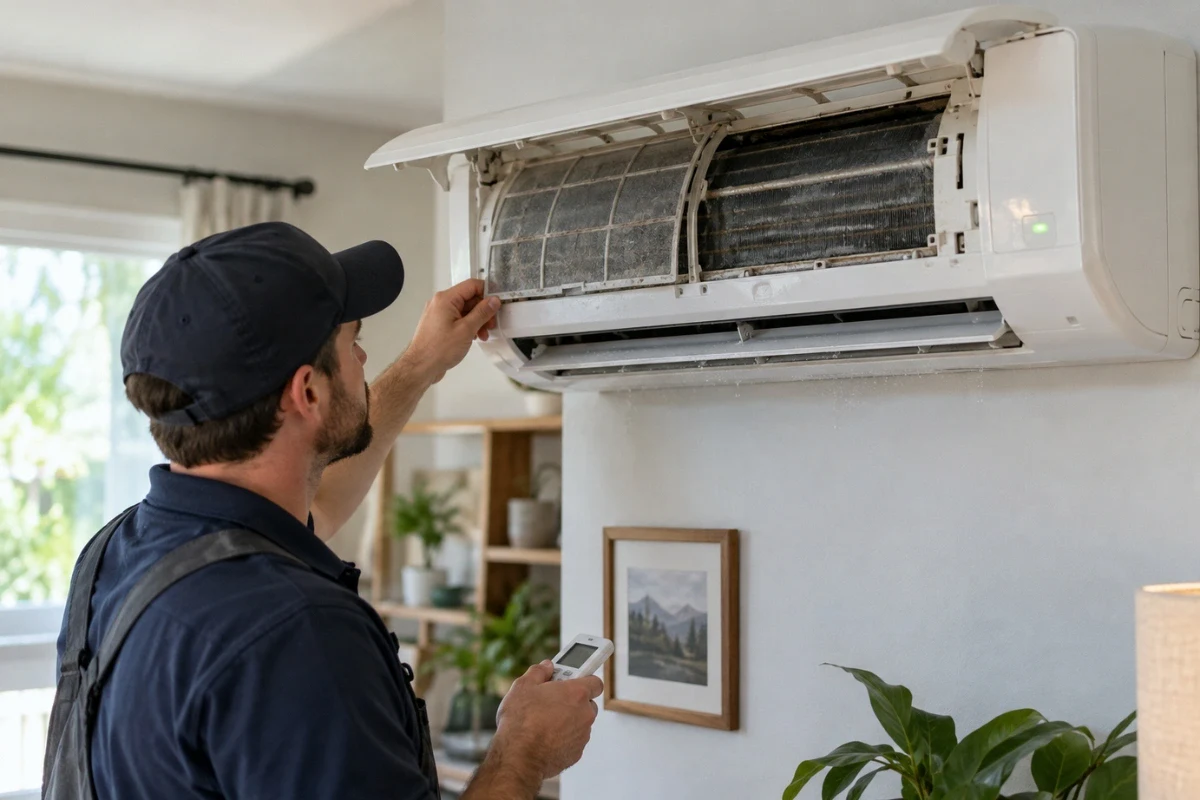
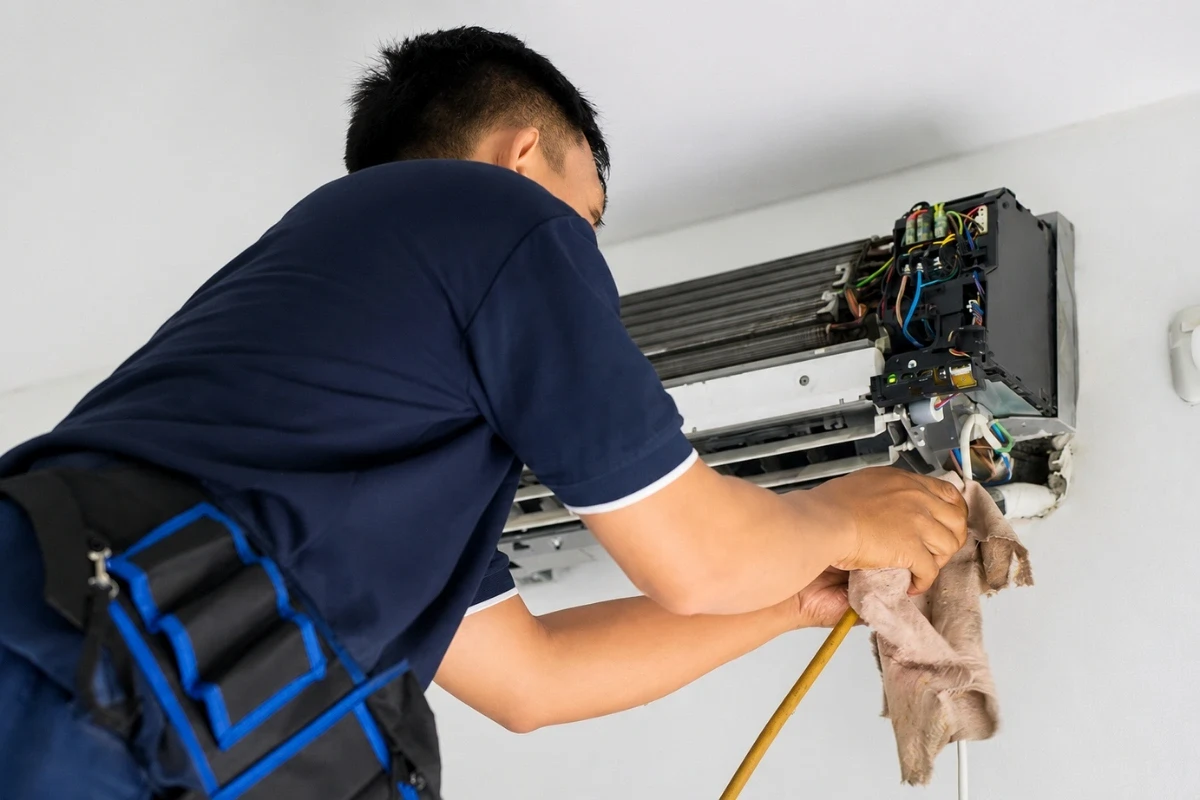
Schedule bi-annual professional maintenance. This service makes sure your system has the proper refrigerant charge and clean coils. This way, you can avoid big repair bills later.
2.2 The Ductwork Disaster: Preventing Conditioned Air Loss
Many homes have leaky air ducts. Your system can lose up to one-third of its conditioned air through these leaks. This is pure waste.
Ask a professional to check your ductwork and seal any leaks immediately. It should already be included in annual HVAC inspections. If not, get your ductwork checked and cleaned routinely.
2.3. High-Efficiency Systems: SEER2, Heat Pumps, and Mini-Splits
Different HVAC systems have different SEER2 ratings and life expectancies. If your unit has surpassed the typical HVAC lifespan in Durham, NC, replace it with a new one that has a high SEER2 rating. The average lifespan of heat pumps makes them a great choice in the North Carolina climate.
For additions or specific zones, consider Ductless Mini-Splits. They are the most efficient option because they have zero duct loss.
2.4. Don’t Miss Out on the Savings: Federal Tax Credits
You could qualify for a $2,000 Federal Tax Credit when you install a high-efficiency Heat Pump or other eligible systems. However, don’t just chase the efficiency numbers; get a proper Manual J sizing for a win in the future.

Tier 3 (Top of the Pyramid): Smart Controls and User Behavior
This final tier is about using technology and smart habits to save electricity.
3.1. The Smart Thermostat and the 78/68 Rule
Use a programmable or smart thermostat. Change your settings to:
- Summer: Set the thermostat to 78°F when you are home.
- Winter: Set the thermostat to 68°F when you are home.
Do not leave the AC running 24/7. Not only will your HVAC system last shorter than the average lifespan of the air conditioner, but it is also cheaper to let the temperature rise a few degrees when you are away. Use your smart thermostat to cool down your rooms before you return.
3.2. Leveraging Electricity Rates: Pre-Cooling Strategies
If your utility company uses Time-of-Use (TOU) electricity rates, you can save money. Pre-cool your house during off-peak hours (like overnight). Usually, the electricity is cheaper than in TOU rates. Then, let the temperature slowly rise during expensive peak hours.
If your electricity bills are still high despite prioritizing off-peak hours, it’s one of the clear HVAC upgrade warning signs. Getting an upgrade with a better SEER rating is often the best long-term solution in that case.
3.3. Ventilation and Fans: Reverse for Heat
Ceiling fans create a “wind-chill effect” in summer, making you feel cooler without lowering the thermostat.
In winter, reverse your ceiling fans (run them clockwise). It creates the opposite effect. The warm air (that is usually trapped near the ceiling) gets pushed down.
FAQs
Q: Is it really cheaper to turn the AC off when I’m gone?
A: Yes. Your AC uses the most energy when fighting a big temperature difference. It is more cost-effective to turn it up a few degrees when away and then cool it down closer to your return.
Q: Are mini-splits really better than central AC?
A: Mini-splits are better for sheer energy efficiency and specific room control. They have very high SEER ratings and no air loss. Central air is simpler if you need to condition the whole house evenly.
Q: How much will new windows really save me?
A: New, low-E windows help, but they are expensive. Start with air sealing and proper insulation first. You will get a much better return on investment (ROI) by sealing leaks before replacing windows.
The Definitive Next Step: Your Alternate Aire Home Energy Efficiency Plan
The best next step is not to guess what your house needs. It is time to get professional help.
Schedule an Energy Audit with a blower door test. This will create a customized plan for your house. If your system is old, start with a professional HVAC maintenance check.
Contact us today. We can help you create your Home Energy plan for maximum comfort and savings in Raleigh, Durham, and Chapel Hill.