Your HVAC system works quietly in the background. It cools your home in summer, heats it in winter, filters the air you breathe, and protects your family from invisible hazards. But the truth most homeowners don’t realize is this:
Your HVAC can only do all that properly if it’s inspected and tuned up every year.

This principle applies whether you run a single residential unit or a rooftop commercial system. Alternate Aire recommends an annual HVAC inspection not because it’s trendy, but because modern HVAC systems are complex, safety-sensitive, and expensive to repair or replace. A yearly inspection protects your wallet, your comfort, and most importantly, your family’s safety.
But before we get into what inspections include, we need to address the elephant in the room…
Addressing the Trust Crisis
Homeowners today are skeptical (and rightfully so). The HVAC industry has a reputation problem. You’ve seen the $49 tune-up specials plastered across billboards or blasted on radio ads, and you’ve wondered:
“How can anyone do a real inspection for that price?”
Short answer: They can’t.
The Problem with Discounted Tune-Ups ($49–$79 Specials)
The Loss Leader Reality
Companies advertise cheap tune-ups not to perform real maintenance, but to get into your home and find something to sell. These “loss leaders” are designed to uncover “urgent repairs” that may or may not be necessary.
A real inspection takes time, tools, knowledge, and labor. There’s no way to provide it for $49 without cutting corners.
Our Pricing Transparency
Alternate Aire doesn’t run loss-leader specials. We don’t rely on clever billboards, gimmicks, or fine print. Our customers come from:
- Local recommendations
- Word of mouth
- Long-term trust built through honest work
Our pricing reflects qualified labor, industry expertise, high-level diagnostics, and the time required to perform a real inspection.
Zero-Pressure Promise
Here’s our commitment:
- We diagnose and never upsell.
- If we find an issue, we show you evidence: photos, readings, or live measurements.
- We do not ask homeowners to “step outside” for pressure tactics (a common industry scare tactic).
- You’ll always get a transparent explanation in plain English.
It’s the only honest way to do business.
The Ultimate Argument: Safety, Savings, and Warranty Protection
Annual HVAC inspections are the most important step you can take after a correct installation. Here’s why.

Non-Negotiable Safety Protection
Your HVAC system manages combustion, electricity, high-pressure refrigerant, and airflow all at once. If anything goes wrong, the consequences can be dangerous and invisible.
Carbon Monoxide Hazards
A cracked heat exchanger can leak carbon monoxide (CO). It’s a colorless, odorless gas responsible for over 400 deaths annually in the U.S. An annual inspection includes mandatory CO testing to ensure there are no leaks.
Electrical Fire Risks
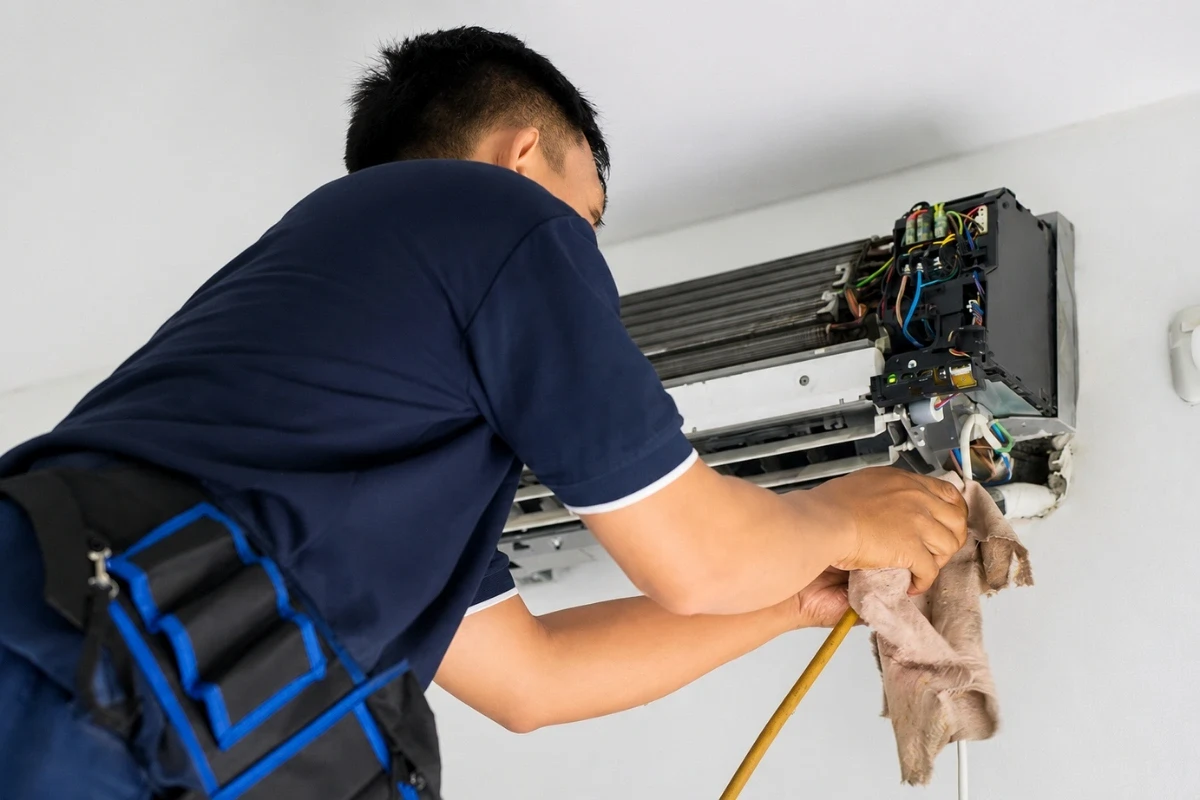
Loose wiring, failing capacitors, and overheating motors can cause electrical shorts or fires. A technician checks:
- Voltage
- Amperage
- Wiring integrity
- Relay and capacitor performance
Refrigerant Toxicity
Refrigerant leaks are unsafe:
- Refrigerant is toxic.
- It can contaminate indoor air.
- It damages the environment.
- It can freeze the evaporator coil and destroy the compressor.
A professional must locate and fix leaks immediately.
Quantifying the Financial Value
Whenever a unit breaks down, the first thought that comes to people’s minds is whether they need a new one. Sometimes, repairing is the budget-friendly solution. If you’re worried about repairing or upgrading your HVAC, here’s how to tell.
Let’s talk numbers, because inspections save serious money.
Energy Efficiency
The U.S. Department of Energy reports that heating and cooling account for nearly half of home energy use. A poorly maintained HVAC system can lose up to 25% efficiency in just a few years.
That means:
- Higher electric bills
- Longer run times
- More wear on motors and parts
A clean, tuned system simply costs less to run.
Preventing Emergency Repairs
Most catastrophic summer breakdowns start as small air conditioning issues earlier in the year:
- A weak capacitor in April becomes a dead AC in August.
- An over-amping blower motor causes a system shutdown during a heatwave.
- A dirty coil forces the compressor to work harder until it fails.
Emergency repair costs (and the discomfort of waiting 2–3 days for service) are entirely avoidable.
Warranty Documentation: The Unbuyable Benefit
Manufacturers require documented annual maintenance by a qualified technician to keep warranties valid. No inspection = no coverage.
This is the one benefit you cannot DIY or “catch up on later.” If something fails and you can’t prove maintenance, the manufacturer can legally deny coverage.
Extending System Lifespan
How long HVAC systems last in Durham depends hugely on the system type. However, well-maintained systems last 15–20 years. Neglected systems often fail at 10–12 years.
Maintenance also results in outlasting the average lifespan of your heat pump, too.
A yearly inspection literally adds years to your HVAC’s life.
The Comprehensive HVAC Inspection Checklist: 20 Points to Peak Performance
This is what a real HVAC inspection includes:

Central Safety and Health Checks
1. Heat Exchanger & Vent Pipe Examination
Technicians inspect for:
- Cracks
- Rust
- Blocked venting
- Improper combustion
This is essential for CO safety.
2. Gas Leak Detection
Testing gas valves and connections ensures no leaks are present.
3. Condensate Drain Line Maintenance
Clearing the drain line prevents:
- Water damage
- Overflow
- Mold growth
- Expensive remediation
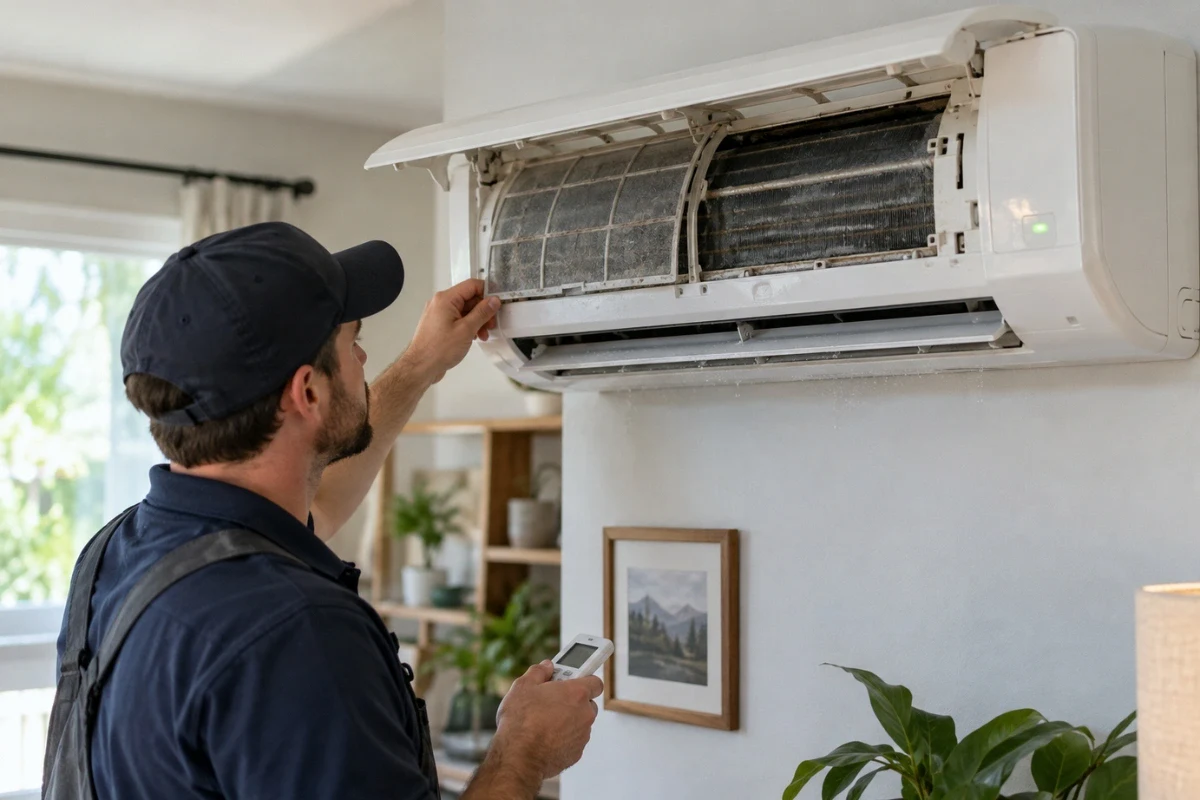
4. Air Filter Check
A dirty filter causes airflow loss and strain. It is the most common cause behind the common HVAC issues North Carolina homeowners face. We check, clean, or replace as needed.
Mechanical and Electrical System Diagnostics
5. Component Lubrication
Lubricating:
- Motors
- Bearings
- Belts
Reduces friction and prevents premature failure.
6. Electrical Component Testing
We check:
- Voltage
- Amperage
- Capacitors
- Relays
- Wiring connections
For zoned systems, we also check the zone control panel and damper motors, which are critical for even cooling and heating throughout the home.
These are the #1 cause of sudden failures.
7. Thermostat Calibration
Ensures accurate temperature readings and consistent comfort.
Cooling (AC) and Heating (Furnace) Performance Optimization
8. Refrigerant Level & Leak Testing
We use professional gauges (not DIY kits) to measure pressure and verify proper charge.
Improper DIY refill attempts can:
- Introduce air into the system
- Cause compressor damage
- Void your warranty
9. Coil Cleaning
Dirty coils can cause a 20–30% efficiency loss.
We deep-clean:
- Evaporator coils
- Condenser coils
10. Blower and Fan Evaluation
We inspect and adjust:
- Blower wheels
- Fan blades
- Motor rotation
- Balancing
This protects airflow and heating system longevity.
The full inspection includes 20+ checks, but these are the core items that protect safety, performance, and efficiency.
Differentiating Maintenance Needs: DIY vs. Pro
Most homeowners can (and should) do basic maintenance. But that doesn’t replace professional service.

What Homeowners Can Safely DIY
You should:
- Change air filters every 30–90 days
- Rinse the outdoor condenser with a garden hose
- Keep debris away from the condenser
These simple tips improve your HVAC efficiency at home in the long run, and help with airflow and reduce strain.
Warning Signs You’re Overdue for Professional Service
If you notice:
- Rising energy bills
- Short cycling
- Uneven temperatures
- Strange noises (grinding, rattling, whistling)
- Musty or burning smells
…you likely already have a developing issue.
Why High-Efficiency Units Need Expert Care
Older, low-SEER units often tolerated neglect and kept running. Modern systems have:
- ECM motors
- Variable-speed blowers
- Smart thermostats
- Higher SEER levels
They are more sensitive and require precise calibration.
DIY mistakes can cause costly damage, such as:
- Shocking yourself on a capacitor
- Leaving a diagnostic jumper on
- Overcharging refrigerant
- Damaging control boards
Professional service prevents dangerous and expensive errors.
Timing Is Everything: Scheduling for Maximum Comfort
You need professional HVAC inspection services in Durham and other cities in North Carolina twice a year for optimal performance and safety.
The Ideal Biannual Schedule
Cooling Checkup (Spring)
Schedule in March or April before the summer heat hits. This prevents:
- Peak-season breakdowns
- Long wait times
- Compressor overwork
Heating Checkup (Fall)
Schedule in September or October to ensure safe heating and reliable winter performance.
Partner with Alternate Aire for Peace of Mind
Your HVAC system is one of your home’s largest investments, and the one responsible for your safety and comfort year-round. You deserve a company that values transparency, honesty, and professionalism.
Alternate Aire is a local, family-owned, word-of-mouth-driven HVAC partner you can trust.
We offer:
- Transparent pricing
- Zero-pressure service
- Photo and diagnostic evidence
- Highly trained technicians
- Maintenance plans tailored for busy homeowners
Ready for total peace of mind?
Schedule your annual HVAC inspection with Alternate Aire today and keep your system safe, efficient, and warranty-protected.