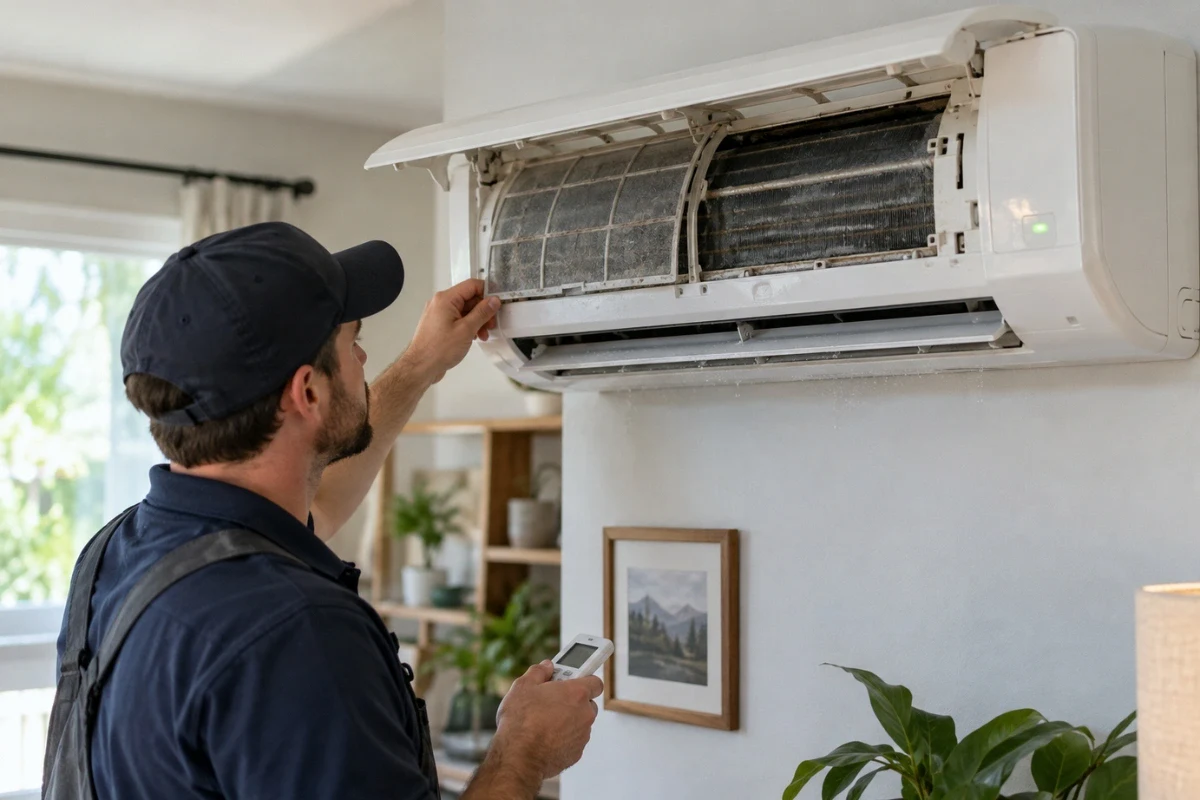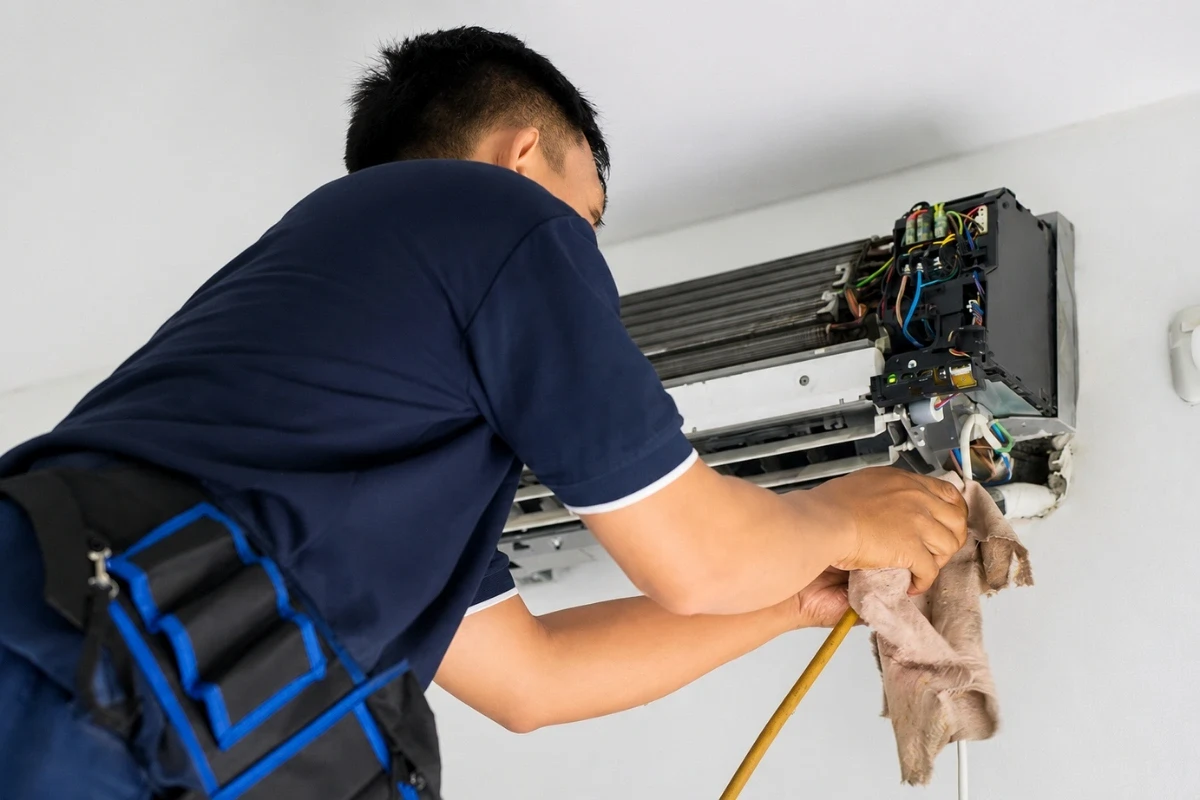
While your HVAC system is great at cooling, a dedicated dehumidifier is what truly controls your home’s feel. Setting it correctly is the key to ending that sticky indoor sensation.
I often see Durham homes with a new HVAC system that cools properly, yet the indoor air still feels sticky because the dehumidification settings weren’t configured correctly. Summer comfort depends on moisture control as much as temperature.
In this guide, I’ll show you the ideal indoor humidity level, how to adjust your thermostat, and fine-tune your HVAC system so your home stays cool, dry, and comfortable all summer.
|
TL;DR Most homes should maintain an indoor humidity between 45% and 50% relative humidity during summer because this range keeps the air comfortable, prevents sticky rooms, and allows your dedicated dehumidifier to maintain a cool environment without forcing your AC to overwork. |
Setting the Right Indoor Humidity After HVAC Installation
After HVAC installation, most homes should keep indoor humidity between 45% and 50% relative humidity during summer.
This range creates balanced comfort. The air feels lighter. Rooms feel cooler without lowering the thermostat too much. It also helps prevent moisture problems inside the home.
At Alternative Aire, we often tell Durham homeowners: don’t start by lowering the thermostat; check your humidity first. When indoor moisture is balanced, your home feels cooler even at the same temperature. That’s why we always follow a proper HVAC startup checklist to ensure every system is set up for optimal comfort from day one.

Why 45–50% Humidity Works Best
When indoor humidity rises above 55%, you’ll start to notice several problems in your home:
- The air feels heavy and sticky
- Rooms may feel warmer than what your thermostat shows
- Mold and mildew can start to grow in damp areas
- You may notice musty or damp odors in certain rooms
When indoor humidity falls below 40%, the air can start to feel too dry in your home. You may notice:
- Dry skin and chapped lips
- More static shocks when touching objects
- Wood floors or furniture developing small gaps or cracks
- Dry or irritated sinuses
The 45%–50% range sits in the comfort zone. Research from ASHRAE Standard 55 supports this range for most homes. It balances moisture without making the air feel damp or overly dry.
In Durham, summer humidity often stays high for long periods. Outdoor moisture enters every time doors open or warm air leaks inside. Your HVAC system must remove that moisture steadily. Setting the right humidity target gives your system a clear comfort goal.
Why Humidity Matters More Than Temperature
You often feel humidity before you notice the temperature.
Your body cools itself through evaporation. Sweat must evaporate from your skin to remove heat. When indoor air is too humid, sweat cannot evaporate properly. You feel hotter, even when the thermostat shows 72°F.
That is why one room can feel comfortable while another feels sticky at the same temperature. The difference is the moisture in the air, not the heat.
Many homeowners lower the thermostat again and again. Energy use increases, but comfort does not improve. When humidity is corrected first, the same temperature suddenly feels cooler.
How to Know Your Current Humidity Level
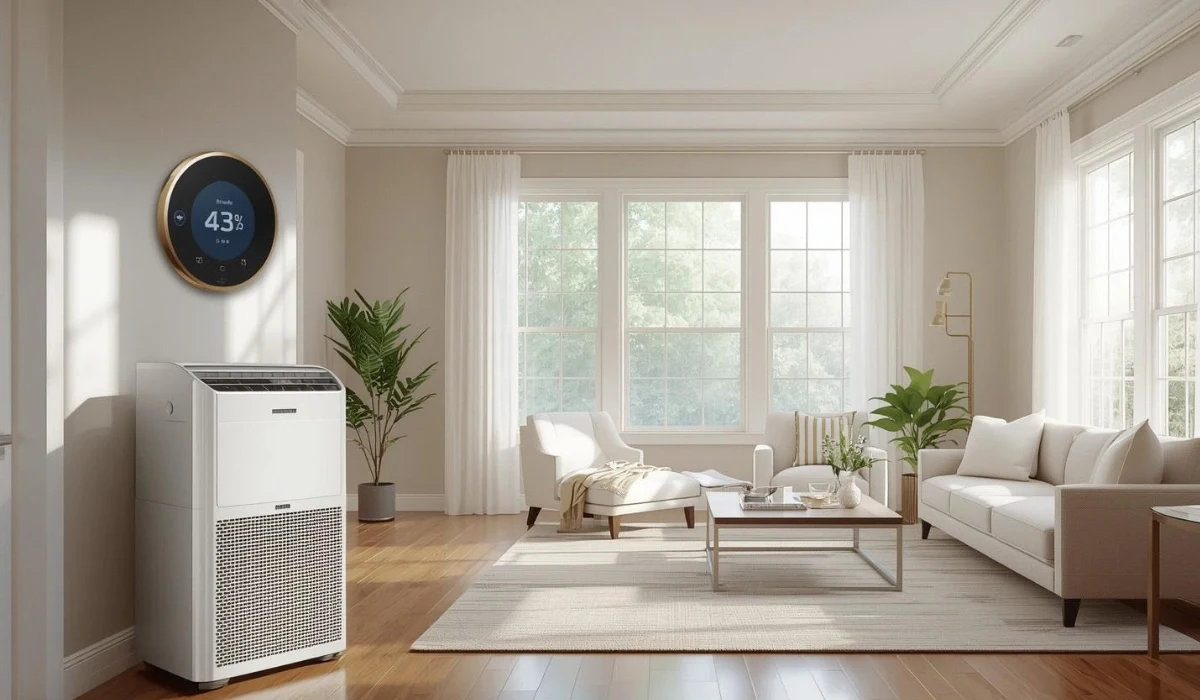
Before adjusting your thermostat or system settings, check your current indoor humidity. Most modern thermostats display relative humidity (RH). If your thermostat does not show it, you can use a simple digital hygrometer.
Place the device in a central living area. Keep it away from supply vents, windows, and exterior doors. Check the humidity once in the afternoon and again at night. In many homes, indoor humidity rises after sunset during summer. If the reading stays above 50%, your system may need adjustment to remove more moisture.
How a Dedicated Dehumidifier Outperforms Standard AC
A standard air conditioner removes some moisture during cooling, but it is not designed to control humidity independently. Dehumidification only happens when the cooling cycle runs long enough.
During mild summer days or short cooling cycles, your HVAC system may cool the house quickly but remove very little moisture. As a result, rooms may feel cool but still sticky.
A dedicated whole-home dehumidifier focuses only on removing excess moisture. It can maintain stable humidity levels even when the AC is not actively cooling.
Compared with standard AC dehumidification, a dedicated system offers several advantages:
- Consistent humidity control even during short cooling cycles
- Independent moisture removal without lowering the thermostat
- Better performance during long humid periods
- More balanced comfort throughout the home
In humid climates like Durham, combining a properly configured HVAC system with a whole-home dehumidifier can help maintain stable indoor comfort throughout the summer.
How to Configure Your Dehumidifier & Thermostat
Follow these steps after HVAC installation:
- Check if your thermostat displays indoor humidity.
- Set the humidity target to 45–50% RH.
- Switch the fan to AUTO mode so condensation can drain properly.
- Enable dehumidify mode if your thermostat includes it.
- Allow several cooling cycles for humidity levels to stabilize.
For a dedicated dehumidifier, follow these steps:
- Locate your dedicated humidistat or integrated smart controller.
- Set your dehumidifier “cut-in” at 50% and “cut-out” at 45%.
- Set your dehumidifier to “Independent” or “Bypass” mode.
The last step makes sure your dehumidifier runs regardless of the AC’s cooling call.
Humidity adjustments happen gradually. In most homes, the air will start feeling lighter and more comfortable within about 24 hours.
Why Your New HVAC System May Still Leave Your Home Humid
Even after setting the correct humidity target, some homes still feel damp during summer.
I see this in many Durham homes after HVAC installation. The system runs. The thermostat is set correctly. But the indoor air still feels heavy.
In most cases, the issue is not the equipment itself. It usually comes from system sizing, airflow balance, or indoor moisture sources.
When one of these factors is off, the HVAC system cools the air but struggles to remove enough moisture.
Oversized HVAC Systems
When an HVAC system is too large for your home, it cools the air quickly, causing your thermostat to short-cycle. Because the system shuts off before completing a full cooling cycle, it doesn’t remove enough humidity.
Proper moisture removal happens during longer cycles, so when your system runs short cycles, rooms may feel cool but still sticky, leaving parts of your home uncomfortable.
Poor Airflow Inside the Home
Airflow also affects how well your system removes humidity.
Blocked vents, dirty air filters, or poorly balanced ductwork reduce airflow across the evaporator coil. When airflow drops, the system cannot remove moisture efficiently.
Some rooms may feel comfortable, while others stay damp. This is one of the reasons upstairs rooms often feel hotter than downstairs.
Fan Settings That Reintroduce Moisture
Thermostat fan settings can also impact humidity.
When the fan is set to ON, it continues circulating air after the cooling cycle ends. This airflow can re-evaporate moisture from the coil and send it back into the house.
Setting the fan to AUTO allows moisture to drain properly after each cooling cycle.
Outdoor Humidity Entering the Home
Durham summers often bring long periods of high humidity.
Each time the doors open, warm, humid air enters the house. Small air leaks around windows, attic spaces, and crawl spaces can also allow moisture inside.
Your HVAC system must constantly remove that incoming moisture to maintain comfort.
Simple Ways to Improve Humidity Control After HVAC Installation
Even with a correctly sized and installed HVAC system, small adjustments can make a big difference in summer comfort. Here’s what I recommend:
1. Optimize Airflow Throughout Your Home
Balanced airflow ensures every room dries evenly.
- Keep vents open and free of obstructions.
- Adjust dampers if your system has them.
- Consider professional airflow balancing, especially if upstairs rooms feel warmer or stickier than downstairs.
2. Seal Air Leaks That Bring Humid Air Inside
Every door, window, or small crack allows outdoor humidity in.
- Check weatherstripping around doors and windows.
- Seal gaps near attic spaces, crawl spaces, or ductwork.
Even small improvements reduce the moisture your HVAC system has to remove.
3. Use Your Thermostat Correctly
Proper thermostat use improves dehumidification performance.
- Keep the fan on AUTO, not ON.
- Use dehumidify mode if available.
- Avoid large temperature swings that shorten cooling cycles.
4. Schedule Regular HVAC Maintenance
Dirty coils, clogged filters, or blocked condensate lines reduce your system’s ability to dehumidify the air.
- Replace filters regularly.
- Clean evaporator coils.
- Check condensate lines for proper drainage.
- Schedule professional inspections when needed.
5. Consider a Whole-Home Dehumidifier
Even a well-tuned system may struggle during long humid periods.
- A whole-home dehumidifier works with your HVAC system to remove excess moisture efficiently.
- ENERGY STAR® certified models save energy while keeping humidity in the ideal 45–50% range.
Common Mistakes That Affect Summer Humidity
HVAC issues aren’t the only cause of indoor discomfort. Homeowner habits can also contribute to the problem.

- Lowering Temperature Instead of Adjusting Humidity: Turning the thermostat down does not remove moisture. Energy use increases, but the air can still feel heavy. Always set your humidity target first, and consider following proper startup testing and balancing procedures after installation to ensure your system removes moisture efficiently.
- Running the Fan Continuously: Fan ON mode re-circulates moisture from the coil back into your home. Keep the fan on AUTO for proper drainage.
- Skipping Maintenance: Dirty coils, clogged filters, or blocked condensate lines reduce dehumidification. Regular maintenance ensures your system works efficiently.
- Ignoring Airflow Imbalances: Blocked vents or poorly designed ductwork cause uneven cooling and humidity. Rooms may feel sticky while others feel fine. Post-installation airflow balancing and comfort dial-in can help solve this.
- Not Using Dehumidify Mode: Many modern thermostats include a dehumidify mode. Skipping it reduces the system’s efficiency in removing moisture.
Conclusion
Balanced indoor humidity is essential for true summer comfort. Keeping humidity between 45% and 50%, using your thermostat correctly, maintaining proper airflow, and performing routine HVAC maintenance help your home feel cooler and more comfortable—even during Durham’s humid summers.
Simple steps like activating dehumidify mode, sealing air leaks, and monitoring humidity levels help your system remove moisture more efficiently. When dehumidification works properly, the air feels lighter, and the sticky feeling disappears.
For homeowners who want reliable comfort without constant adjustments, Alternative Aire can ensure your HVAC system is tuned to maintain the right balance of cooling and moisture control all summer.
FAQs
Will a new HVAC system automatically control humidity?
Not always. Proper sizing, installation, and airflow adjustments are required for consistent control.
How can I check if my humidity level is correct?
Use a hygrometer or a thermostat that displays relative humidity. Your goal is the comfort range of 45–50%.
What humidity level helps prevent mold?
Keeping indoor humidity in the mid-40s to 50% range greatly reduces the risk of mold growth, particularly in basements, bathrooms, and closets.
Why is my upstairs more humid than downstairs?
Inconsistent airflow, warm air rising, and duct leaks can make upper floors more humid. Balancing airflow improves comfort.
Does running a ceiling fan reduce humidity?
No. Ceiling fans move air to create a cooling effect, but don’t remove moisture. Your AC or dehumidifier does the work.
What is the best thermostat setting for summer comfort?
Most homes feel comfortable between 72–75°F when humidity stays near 45–50%. Controlling moisture often reduces the need for lower temperatures.
Can outdoor air increase indoor humidity?
Yes. Open windows, air leaks in ducts, doors, or windows can let humid outdoor air in.
How long does it take to lower indoor humidity?
Humidity changes slowly, often requiring several hours or multiple cooling cycles. Steady system operation is key.