When you have a proper HVAC startup checklist, you set your new system up for peak efficiency and long-term reliability. In Durham, NC, this process includes Manual J load verification, refrigerant charge testing, and airflow balancing to handle our heavy humidity. A professional commissioning report also records static pressure, Delta T readings, and float switch operation.

I remember a hot Durham July where a new AC of one of our clients failed to cool. The installer skipped the HVAC startup checklist. Our commissioning fixed a hidden blockage, restoring comfort and saving the motor. We believe every Durham homeowner deserves that level of care from the very first startup.
TL;DR
|
Why a Proper HVAC Startup Checklist Matters After Installation
A checklist serves as the bridge between a simple mechanical install and a high-performing climate system. It confirms that every component works exactly as the manufacturer intended.
Startup vs. Professional Commissioning Checklist
Commissioning is a deep-dive verification that goes far beyond just turning the power on. While a basic startup check only ensures the unit runs, a professional checklist measures performance against specific engineering standards.
We find that systems following ACCA Standard 5 commissioning protocols experience significantly fewer breakdowns. At Alternative Aire, we treat this step as the final exam for your new system to ensure it passes with flying colors.
Manufacturer Requirements (Trane, Carrier, Rheem, Lennox)
Major brands like Trane and Carrier require specific startup data to keep your manufacturer warranty valid. If a component fails later, the manufacturer often asks for the original startup readings to prove the installation was correct.
Always keep a copy of these records. Our team at Alternative Aire maintains digital logs of every manufacturer’s requirements to keep your coverage safe.
Protecting Your System Longevity and SEER2 Rating
Your SEER2 rating is only achievable if the system is tuned perfectly. A system that lacks proper calibration works harder, which shortens its lifespan and increases your monthly power bills.
Data shows that a properly commissioned system can save up to 30% on annual energy costs compared to a poorly tuned one. We focus on these fine details to maximize your long-term savings.
Day 1: The Homeowner’s HVAC Startup Checklist
Homeowners play a vital role in the first 24 hours of a new installation. Your observations help catch minor adjustments before they become major issues.
Thermostat Setup and Calibration (Honeywell, ecobee, Nest)

Your thermostat calibration ensures the temperature you see matches the actual air temperature in the room. Whether you use Nest, ecobee, or Honeywell, verify that the settings align with your schedule.
Properly setting dehumidification targets for summer comfort keeps your home dry and prevents the unit from overworking. Our technicians walk you through every screen on your new device before we leave.
Verifying Cooling, Heating, and Fan-Only Modes
Always test every mode, even if the current weather is mild. Switch from cooling to heating to ensure the reversing valve or burners engage correctly. Test the fan-only mode to check for consistent air movement.
Correctly reading your new thermostat and avoiding short cycling ensures your system runs long enough to pull out moisture during the humid months.
Filter Orientation and Airflow Setup
The air filter must face the correct direction to allow for proper suction. Look for the arrow on the filter frame and ensure it points toward the unit. We always double-check the filter size during our walkthrough to ensure you have the right replacements on hand.
Checking for Short Cycling and Blower Noise
Listen for any unusual rattling or a system that turns on and off every few minutes. Short cycling is often a sign of an airflow restriction or an oversized unit. If you hear excessive noise, we can adjust the blower speed to find the perfect balance between power and quiet.
Post-Install Technical Testing (The Installer’s Checklist)
The technical portion of the checklist requires specialized tools to measure the internal health of the machine.
AHRI Matched System Verification and Nameplate Ratings
Your installer must verify that the indoor coil and outdoor condenser match according to the AHRI certificate. Mismatched parts lead to efficiency loss and early failure. We ensure your equipment matches the nameplate ratings for a perfect mechanical pairing.
Refrigerant Charge: Subcooling and Superheat Readings
Checking the refrigerant charge involves measuring subcooling and superheat to ensure the levels are exact. Even a small error in the charge can reduce efficiency by 5% to 10%. At Alternative Aire, we use digital manifolds for precision accuracy.
Electrical Startup: Voltage, Amperage, and NEC Compliance
Measuring the amp draw of the compressor and blower motor ensures they stay within safe limits. This step confirms the system meets the North Carolina State Electrical Code (NCSEC) and your local Durham safety standards. Our technicians prioritize your safety by verifying every electrical connection is tight and secure.
Check the Filter Drier
Always verify that your installer replaced the liquid line filter drierduring the startup. This small, canister-like component captures tiny bits of debris and moisture. Reusing an old drier on a new system is a leading cause of “mystery” compressor failures three to five years down the road.
Airflow Verification and Static Pressure Testing
Airflow is the lifeblood of your HVAC system. Without the right pressure, the most expensive unit in the world will fail to cool your home.
Measuring Total External Static Pressure (TESP)
Static pressure measures the resistance the blower motor faces when pushing air through the ductwork. High pressure is like trying to breathe through a straw; it wears the system down quickly. We aim for a balanced pressure that allows the unit to “breathe” easily.
Airflow Targets: Achieving 350 to 450 CFM per ton
A standard system needs roughly 400 CFM (Cubic Feet per Minute) per ton of cooling. If the CFM is too low, the coils can freeze. If it is too high, the air moves too fast to remove humidity. We fine-tuned your blower settings to hit these exact targets.
Room-by-Room Airflow Balancing and Dampers
Every room in your Durham, NC home should feel consistent. You can improve airflow by balancing bedrooms and fixing upstairs being hotter than downstairs with damper adjustments in the ductwork. We take the time to ensure every corner of your home stays comfortable.
Duct Leakage Verification and Sealing Confirmation
Leaky ducts waste money by cooling your attic instead of your living room. We verify that all joints are sealed with mastic or high-quality foil tape. This step is a core part of our commitment to your home’s energy efficiency.
The Durham Humidity Protocol: Delta T and Latent Load Check
Durham, NC summers are notoriously sticky. A proper startup must focus on moisture removal as much as temperature.
Temperature Split and Delta T Testing (16°F to 22°F)
The Delta T is the difference between the air entering the system and the air leaving the vents. A healthy split stays between 16°F and 22°F. If the split is too low, the system is failing to cool effectively. We monitor this split for at least 15 minutes to ensure stability.
The 15-Minute Rule
Before taking any Delta T or refrigerant charge readings, ensure the system has been running continuously for at least 15 minutes. This allows the pressures and temperatures to “steady-state,” giving you an accurate look at real-world performance rather than just a startup spike.
Dehumidification Performance and Latent Heat Removal
The latent load refers to the energy used to remove moisture from the air. In the Durham summer, your AC acts as a giant dehumidifier. We calibrate the system to ensure the evaporator coil stays cold enough to pull gallons of water out of your indoor air every day.
Managing Humidity Performance in Durham Summers
Maintaining indoor humidity below 50% prevents mold growth and keeps you feeling cooler at higher temperatures. We set up your system to prioritize long, steady cycles that maximize moisture removal. Feel the difference a properly tuned system makes during a humid July day.
Condensate Drainage and Moisture Risk Management Inspection
Water is the primary enemy of your home’s structure. A startup checklist must ensure every drop of condensation goes exactly where it belongs.

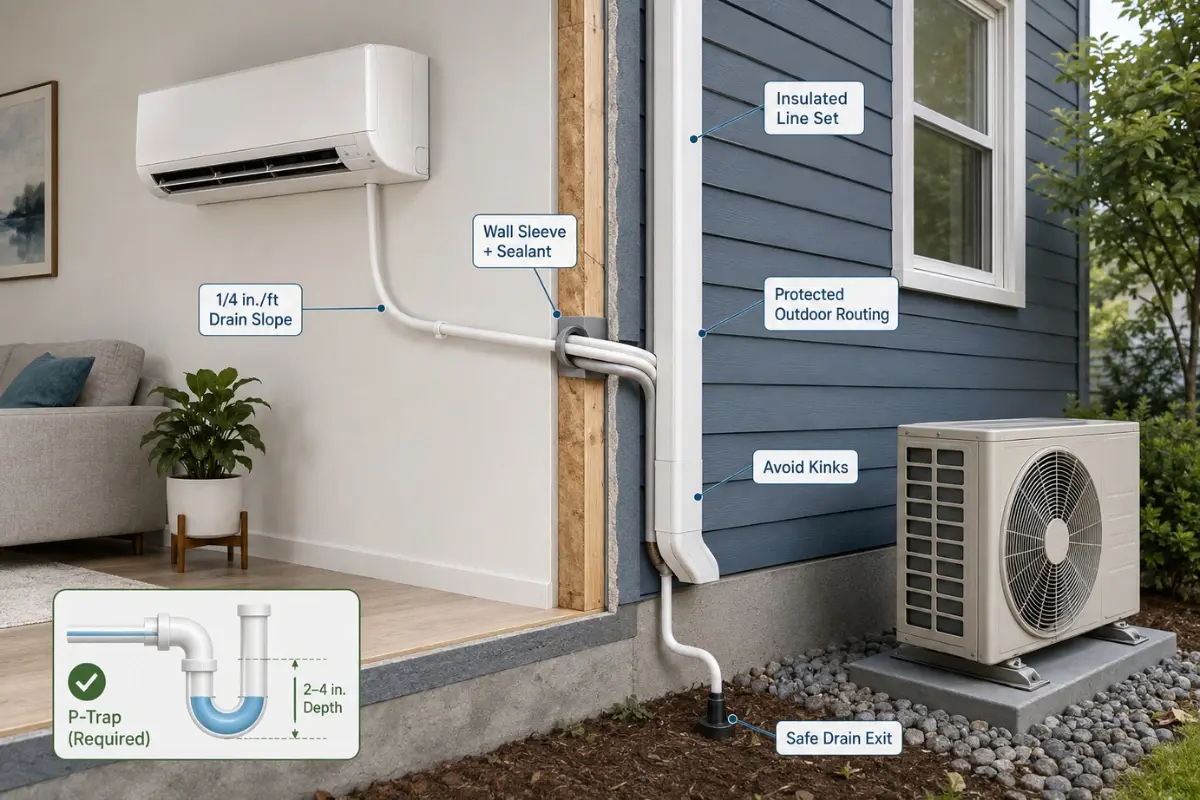
Drain Trap, Slope, and Flow Testing
The condensate drain line requires a specific slope to allow gravity to carry water away. We test the trap by pouring water into the drain to confirm it flows freely. We install clear traps so you can easily see if a clog begins to form.
Local Warning
In Durham, NC, our high humidity means condensate drain lines work overtime. Even with a new install, ensure your technician adds a biological drain strip or tablet to the secondary drain pan. This prevents the thick “algae slime” common in the Triangle region from clogging your safety switch in the very first season.
Float Switch and Secondary Pan Safety Verification
A float switch is a safety device that shuts the system down if the drain clogs. We manually trigger this switch during every startup to ensure it works. This simple test prevents thousands of dollars in potential ceiling damage.
Crawl Space and Attic Moisture Inspection
We always inspect the area around the unit for any signs of sweating or leaks. Keeping your crawl space or attic dry is essential for the health of your home. Alternative Aire provides a thorough visual inspection of these hidden areas before we finish the job.
Check Durham Compliance, Permits, and Duke Energy Rebates
Following local rules ensures your installation is legal and your wallet stays full with available incentives.
Durham City-County Inspections (LDO Portal) and Permit Closeout
Every major HVAC project in Durham requires a permit and a final inspection. We handle the permit closeout through the Durham LDO portal to ensure the city signs off on the safety of your install. This step is vital for the future resale of your home.
NC State Building Code and National Electrical Code (NEC)
Adhering to the North Carolina State Building Code ensures your system is safe and efficient. We stay updated on every change in the code to provide the highest level of service. You can rest easy knowing your system meets every local legal requirement.
Maximizing Duke Energy Smart Saver® Rebates
Using high-efficiency equipment often makes you eligible for Duke Energy rebates. We provide all the necessary paperwork and AHRI data to help you claim these savings. Our experts help you turn a smart home investment into an even better deal.
Startup Documentation and Warranty Activation for Checklist
The final step of a checklist is creating a paper trail for the life of your system.
Recording Baseline Readings
We record baseline readings of your system’s pressures, temperatures, and electrical draws. These readings help us identify changes during future maintenance visits. Having this data allows for faster and more accurate repairs if issues arise years later.
Model/Serial Number Verification and As-Built Photos
We document every model and serial number and take as-built photos of the installation. This provides a clear record of the work performed and the exact equipment in your home. It also makes ordering the correct parts in the future a breeze.
Registration for 10-Year Parts Warranties
Most manufacturers require warranty activation within 60 or 90 days of installation. If you miss this window, your 10-year warranty could drop to only 5 years. We assist you with the equipment registration process to ensure you get the full protection you paid for.
The First 30 Days: What Homeowners Should Check
The first month is a “break-in” period where you become familiar with how your new system breathes.

Owner Training: Filter Changes and Staging Awareness
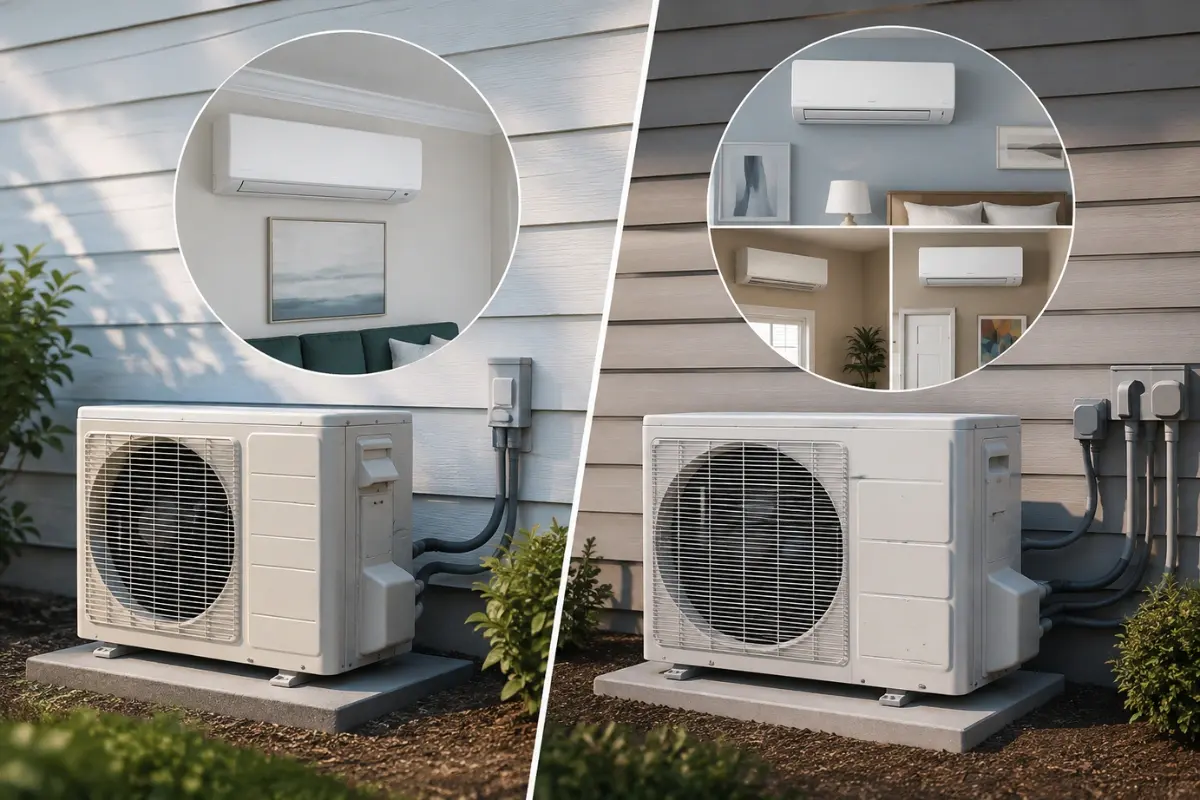
We provide a full owner walkthrough to show you how to change filters and explain the sounds of your new system. If you have inverter technology or a variable-speed blower, the system will run at different levels.
During the first 30 days after installation, keep a simple log of how the system runs. Note temperature consistency, humidity levels, and any unusual sounds. This early tracking confirms the system is settling in correctly.
Also gives your contractor clear information if adjustments are needed. Preventing small setup issues from turning into comfort or efficiency problems later.
Monitoring Drainage During the Humid Season
Watch the exit point of your condensate drain line to ensure water is flowing out when the AC is running. This is especially important during our humid Durham summers. If you see water in your secondary pan, call us immediately.
Thermostat Staging Adjustments for Two-Stage Systems
If your home feels slightly uneven, we can adjust the staging on your thermostat. Two-stage systems are designed to run on a lower, more efficient level most of the time. We ensure your settings match your personal comfort preferences.
Conclusion
A professional HVAC startup checklist is the only way to ensure your new system handles the Durham NC climate effectively. By covering everything from static pressure and refrigerant charge to Durham LDO permit compliance and Duke Energy rebates, you protect both your home comfort and your budget.
This process confirms that your commissioning is complete, your warranty protection is active, and your energy efficiency is maximized. At Alternative Aire, we believe the job is only finished when every box on that checklist is checked, and you are perfectly cool.
FAQs
How does high humidity in Durham affect the startup checklist?
High humidity increases the latent load, meaning the technician must prioritize condensate drainage flow and evaporator coil moisture removal over simple temperature drops.
What is the “Micron” level required during the vacuum stage?
For a proper startup, the system must hold a vacuum below 500 microns to ensure the refrigerant lines are free of non-condensable air and moisture.
Can a mismatched indoor coil fail a Durham inspection?
Yes, if the indoor and outdoor units do not form an AHRI matched combination, it can lead to code failure and the denial of Duke Energy rebates.
Why does the tech measure the “Amp Draw” of the blower motor?
Measuring the amp draw ensures the motor is operating within its Full Load Amps (FLA), preventing premature motor burnout caused by restrictive ductwork.
Is a “Duct Leakage Report” mandatory in Durham?
Per the North Carolina Energy Code, a duct leakage test is required for all new system installs where any part of the duct system is located in unconditioned space.