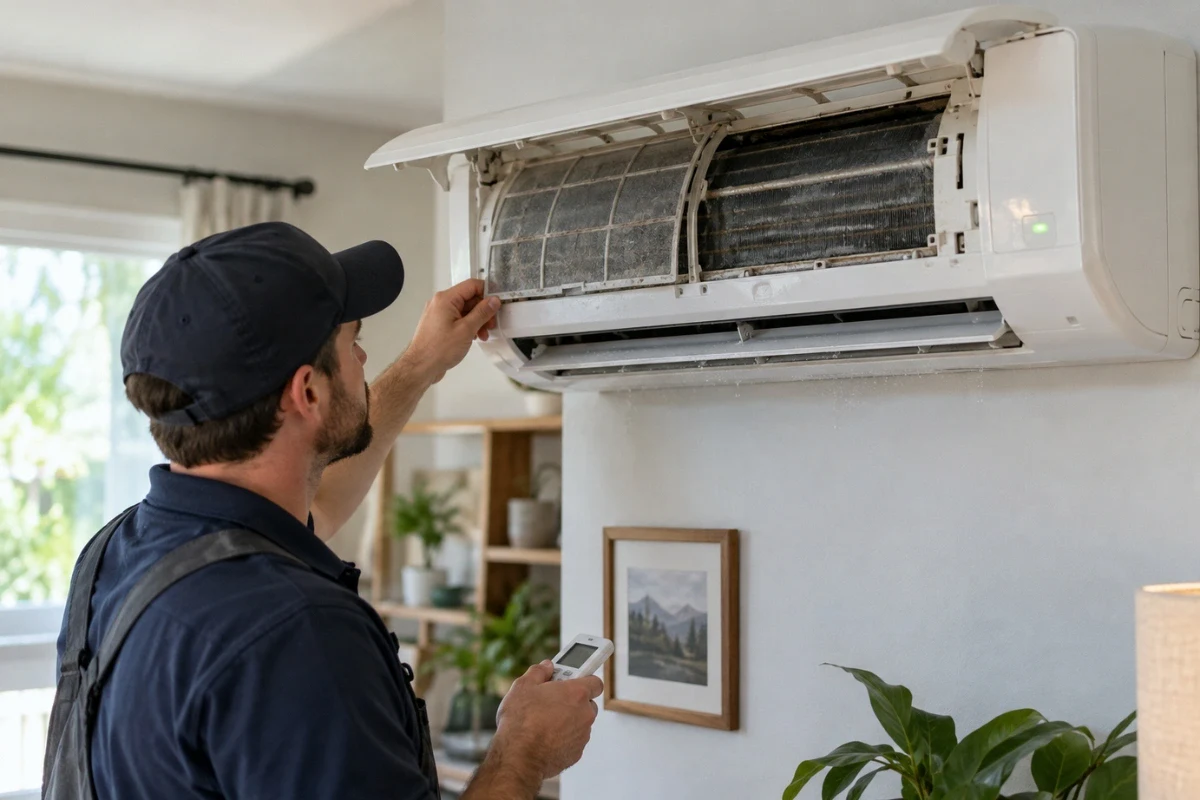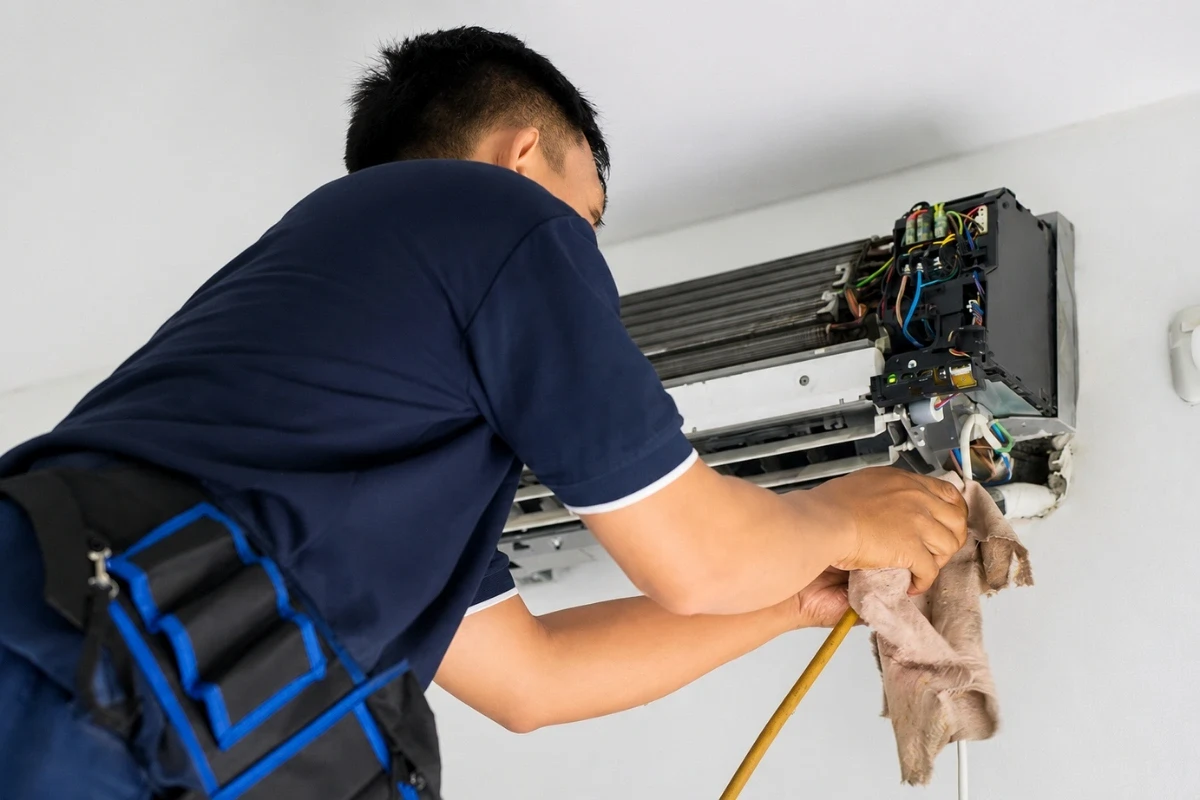
Deciding between a ceiling cassette and a wall-mount unit depends on your budget and home design. A wall unit saves money and lets you enjoy the quietest sleep. A ceiling unit comes with a hidden design that enhances your room’s beauty.
At Alternative Aire, we help families make this decision every single day. Finding the sweet spot between your budget and your home style is a big step. In this guide, we will help you find the perfect cooling and heating system. You will get to know exactly what works best for your daily comfort.
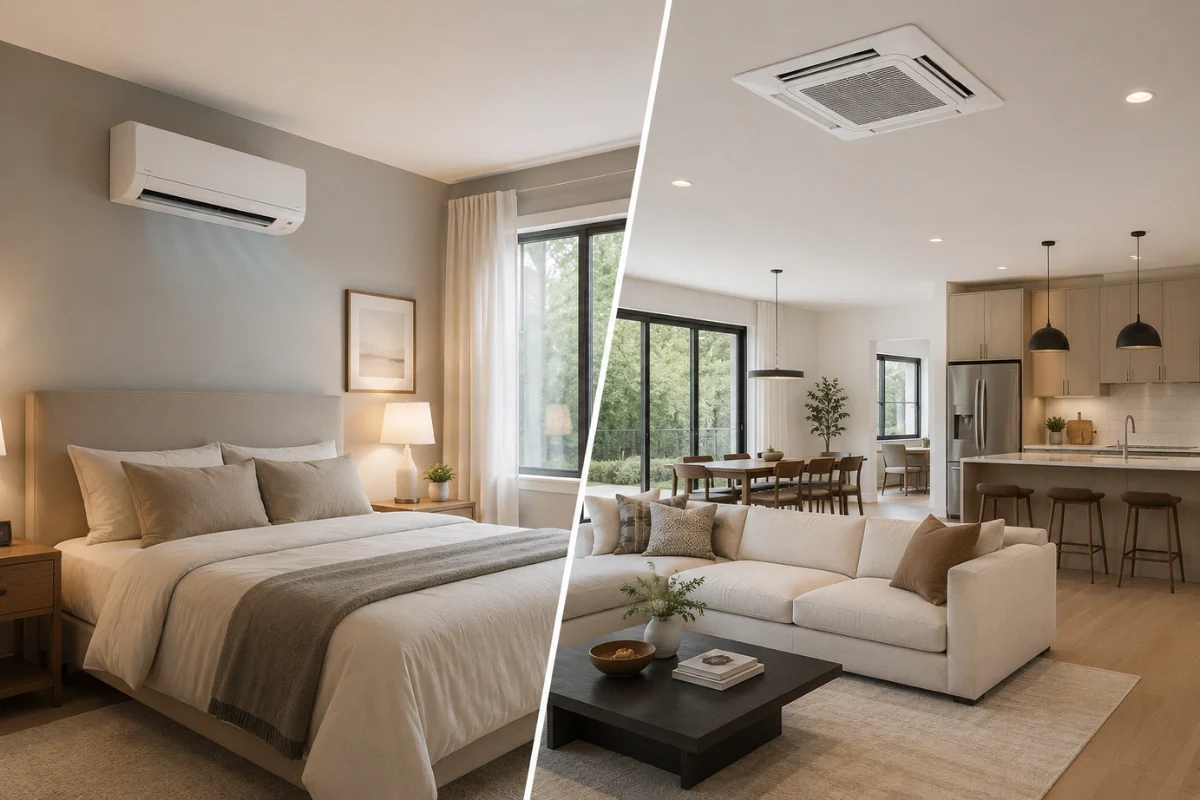
| TL, DR We recommend choosing a wall-mounted unit to save money and enjoy quiet sleep, or investing in a ceiling cassette for a beautifully hidden, modern look in your large open rooms. |
Understanding the Placement of Your System
Placement and zoning options are among the first considerations of a mini-split. A wall unit stays high up on an exterior wall. A ceiling unit stays hidden inside your roof structure. Both have different hardware for this placement.
Wall-Mounted System
A wall unit is a standard indoor air handler. It hangs right on your wall and connects to the outside using a refrigerant line set and a condensate drain. Homeowners sometimes ask if they can get a system that only cools without heating. You absolutely can find cooling-only versions, though most families choose heat pumps for year-round comfort.
Ceiling Cassette System
A cassette unit sits flat against your ceiling. To fit one, you must have enough empty ceiling plenum space. You also need proper ceiling joist clearance so that the machine fits safely between the wooden beams inside your roof.
Head-to-Head Comparison of Wall-mounted vs Ceiling Cassette Unit
This simple table shows the main differences in price, look, and sound between the two choices.
| Feature | Wall-Mounted System | Ceiling Cassette System |
| Overall Cost | Lower Easier to install and less labor required | Higher Requires complex ceiling work and joist modifications |
| Aesthetics & Look | Visible Hangs on the wall but features a sleek modern design | Hidden Sits flush and blends invisibly into your ceiling |
| Noise Level | Whisper-quiet Perfect for light sleepers | Slightly more sound Creates mild ambient noise from the internal water pump |
| Airflow Direction | Horizontal Pushes air straight across the room | 360-Degree Pushes air evenly in all four directions |
| Ideal Placements | Master bedrooms, small spaces, and narrow hallways | Open floor plans, large living rooms, and central home areas |
| Routine Maintenance | Simple to reach the air filter from the floor | Requires a stepladder to reach and clean overhead |
Cost Analysis
The ceiling cassette mini-split installation cost is always higher than that of a standard wall unit. The labor takes longer and requires complex overhead ceiling work. However, a ceiling cassette is worth the extra cost if your main goal is a beautiful room design.
To give you a clear idea, here is a breakdown of estimated costs for a single-zone system:
- Wall-Mounted Costs: You will usually pay between $500 and $9,200. The labor is fast and straightforward, keeping your final bill lower.
- Ceiling Cassette Costs: The ceiling cassette installation cost in NC usually ranges from $1,300 to $9,100 or more. This price reflects the hard work of cutting ceilings, building custom supports, and running drainage pipes overhead.
If you plan a mini-split aesthetic upgrade in Durham or need a system for a new construction home, you must follow local rules. Installations in Durham, Chapel Hill, Cary, and near Research Triangle Park require proper permits. So, pick a professional who follows the North Carolina Mechanical Code and the NC Building Code. You will also need an HVAC permit for a ceiling cassette in Durham from the City of Durham Permits and Inspections.
Benefits of Wall-mounted vs Ceiling Cassette Unit
Wall units save you money and run very quietly, while ceiling units free up your valuable wall space. Regardless of placement, a major advantage of a mini-split over old-school central air systems is the ability to control temperatures independently in different zones.
Wall-Mounted Units
- Cost-Effective: They cost significantly less to both purchase and install.
- Whisper Quiet: They offer excellent low-noise mini-split options for bedroom spaces, making them perfect for light sleepers.
Ceiling Cassette Units
- Hidden Design: The primary advantage is their sleek, out-of-the-way aesthetic.
- Frees Up Wall Space: A mini-split ceiling unit leaves your walls completely open, giving you the freedom to hang tall artwork or place large furniture.
Drawbacks of Wall-mounted vs Ceiling Cassette Unit
Wall units take up visible space on your wall, while ceiling units demand complex ceiling construction.
Wall-Mounted Units
- Indoor Visibility: The main drawback is the visibility in the room. While most people agree modern units look clean, they are still definitely visible.
- Outdoor Lines: You will have exposed refrigerant lines running down the outside of your house, though a good installer will easily hide them using a neat line cover conduit.
Ceiling Cassette Units
- Complex Installation: They are significantly harder to install. You must meet strict ceiling cassette plenum space requirements for the unit to fit properly.
- Tough for Older Homes: A ceiling cassette installation for an older home can be tricky. For instance, installing one directly under a finished second floor is very difficult due to the lack of space.
- Requires Flat Ceilings: You absolutely must install a cassette on a perfectly flat ceiling. Placing one on a sloped ceiling will cause the internal water pan to leak.
The Aesthetics Battle: Blending HVAC with Your Interior Design
Ceiling units give you a sleek, invisible look, while wall units offer a modern but visible style.
If you want true interior design compatibility, the debate is easy. Ceiling cassette mini-splits look better than wall units for a modern home. It will give you a super clean look. You only see a flat grille design.
Thus, if you want a mini split that looks like a built-in unit or blends with interior design, choose the ceiling option. It is one of the best hidden mini-split options.
The Noise Factor: Which Unit is Actually Quieter?
Wall units are much quieter because they lack the internal water pump found in ceiling units.
When we do a mini-split dB rating comparison, wall units win easily. At the sound pressure level in decibels (dB), the wall unit scores lower. Moreover, you can use the sleep mode operation for peaceful nights. Good vibration isolation stops any rattling.
A ceiling cassette creates a bit more ambient noise and blower noise because it has a small pump inside to lift water.
Best Placements for Both
Put ceiling units in large open rooms, and hang wall units in bedrooms, basements, or narrow hallways. With proper placement, efficient dehumidifcations with mini-splits come naturally.
Where to Put a Ceiling Cassette
- Open Living Areas: A central ceiling unit is the best mini-split for an open living room. It is the exact type of mini-split best for open-concept homes. Placing it in the middle guarantees great living room aesthetics.
Where to Put a Wall-Mounted Unit
- Bedrooms: They run silently, making them perfect for where you sleep.
- Basements & Hallways: They are easy to reach for filter cleaning. Plus, they are the top mini-split options for finished basements since you do not have to cut into the floor above.
Final thoughts: Which Option Works Best for You
Pick a wall unit to save money and enjoy a quiet night of sleep, and choose a ceiling unit to keep your large, open rooms looking beautiful. Ultimately, the choice between a wall-mounted system and a ceiling cassette comes down to your personal goals and your home’s layout.
If you are worried about overhead space for a cassette, you still have options. For example, a room with a drop ceiling makes the job much smoother. By taking advantage of a recessed mini-split for a drop ceiling, you can easily meet the strict installation requirements. At Alternative Aire, we are here to make this decision easy for you. We know how to place either style perfectly in your home for maximum comfort and style.
Frequently Asked Questions (FAQs)
How often do I need to clean the air filters?
You should wash the reusable air filters once every month to keep the system running smoothly.
Will my pets affect the performance of the indoor unit?
Yes, pet hair gets pulled into the system quickly, so you will need to clean the filters more often.
Can I control the temperature with my smartphone?
Yes, most modern systems connect to your home Wi-Fi so you can use a phone app.
Do I need to upgrade my electrical panel for a new system?
It depends on your current panel size, but ductless systems use very little power compared to traditional central air.
What happens to the outdoor unit during a snowstorm?
The outdoor unit handles weather well, but you should clear away deep snow so it can pull in fresh air.
Can I safely paint the plastic cover to match my wall color?
You can use special plastic paint, but you must be extremely careful to avoid getting paint inside the moving parts.
How long does the installation process usually take?
We can usually finish a basic wall unit in just a few hours, while ceiling units often take a full day.
Does a ductless system add value to my home when I sell it?
Yes, buyers love high-efficiency systems because they keep energy bills very low.