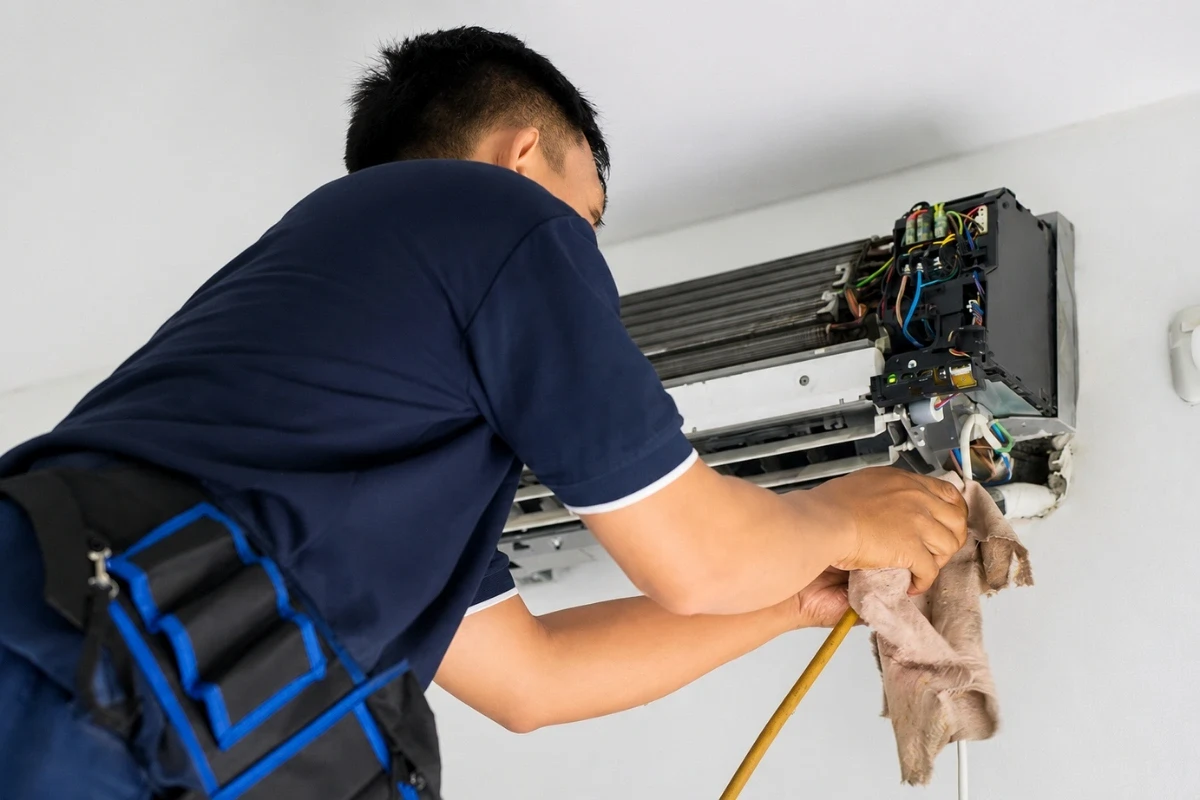
Mini split maintenance keeps a ductless heating and cooling system clean, open to airflow, and ready to handle daily demand.
For proper ductless mini-split maintenance, clean the indoor filters every 2–4 weeks, or every 4–6 weeks in low-use rooms. Check the indoor and outdoor coils every 3 months, and schedule a professional deep clean 1 to 2 times a year, and clear the condensate drain line monthly.
It will help prevent water leaks, poor airflow, and efficiency problems. But what maintenance you should do depends on what’s wrong with it. But taking action before is always a good thing.
Mini Split Maintenance Checklist
| Task | Typical timing | Main purpose |
| Inspect washable filter | Every two to four weeks | Catch dust buildup early |
| Clean washable filter | When dirty | Maintain airflow |
| Replace specialty filter | According to product instructions | Maintain secondary filtration |
| Wipe indoor cabinet | Periodically | Limit surface dust |
| Check condensate drain | About monthly during cooling | Reduce blockage risk |
| Clear outdoor debris | As needed | Maintain outdoor airflow |
| Inspect outdoor coil | Monthly or as needed | Identify dirt and debris |
| Deep clean evaporator coil | Based on condition and professional inspection | Restore clean heat transfer surfaces |
| Clean blower wheel | Professional service | Maintain indoor airflow |
| Clean drain pan | Professional service or as needed | Control moisture and buildup |
| Check refrigerant | Professional service or when symptoms appear | Confirm proper system operation |
| Inspect electrical connections | Professional service | Check safe operation |
| Test system performance | Professional service | Confirm heating and cooling operation |
At least once a year is a reasonable baseline for professional inspection. An annual service checklist for ductless can help account for the filters, coils, drainage, electrical components and performance checks that need attention.
Why Is Regular Mini Split Maintenance Important?
Regular maintenance keeps dirt from interfering with airflow, heat transfer, drainage and component operation.
A dirty filter can restrict airflow to the indoor unit. A dirty evaporator coil can interfere with heat transfer. Debris around the outdoor condenser can restrict the air needed to release heat. A clogged condensate drain can stop water from leaving the indoor unit properly.
These problems can lead to:
- Lower heating or cooling performance
- Longer operating cycles
- Higher electricity use
- Water leaks
- Musty odors
- Excessive component wear
- Unexpected service calls
Accumulated dirt on filters and coils can make the system work harder and increase energy consumption.
Maintenance also gives a technician a chance to spot developing problems before a small airflow, drainage, electrical or refrigerant issue becomes a larger repair. Proper maintenance can extend the lifespan of a mini-split.
What Are the Signs a Mini Split Filter Needs Cleaning?
A filter may need attention before the calendar says it is time. Look for:
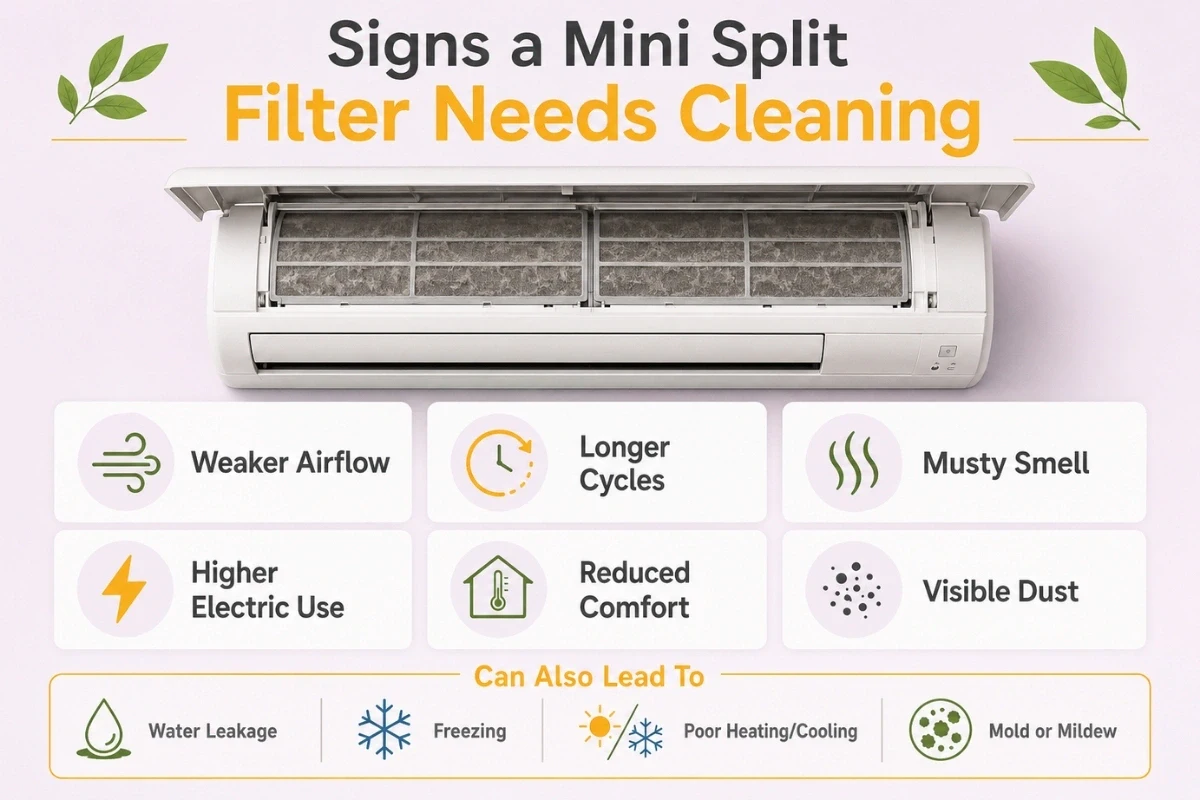
- Weaker airflow from the indoor unit
- Longer cooling or heating cycles
- A musty or dusty smell
- An unexplained rise in electricity use
- Reduced comfort in the room
- Visible dust covering the filter
A dirty filter can also contribute to water leakage, freezing and poor heating or cooling. Poor cooling, poor heating, water leakage, mold or mildew issues and musty odors among the problems associated with clogged filters.
How Do You Clean a Washable Mini Split Filter?
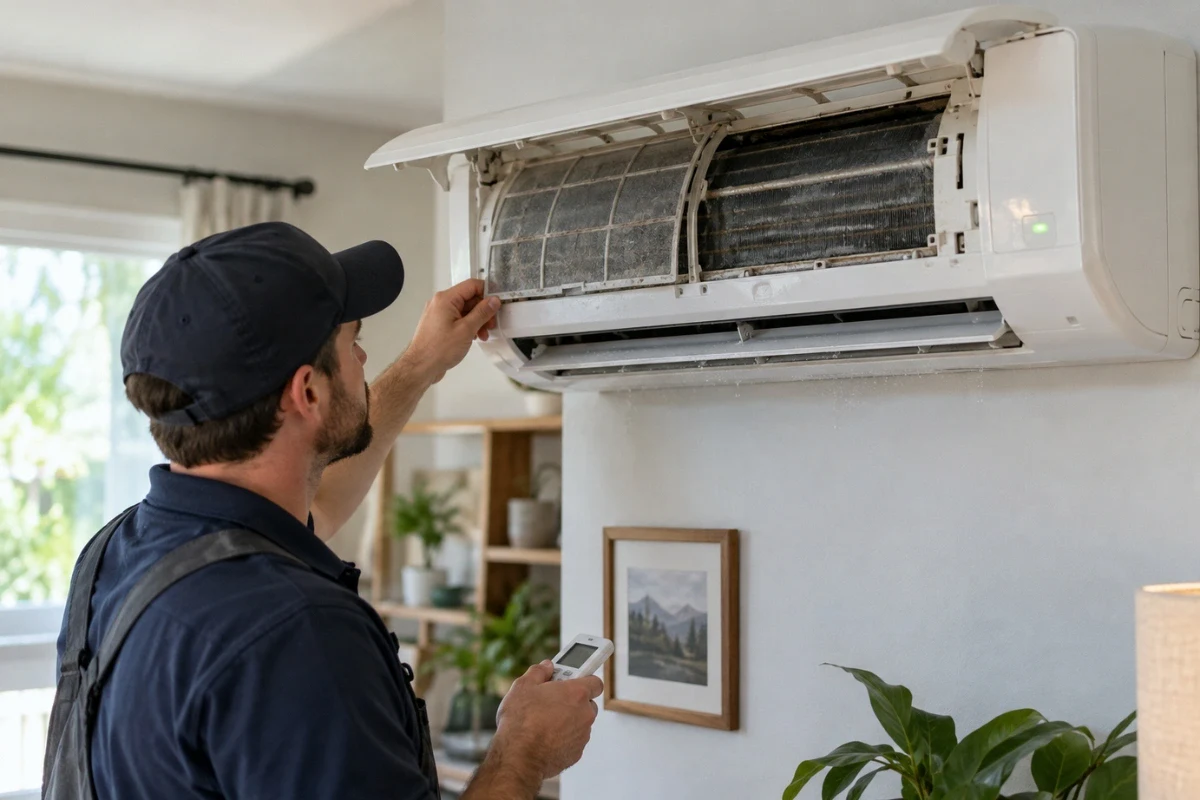
Turn the system off before opening the indoor unit. Follow the instructions for your specific model, as filter designs and approved cleaning methods vary. A typical washable filter cleaning process is:
- Turn the mini split off.
- Open the front panel of the indoor unit.
- Remove the washable mesh filters carefully.
- Vacuum loose dust using low suction and a soft brush when appropriate.
- Rinse the filter with water if the manufacturer’s instructions allow washing.
- Use only a mild cleaning method approved for the filter.
- Let the filter dry completely.
- Return the filter to its original position.
- Close the panel before restarting the system.
We recommend gentle vacuuming or hand washing for applicable reusable filters and emphasize allowing them to dry thoroughly before reinstalling them.
Do not reinstall a wet filter. Moisture trapped inside the indoor unit can create an environment that makes unwanted biological growth more likely.
Mini Split Maintenance Schedule
A ductless mini-split needs regular cleaning to maintain airflow, efficiency, and reliable performance. Homeowners can handle basic filter and exterior cleaning, while deeper coil cleaning, refrigerant checks, and electrical inspections are better left to an HVAC professional.
| Maintenance Task | How Often | Who Should Do It |
| Clean indoor air filters | Every 2–4 weeks | Homeowner |
| Wipe indoor unit and louvers | Monthly | Homeowner |
| Check airflow and obstructions | Monthly | Homeowner |
| Check condensate drain | Every 3 months | Homeowner |
| Inspect indoor coil and blower | Every 3 months | Homeowner |
| Clear leaves, dirt, and vegetation | Every 6 months/seasonally | Homeowner |
| Clean outdoor condenser coil | Seasonally | Homeowner/pro |
| Deep-clean coils and blower wheel | Annually | HVAC professional |
| Check refrigerant and leaks | Annually | HVAC professional |
| Inspect wiring, controls, and electrical connections | Annually | HVAC professional |
Monthly Mini-Split Maintenance
Clean the air filters: Remove the reusable filters, gently vacuum off loose dust, then wash them with warm water and mild soap. Let them dry completely before putting them back. Homes with pets or allergy concerns may need more frequent cleaning.
Wipe the indoor unit: Use a soft, dry or slightly damp microfiber cloth to remove dust from the cabinet, vents, and louvers.
Check airflow: Make sure curtains, furniture, dust, or other objects are not blocking the indoor unit.
Every 3 Months
Check the condensate drain for buildup or signs of blockage. A clogged drain can cause water to back up and leak from the indoor unit.
Also inspect the evaporator coil and blower wheel for excessive dust. Light buildup can sometimes be cleaned by the homeowner, but heavily soiled components are better handled by a professional.
Seasonal Outdoor Maintenance
Keep at least 2–3 feet of clearance around the outdoor condenser. Remove leaves, grass, dirt, and other debris that can restrict airflow.
The outdoor coil can also be gently rinsed with a garden hose after turning off power to the unit. Avoid high-pressure washing because it can bend the delicate coil fins.
Annual Professional Service
Schedule a professional tune-up at least once a year. The technician can deep-clean the indoor components, inspect the outdoor coil, check refrigerant levels and possible leaks, and test electrical connections, controls, and overall system operation.
Regular maintenance helps your mini-split maintain good airflow and efficiency while catching small problems before they turn into expensive repairs.
When Should You Replace a Mini Split Filter Instead of Washing It?
A standard mesh filter is often designed to be washed and reused. A secondary insert may work differently.
Some mini split systems use additional filtration products such as carbon or anti allergy inserts. These may require replacement rather than washing. Secondary carbon or anti allergy filters commonly need replacement every three to six months, depending on the product and system.
Replace a filter when:
- The manufacturer specifies replacement.
- The filter media is damaged.
- The frame is cracked or warped.
- The filter no longer fits correctly.
- A disposable filter has reached the end of its service interval.
- A specialty insert has reached its replacement date.
Always use the filter type specified for the equipment. A thicker or different filter is not automatically better if the unit was not designed for it.
Ways to Maintain the Indoor Mini Split Unit
The indoor unit collects dust even when its main filter is regularly cleaned.
Wipe the accessible cabinet and surrounding surfaces periodically to prevent dust from accumulating around the air intake and discharge areas. Keep furniture, curtains and other objects from blocking airflow around the unit.
It recommends wiping the exterior of the indoor unit and keep objects from obstructing the equipment.
Pay attention to the louvers and air outlet. Visible dust in these areas can signal that the unit needs more than a quick surface wipe.
How Often Should You Clean a Mini Split Evaporator Coil?
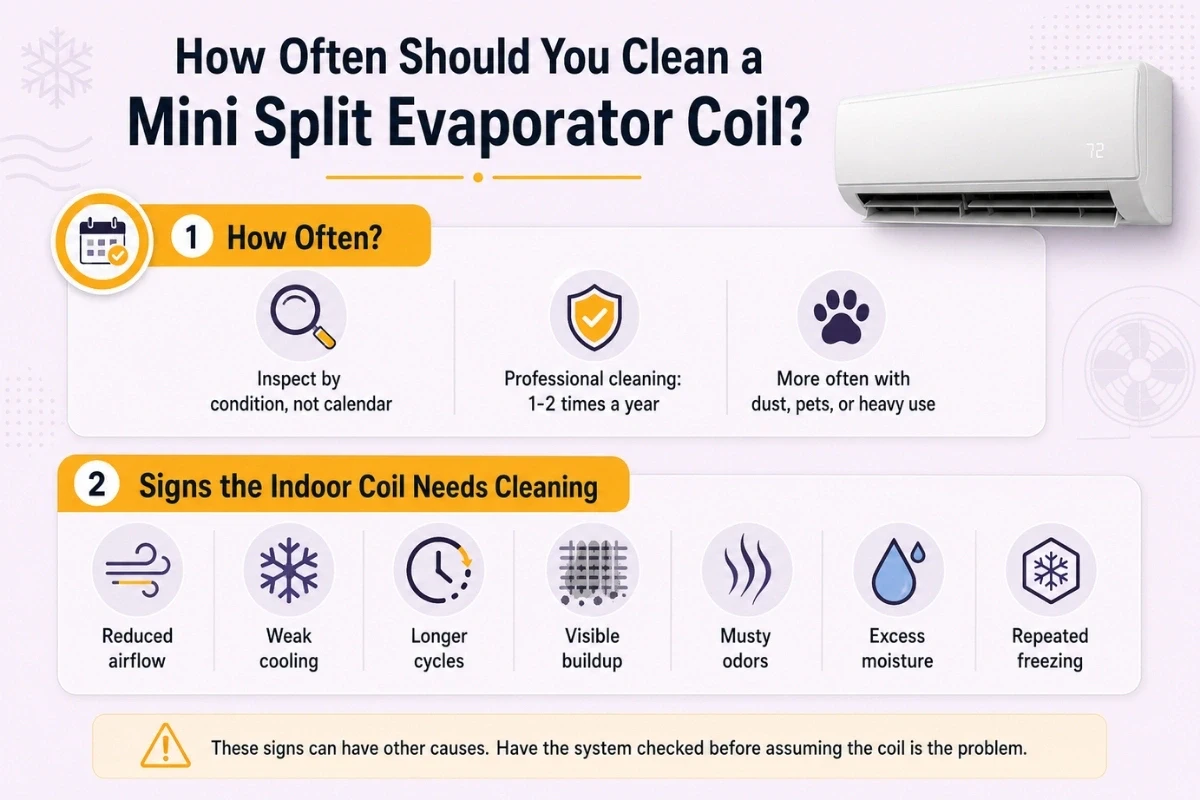
The indoor evaporator coil does not need to be cleaned on the same calendar schedule as the filter.
Its condition is more important than an arbitrary monthly date. A professional should inspect the coil and determine whether buildup requires deeper cleaning.
We often recommend professional evaporator coil cleaning once or twice a year in our maintenance guidance, while other manufacturers emphasize following the model specific maintenance instructions.
A heavily used system or a home with significant dust and pet exposure may need more attention than a lightly used system in a clean indoor environment.
Signs an Indoor Coil Needs Cleaning
Possible signs include:
- Reduced airflow even after cleaning the filter
- Weak cooling despite normal thermostat settings
- Longer operating cycles
- Visible buildup around accessible coil areas
- Musty odors
- Excess moisture
- Repeated freezing after the filter has been cleaned
These symptoms can have several causes. Coil contamination should not be assumed to be the cause without checking the rest of the system.
How Often Should You Clean the Mini Split Blower Wheel?
The blower wheel pushes air through the indoor unit, and dust builds up on its blades over time the same way it does on a filter or coil. A dirty blower wheel shows up as weaker airflow even after the filter and coil have been cleaned, along with a system that runs longer than it should to reach the set temperature.
Cleaning it means partially disassembling the indoor unit, so it’s a professional task, not something to attempt yourself. It’s typically done during the same annual or twice-yearly visit as the coil deep-clean, not on a separate schedule of its own.
How Do You Maintain the Mini Split Condensate Drain?
During cooling, the indoor coil removes moisture from the air. That moisture collects as condensate and must be removed from the indoor unit through the drain system.
Inspect the condensate drain regularly, especially during periods when the system runs frequently.
Check the PVC drain line monthly and clearing obstructions when necessary.
Common sources include:
- Dust
- Organic buildup
- Algae or biological growth
- Debris entering the drain system
- Sludge accumulating in the drain pan
A neglected drain system can become restricted even when the filter and coil appear clean.
How Do You Clean the Outdoor Coil Safely?
- First, turn off the system according to the manufacturer’s instructions.
- Remove loose debris around the cabinet. If your equipment allows homeowner rinsing, use gentle water rather than forceful spray.
- It’s advisable to caution against high pressure because the coil fins are delicate and can bend.
- High pressure can bend the thin metal fins and allow air to move through the condenser coil.
- Bent fins reduce open space between the passages and can interfere with airflow.
- A garden hose or other manufacturer approved gentle cleaning method is a safer choice.
How Should Refrigerants Be Checked During Mini Split Maintenance?
Refrigerant work should be handled by a qualified HVAC professional.
A refrigerant problem can reduce heating or cooling performance, cause abnormal coil temperatures and contribute to freezing.
Possible signs include:
- Poor cooling or heating
- Ice forming on the coil
- A hissing sound
- Persistent performance problems after cleaning the filter
Difficulty heating or cooling, coil ice and hissing sounds are among possible signs of a low refrigerant condition.
A frozen coil does not automatically mean the system is low on refrigerant. Airflow restrictions and other mechanical problems can also produce freezing.
However, common ductless errors and maintenance alerts can point to sensor, communication, drainage or equipment faults that require further diagnosis.
Which Mini Split Maintenance Tasks Can You Do Yourself?
Homeowners can generally handle simple cleaning and visual checks, and the equipment manual allows.
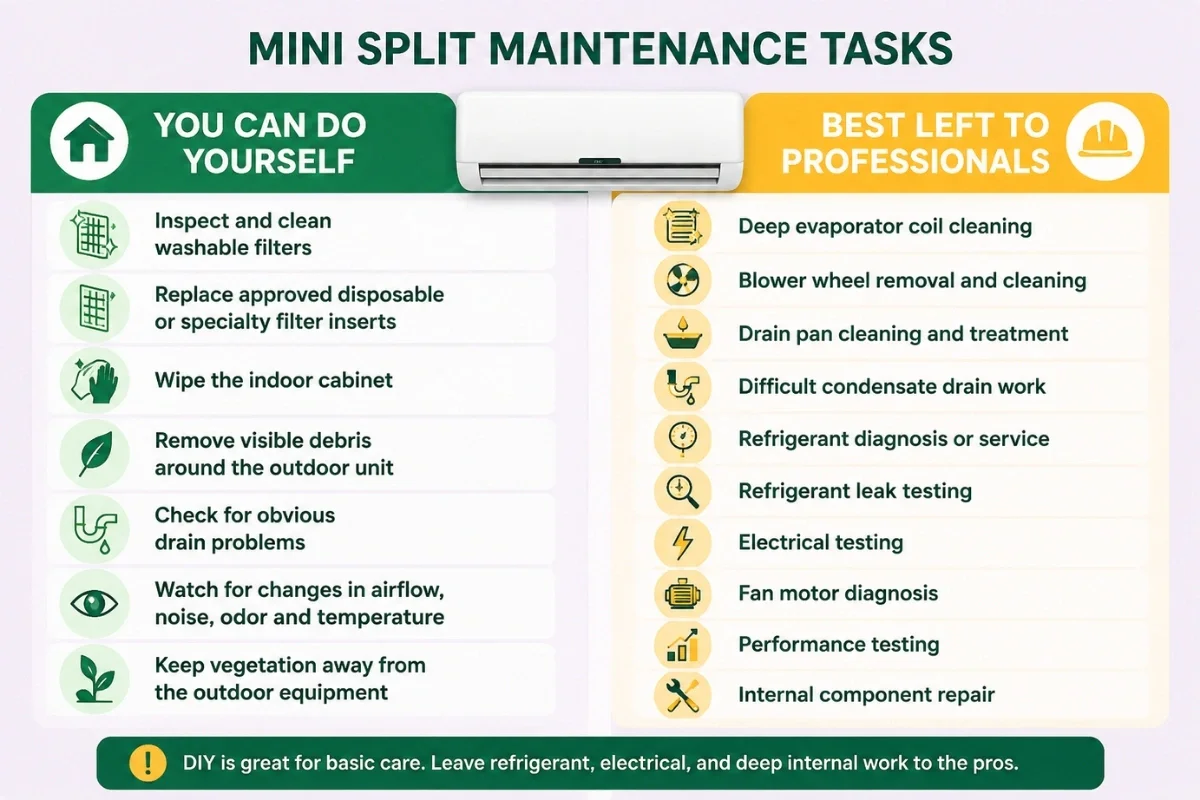
Homeowner tasks
- Inspect and clean washable filters
- Replace approved disposable or specialty filter inserts
- Wipe the indoor cabinet
- Remove visible debris around the outdoor unit
- Check for obvious drain problems
- Watch for changes in airflow, noise, odor and temperature
- Keep vegetation away from the outdoor equipment
Professional tasks
- Deep evaporator coil cleaning
- Blower wheel removal and cleaning
- Drain pan cleaning and treatment
- Difficult condensate drain work
- Refrigerant diagnosis or service
- Refrigerant leak testing
- Electrical testing
- Fan motor diagnosis
- Performance testing
- Internal component repair
The dividing line is simple. DIY versus professional cleaning depends on the task, manufacturer instructions and whether the work involves refrigerant, electrical components, deep internal cleaning or component removal.
FAQs
How Often Should You Schedule Professional Mini Split Maintenance?
At least once a year is a reasonable baseline for professional inspection. Twice-yearly service can make sense when a ductless system provides both heating and cooling year-round.
Does a dirty filter cause a mini split to leak water?
A dirty filter can restrict airflow and contribute to coil freezing, which may create excess water when ice melts. A clogged drain, a drain pan problem or another equipment issue can also cause leakage, so persistent water problems need to be diagnosed.
Why is my mini split freezing up?
Restricted airflow from a dirty filter or dirty indoor coil can contribute to freezing. Refrigerant problems and mechanical faults can also cause it. Continued freezing after filter cleaning should be evaluated by an HVAC technician.
Do mini splits need maintenance if they are not used year round?
Yes. A system siting unused still benefits from inspection before the next operating season. Filter condition, outdoor debris, drainage and overall equipment condition should be checked before placing the system back under heavy demand.
Conclusion
Start mini split maintenance by cleaning the filter per the manufacturer’s guidelines. Ensure the indoor unit is dust free, check the condensate drain and clear any debris from the outdoor unit.
Coils, blower wheels, drains, refrigerant components and electrical connections require closer inspection as the system ages or if performance declines. Seek professional maintenance if you observe freezing, leaks, unusual noises, weak airflow, persistent odors or error alerts.
Regularly check frequently used parts, adjust filter cleaning based on system usage and schedule professional service per the manufacturer’s guidelines and system condition.