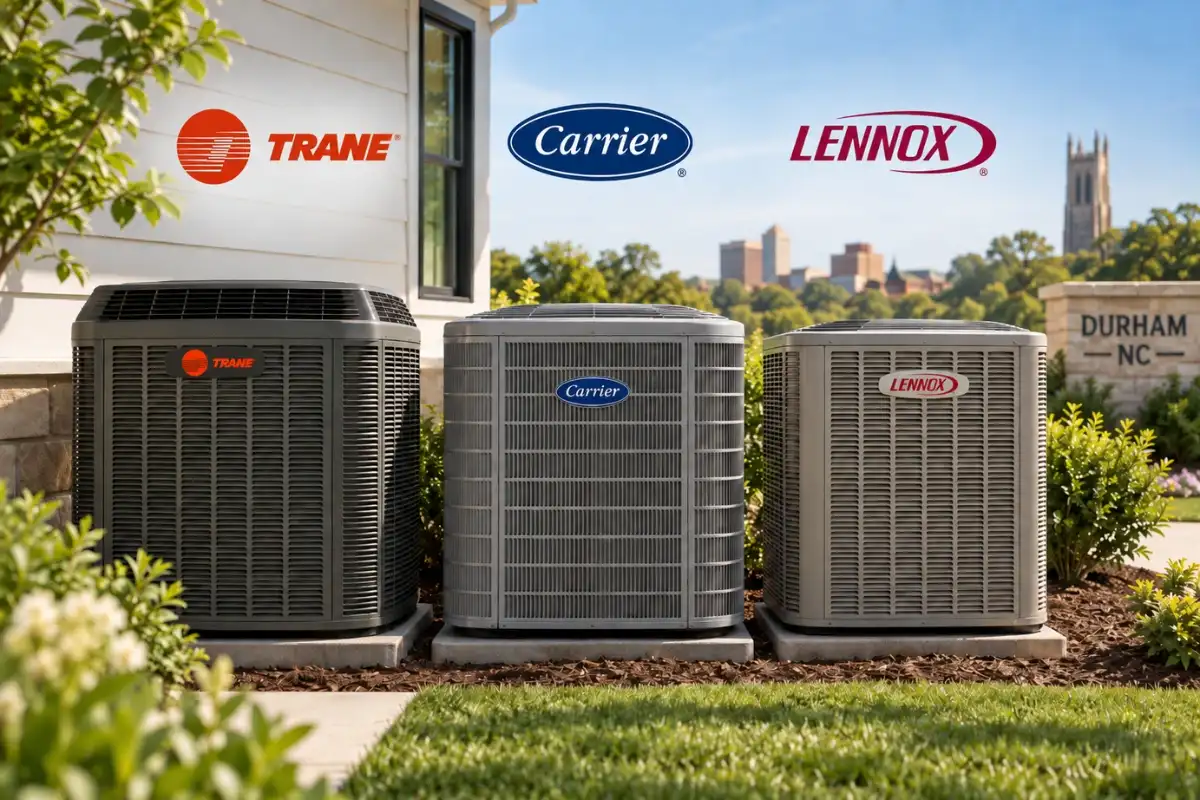
If you’re comparing Trane vs Carrier vs Lennox AC in Durham, NC, you’ve probably already noticed something frustrating: every HVAC company seems to have a different favorite.
The truth is less dramatic.
All three make very good air conditioners. The better question is which one fits your Durham home, because our summers bring both heat and humidity, and those two things don’t always reward the same equipment.
I’d give Carrier the slight edge as the best all-around choice for most homes around Durham. Its variable-speed systems are especially good at running longer at lower output, which helps with humidity and keeps temperatures from swinging as much.
Trane would be my durability pick. If you’re staying in the house for a long time and want something built for longevity, it’s hard to ignore.
And if efficiency is the thing you care about most, Lennox has the strongest numbers at the top end of its lineup.
Here’s the short version before we get into the details.
| What Matters Most | Best Pick |
| Best overall for a Durham home | Carrier |
| Durability and long-term ownership | Trane |
| Highest premium efficiency | Lennox |
| Humidity control | Carrier |
| Quiet premium operation | Carrier |
| Rugged construction | Trane |
| Efficiency-first homeowner | Lennox |
| Most important factor overall | Quality of installation |
Why Durham Changes the Trane vs Carrier vs Lennox Comparison?
Durham is not Phoenix, and it isn’t Southern California. That matters more than many national HVAC comparisons admit.
NOAA’s 1991–2020 climate normals for Raleigh-Durham International Airport show a normal July high of 90.8°F and a normal July low of 70.2°F. The area also averages about 52.5 days each year at 90°F or hotter.
Those warm nights are worth noticing.
Your AC isn’t just dealing with a few brutally hot afternoons. During summer, it can be running on and off for much of the day, and when humidity is high, simply getting the house to 74°F doesn’t always make it comfortable.
You know the feeling. The thermostat says the temperature is fine, but the room still feels a little sticky. Handling Durham’s heat wave with HVAC is such a headache.
That’s where AC sizing and compressor design start to matter. A basic single-stage AC has two settings: essentially on and off. When it’s on, it runs at full capacity.
A variable-speed system can back off and keep running at a lower level. That usually gives the system more time to circulate air and remove moisture instead of blasting cold air for a short period and shutting down.
For a humid North Carolina summer, that’s useful.
Trane vs Carrier vs Lennox: Head-to-Head Comparison
Here’s a cleaner comparison using current manufacturer information, not older model data still floating around online.
| Feature | Trane | Carrier | Lennox |
| Premium AC example | 20 TruComfort | Infinity 21 | SL25KCV |
| Maximum published SEER2 | Up to 23.6 | Up to 21 | Up to 25.10 |
| Compressor | Variable speed | Variable speed | Variable capacity |
| Capacity range | About 30%–100% | 25%–100% | Variable capacity |
| Published minimum sound | Around 64 dB* | 55 dB | 58 dB |
| Refrigerant | R-454B | Puron Advance / R-454B | R-454B |
| Main strength | Durability | Comfort + humidity | Efficiency |
Sound ratings are not always measured under identical conditions, so don’t treat a few decibels on a spec sheet as a perfect real-world comparison.
Carrier currently lists the Infinity 21 at up to 21 SEER2, with a variable-speed compressor that can adjust between 25% and 100% capacity and operate as low as 55 dB.
Trane says its newer 20 TruComfort variable-speed AC can reach up to 23.6 SEER2 and uses R-454B refrigerant. Lennox lists the SL25KCV at up to 25.10 SEER2, with variable-capacity operation and sound levels as low as 58 dB.
So, right away, you can see why calling one of these “the best” without context doesn’t tell you much.
Trane AC: The Pick for Durability
Trane has had the tough-equipment reputation for years, and it hasn’t really moved away from that identity.
You’ll hear a lot about Climatuff compressors, SpineFin coils, and heavy-duty construction when you talk to Trane dealers. Some of that is branding, sure, but Trane does put real engineering behind the durability angle.
Its newer premium variable-speed equipment has also closed the efficiency gap.
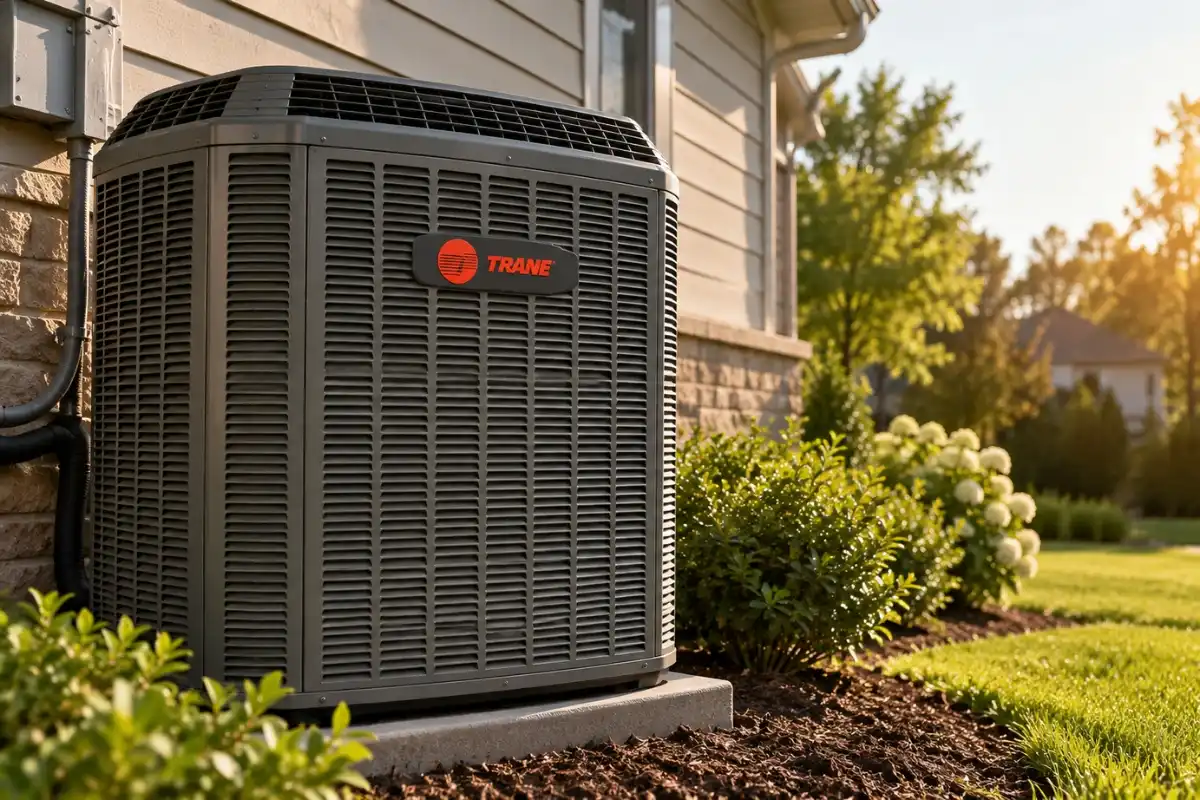
The 20 TruComfort AC now reaches up to 23.6 SEER2, according to Trane. That’s quite a jump from the numbers you’ll see on older XV-series comparison articles.
Where Trane makes sense in Durham
I’d look hard at Trane if you’re planning to stay in the home for a long time.
Maybe you’ve already lived there for ten years and don’t plan on leaving. Maybe you’re replacing a system that gave you 15+ years, and you’d rather pay for something solid again than chase every new smart feature.
That’s the Trane buyer.
Its variable-speed system is also useful in Durham because it doesn’t have to run at full capacity every time it kicks on. The current 20 TruComfort platform can modulate roughly between 30% and 100% capacity depending on the equipment setup.
That gives you more even cooling and longer cycles than a traditional single-stage unit.
Where Trane isn’t automatically the winner
Price is one issue.
A good Trane installation can get expensive once you move into variable-speed equipment, communicating controls, air handlers, and duct corrections.
And if your main goal is simply to buy the system with the highest possible efficiency rating, Lennox currently goes higher.
So I wouldn’t spend more on Trane just for the badge.
I’d spend more on Trane if I valued durability, build quality, long-term ownership, and good variable-speed performance.
Carrier AC: My Best Overall Pick for Durham
Carrier is the one I’d put in front of most Durham homeowners. Not because it’s dramatically better than Trane or Lennox. It isn’t.
It’s because Carrier excels in the areas that matter every day in this climate: humidity control, quiet operation, part-load cooling, and temperature consistency.
Its current Infinity 21 is a good example.
The compressor can vary from about 25% to 100% capacity instead of constantly jumping between off and full blast. The carrier specifically ties that lower-speed operation to better temperature control and humidity removal.
That makes sense for Durham.
On a 90°F afternoon, you may need a lot of cooling. At 8 p.m., you might not. But humidity doesn’t disappear just because the sun went down.
A system that can slow down instead of shutting off immediately has more time to move air across the coil and pull moisture out of the house.
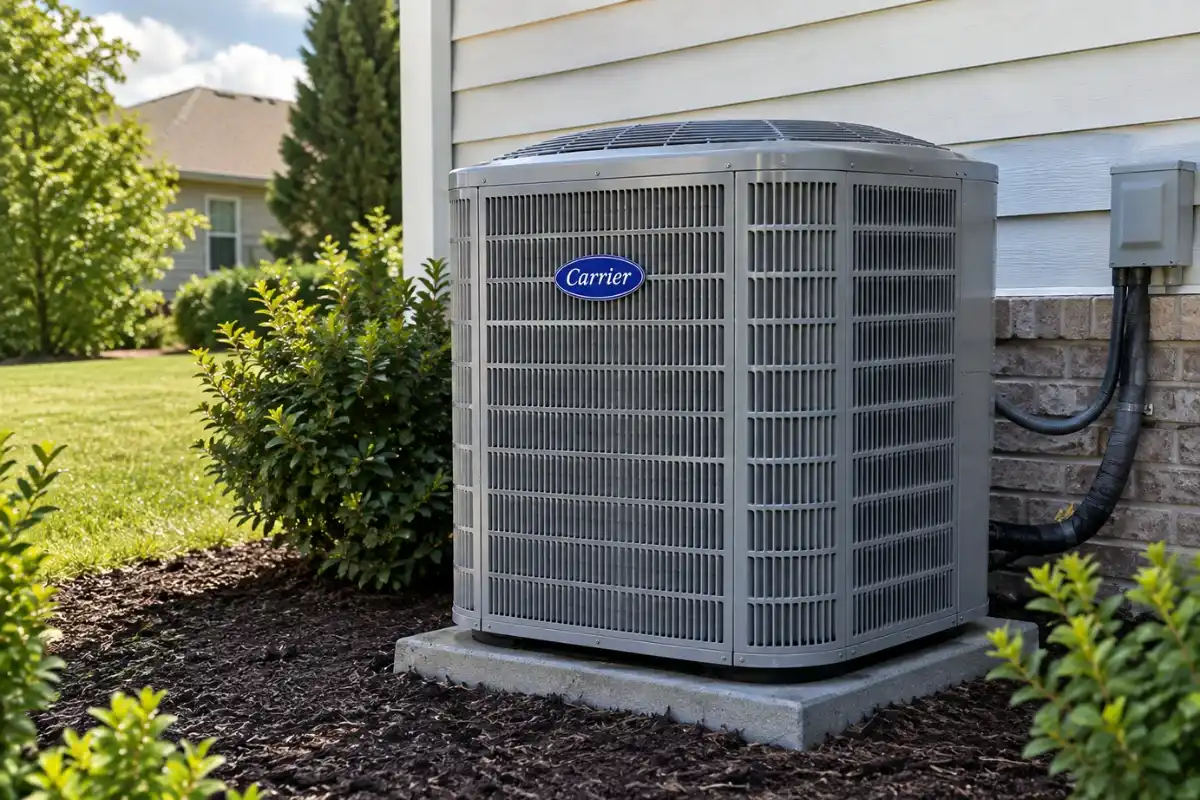
Carrier also wins the noise comparison
Carrier rates the Infinity 21 as low as 55 dB. That won’t matter much if your outdoor condenser sits on the far side of an acre. So, your Durham homes won’t feel sticky if you have Carrier AC.
But if it’s six feet from your bedroom wall, beside a patio, or close to your neighbor’s property line, you’ll care. Those are the small real-life details that a SEER2 chart doesn’t show.
Carrier isn’t necessarily the efficiency champion
Its current premium central AC tops out around 21 SEER2, below the highest current offerings from Trane and Lennox.
Would that stop me from buying one in Durham?
Probably not.
A properly sized 21 SEER2 system running as intended can still be a much better investment than a higher-rated unit attached to the wrong coil, oversized by half a ton, or pushed through bad ductwork.
That’s why I see Carrier as the balanced choice, not necessarily the spec-sheet winner.
Lennox AC: The Pick When Efficiency Comes First
Lennox is where I’d start if a homeowner told me:
“I want the most efficient premium system I can reasonably put in this house.”
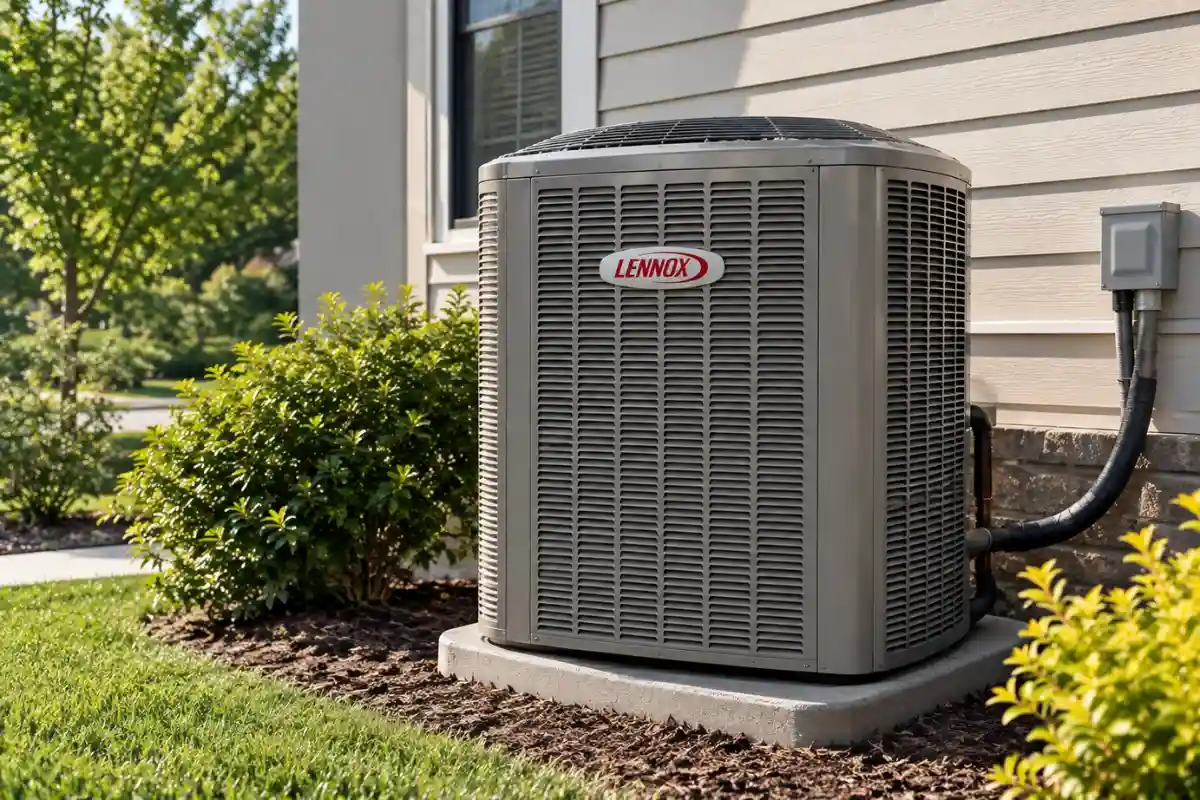
The current Lennox SL25KCV is rated at up to 25.10 SEER2 in Lennox’s published specifications. It also uses a variable-capacity compressor and is rated as low as 58 dB.
That’s an impressive package.
And efficiency matters more now than it did a few years ago because electricity isn’t getting cheaper.
The U.S. Energy Information Administration reports that the average residential electricity price in North Carolina was 14.90 cents per kWh year-to-date through June 2026, compared with 13.78 cents per kWh over the same period in 2025. That’s an increase of a little over 8%.
So yes, efficiency deserves attention.
But here’s where homeowners sometimes get carried away. A higher SEER2 number doesn’t automatically mean the most expensive Lennox will save enough money to justify the price premium.
If System A costs several thousand dollars more than System B, you need to compare the expected energy savings across the number of years you’ll actually own the house. That’s a much more useful calculation than simply saying:
“25 SEER2 is higher than 21, so Lennox wins.”
Maybe it does.
Maybe it doesn’t.
How Much Does Trane vs Carrier vs Lennox Cost in Durham?
If you’re replacing a 3-ton HVAC system in Durham, NC, expect to spend roughly $5,200 to $12,500 installed for a premium brand like Trane, Carrier, or Lennox. Labor in the Durham–Chapel Hill area is a little less expensive than the national average, which can help keep the total cost down.
Still, the final price depends on what you’re actually installing. A basic single-stage system usually costs much less than a high-efficiency variable-speed model, and duct repairs and electrical work.
Sometimes system size and installation difficulty can quickly push the price higher, and costs can vary, like AC repair costs.
| Brand | Entry-Level Installed (14–16 SEER2) | Mid-Tier Installed (16–18 SEER2) | Premium / Variable-Speed Installed (19+ SEER2) |
| Carrier | $4,800–$6,200 | $6,200–$9,500 | $9,500–$14,000 |
| Trane | $5,500–$6,800 | $6,800–$10,500 | $10,500–$14,500 |
| Lennox | $5,000–$6,500 | $6,500–$11,000 | $11,000–$16,000 |
Note: Talk clearly with the HVAC contractor before closing the deal. AC installation in Durham price varies depending on many factors.
Ask for the AHRI Number Before You Buy
This is one question I’d put on a sticky note before meeting any HVAC salesperson:
“What’s the AHRI Certified Reference Number for this system?”
Why?
Because the SEER2 rating belongs to a matched system, not simply the outdoor unit sitting beside your house.
AHRI explains that a split central AC has indoor and outdoor components designed to work together. Its certification program verifies the performance of that specific combination and gives the matched system a unique Certified Reference Number.
So if someone tells you:
“This condenser is 21 SEER2.”
Ask:
“With which indoor coil?”
That’s when you’ll find out whether you’re looking at the real system rating or a brochure number.
The Installer May Matter More Than the Brand
This sounds like something contractors say to make themselves more important.
But there’s good reason for it.
ENERGY STAR estimates 20% to 30% of the air in a typical duct system can be lost through leaks and poor connections. It also says sealing and insulating ducts can improve heating and cooling efficiency by up to 20% in some cases.
Now compare that to the differences you’re obsessing over between brands. Maybe you’re comparing 18 SEER2 with 21 SEER2.
Meanwhile, the ductwork is throwing conditioned air into the attic. Fix the bigger problem first.
Which Brand Handles Durham Humidity Best?
For me, Carrier gets this one. Trane and Lennox both offer excellent variable-capacity equipment, so this isn’t a blowout.
But Carrier has put a lot of engineering and marketing emphasis on part-load operation and humidity management in its Infinity platform.
The Infinity 21 can adjust between 25% and 100% capacity, which allows longer operation at lower speeds when the house doesn’t need full cooling.
For Durham, that’s a very practical advantage.
If I lived somewhere extremely dry, I’d probably give humidity less weight.
Here, I wouldn’t.
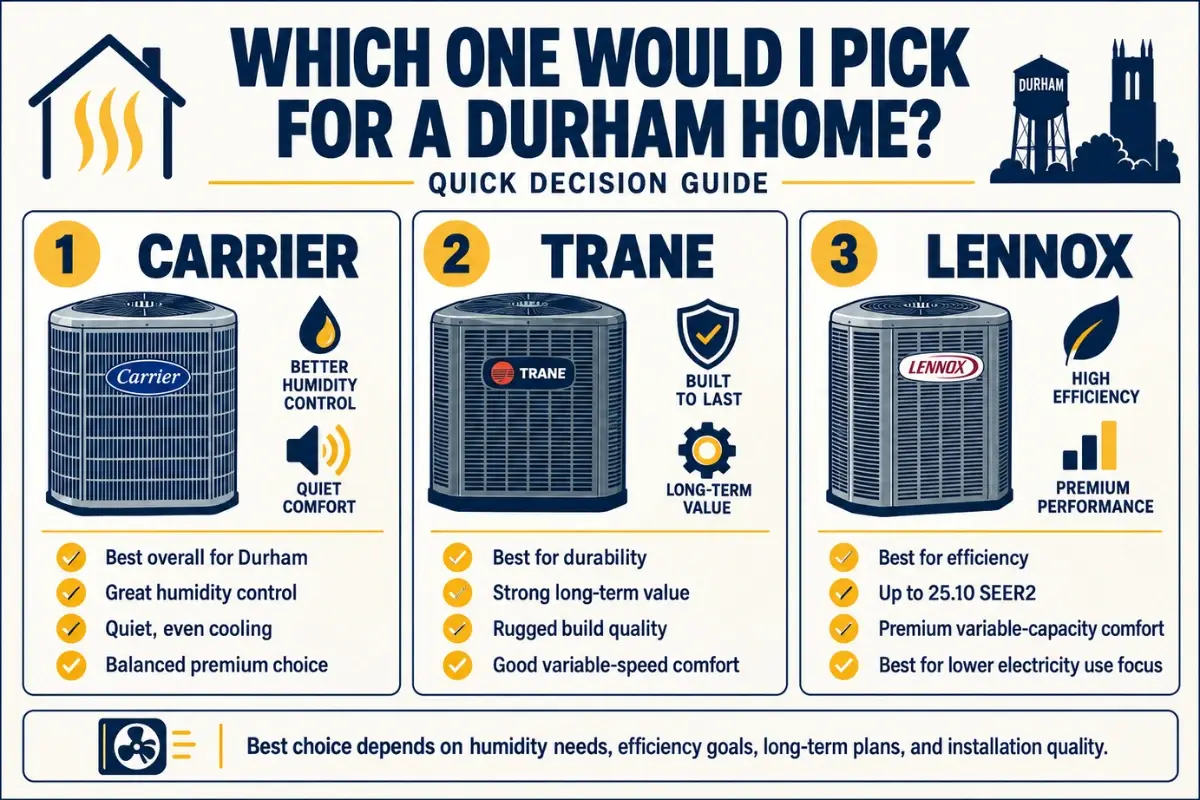
So, Which One Would I Pick for a Durham Home?
Here’s how I’d decide.
I’d choose Carrier if…
Your biggest concerns are summer humidity, quieter operation, even temperatures, and having a premium system that does a little bit of everything well. For a typical owner-occupied Durham home, Carrier would be my starting point.
I’d choose Trane if…
You’re more interested in ruggedness and long-term ownership than winning every efficiency comparison.
If I’m planning to stay in the house for 15 years and the Trane dealer gives me the strongest installation proposal, I’d be perfectly comfortable choosing it.
I’d choose Lennox if…
You want premium variable-capacity comfort, but you’re especially focused on reducing electricity use.
With the SL25KCV reaching up to 25.10 SEER2, Lennox currently has the efficiency edge among the premium systems compared here. Make sure you’re comparing the complete installed cost and the exact AHRI match, not just the headline rating.
Frequently Asked Questions
Is Lennox AC better than Trane?
It depends on what matters most to you. Lennox is usually the stronger choice for homeowners focused on high efficiency and premium comfort features, while Trane has a stronger reputation for durability and long-term reliability.
What AC brands should you stay away from?
No single AC brand should every homeowner avoid. Even a well-known brand can perform poorly if the system is oversized, the ductwork leaks, or the installation is rushed. Instead of judging by the logo alone, look at the installer’s experience, warranty, local parts availability, equipment match, and service support.
Which air conditioner brand is better: Trane, Lennox, Carrier, or Goodman?
Each brand fits a different type of homeowner. Carrier is a strong all-around choice, especially for humidity control and quiet operation. Trane is a good fit for durability, while Lennox stands out for high efficiency.
What are the top 3 HVAC systems?
For premium residential HVAC systems, Trane, Carrier, and Lennox are three of the most commonly compared brands. Trane is known for durability, Carrier for balanced comfort and variable-speed technology, and Lennox for high-efficiency equipment. Still, installation quality can matter as much as the brand itself.
Final Take
From an HVAC standpoint, Carrier is the best all-around choice for most Durham homes because of its strong humidity control, quiet operation, and balanced efficiency. Choose Trane for durability and Lennox if maximum efficiency is your top priority.
Ready to compare real quotes for your home? Request an appointment online or call (919) 404-9040. Our NATE-certified techs can help you match the right brand and size to your Durham home.