Many homeowners close vents in unused rooms or open a window at night, hoping to make the house more comfortable or save a little on energy bills. These habits are especially common during humid summer months.
At Alternative Aire, we see this often while visiting homes around Durham, North Carolina. The house may feel cool, but the air still feels sticky and uncomfortable. That also leads homeowners to keep adjusting vents or windows, trying to fix the problem.
In many cases, those small changes actually make comfort worse. In this guide, we will explain what really happens inside your AC system and which simple habits can help your home stay cooler and drier.

|
TL;DR Keep your AC vents open and your windows closed in humid weather, because closing vents or opening windows can make your home feel more humid and won’t save energy. |
Should You Close Vents in Unused Rooms?
No, you should not close vents in unused rooms. Closing vents does not help your AC cool the rest of the house or lower energy use. In most homes, it actually reduces airflow and makes the system less comfortable.
During many service visits around Durham, we see homeowners close vents hoping the cool air will move into other rooms. It sounds logical, but central AC systems do not work that way.
How Central AC Systems Are Designed to Move Air
Central AC systems are built to circulate air through the entire home in a balanced loop. Cooled air flows from supply ducts to each room, then returns through return vents. Every vent contributes to this continuous airflow.
HVAC engineers design the blower and ductwork assuming all vents remain open. When every vent is open, air moves smoothly, the evaporator coil gets proper airflow, and the system removes heat and moisture efficiently.
Why Closing Vents Disrupts Airflow Balance
Closing a vent removes a path for airflow, forcing the system to push air through fewer openings. This creates extra pressure in the ducts, which can reduce airflow to other rooms and cause uneven temperatures.
Some rooms may feel warmer, while others stay cooler but humid. Over time, this imbalance makes the system work harder and can reduce overall comfort. Keeping all vents open ensures steady airflow, better cooling, and a more consistent path toward achieving thermal comfort throughout your entire living space.
Does Closing Vents Actually Save Energy?
Shutting off AC vents does not reduce energy bills. Your central system still works to cool the entire house, so limiting airflow rarely lowers the workload.
Many homeowners assume that if fewer rooms receive cool air, the system will use less power. In reality, this is a common misconception.
Why Less Airflow Does Not Reduce Energy Use
Even when you block airflow to some rooms, the blower and compressor still run until the thermostat reaches your set temperature. Most homeowners notice little to no drop in their energy bills after trying this.
The system keeps operating as usual because the thermostat controls when cooling cycles stop.
How Duct Pressure Can Increase System Strain
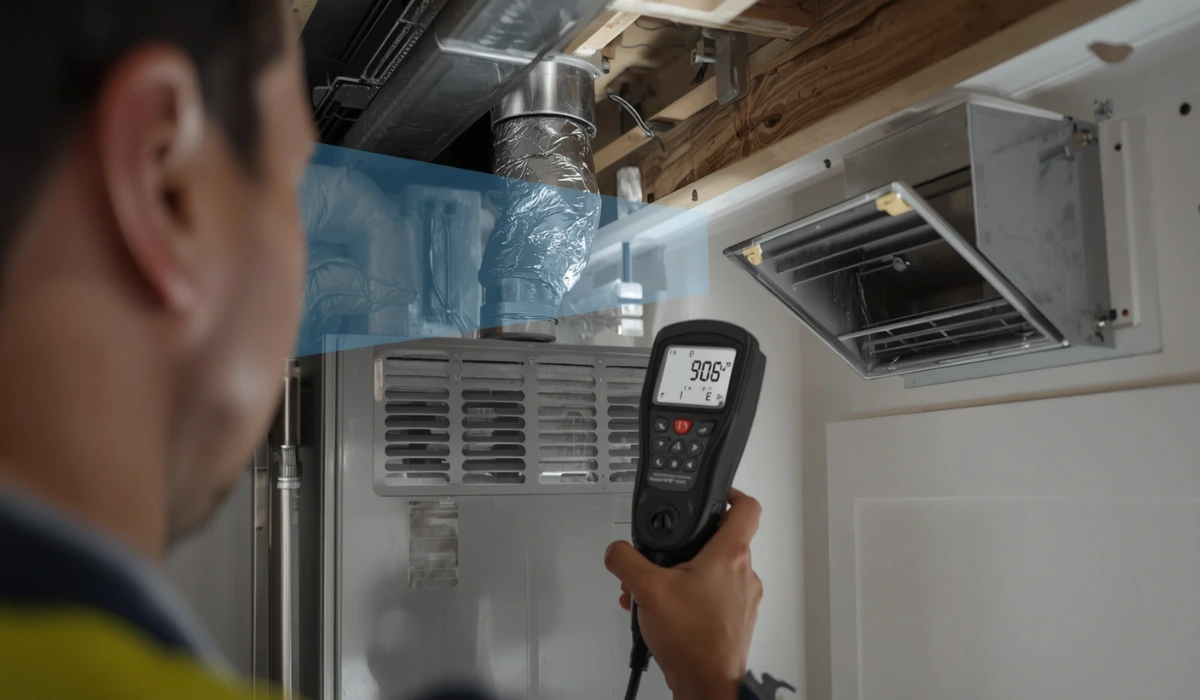
Limiting airflow raises static pressure inside the duct system. Static pressure is the resistance the blower must push against to move air through the ducts. When vents are closed, this pressure increases and can reduce airflow across the system.
These stresses are one of the common reasons for repeated AC breakdowns during heatwaves. Oftentimes, the incident can be traced back to oversized units or poor airflow design.
During inspections, we sometimes measure duct pressure with a manometer to show how restricting airflow affects performance. Keeping vents open allows your AC to run smoothly, maintain efficiency, and remove moisture effectively.
Keeping vents open and windows closed also helps reduce AC noise caused by high duct pressure or uneven airflow.
Can Turning Off AC Vents Increase Indoor Humidity?
Yes, limiting airflow to some rooms can make indoor humidity worse. Your AC removes heat and moisture at the same time, and both rely on steady airflow.
When airflow drops, less air passes over the evaporator coil, which means less moisture is removed. The house may feel cool, but the air can still feel sticky and uncomfortable.
How Reduced Airflow Lowers Moisture Removal
The evaporator coil needs a steady flow of air to pull humidity from the indoor air. Warm air passes over the cold coil, and moisture collects as water, which drains through the condensate line.
If vents are blocked or partially closed, less air reaches the coil. Cooling may still happen, but moisture removal slows down, leaving the air damp.
Why Some Rooms Start Feeling Sticky
Airflow issues rarely stay in one room. Restricting vents changes circulation across the home.
Some rooms may get less conditioned air, while others trap humid air because fresh airflow cannot reach them. Homeowners often describe this as a sticky or muggy feeling. The thermostat may show the correct temperature, but comfort still feels off. You might notice that the AC is running but not effectively cooling the space.
In many homes we visit, simply reopening vents restores airflow and helps the AC remove moisture more effectively.
Can High Humidity Cause Your AC to Ice Up?

Yes. When indoor humidity is high and airflow is restricted, moisture can condense on the evaporator coil faster than it drains. This is one of the causes of AC coil freezing. It reduces cooling efficiency and makes your AC struggle.
Keeping vents open, using the fan on AUTO, and controlling indoor humidity prevent icing and keep your system running smoothly.
Can Opening Windows Make Your House Feel Muggy?
Yes, opening windows during humid weather can make your home feel muggy. While it might seem like a simple way to cool the house, outdoor air often carries extra moisture.
When that humid air enters, your AC must work harder to remove it. Even if the temperature feels cool, the air can still feel damp and uncomfortable.
Why Night Air Can Still Raise Indoor Moisture
Nighttime air may feel cooler, but it can still hold plenty of moisture. Many homeowners are surprised by this.
In Durham, North Carolina, summer nights often bring high humidity. Open windows allow that moisture to slowly spread throughout the house. Sometimes it becomes a reason for not having nighttime comfort at 72°F.
By morning, your home may feel cool but sticky. The AC then spends extra time and energy removing the added moisture. Relying on open windows can leave your system struggling to keep up. You may end up needing a professional emergency response during heatwaves when temperatures spike, and your unit can no longer maintain a safe indoor environment.
Keeping windows closed during humid weather helps your system maintain steady comfort and keeps indoor air dry.
Why Can an AC Cool the Air but Not Dry It?
Your AC can lower the temperature without fully removing humidity. This happens because cooling and dehumidifying don’t always work at the same speed. The system can cool the air quickly, but moisture takes longer to drain away.
The evaporator coil is where both cooling and moisture removal happen. Warm air passes over the cold coil, heat leaves the air immediately, and water collects on the coil before draining through the condensate line.
If your AC cycles on and off too quickly, the coil doesn’t stay cold long enough to remove much moisture. That’s why a house can feel cool but still slightly sticky. Longer, steady cooling cycles allow the system to remove more humidity and make the home feel truly comfortable.
Other Everyday Habits That Can Raise Humidity
Small daily habits can quietly increase indoor humidity and make your AC work harder. Changes in airflow or introducing extra moisture can leave parts of your home feeling sticky or damp.
- Fan set to ON: Running the fan continuously can blow leftover moisture from the coil back into your home. Using the AUTO setting allows the system to remove moisture properly.
- Blocked return vents: Furniture, rugs, or storage items that block return vents reduce airflow, which lowers the system’s ability to pull moisture from the air.
- Closed interior doors: Closing doors can trap air in rooms, preventing proper circulation and raising humidity in certain areas.
Simple Habits to Improve Moisture Removal
You can make your home feel drier and more comfortable with a few easy changes:

- Keep supply vents open: This ensures air flows as designed, helping the coil remove heat and moisture efficiently.
- Use the thermostat fan on AUTO: Stops the fan after the cooling cycle, letting moisture drain from the coil instead of returning to your rooms.
- Run bathroom exhaust fans after showers: Removes excess humidity before it spreads through the house.
- Keep windows closed during humid weather: Prevents outdoor moisture from entering and keeps indoor humidity steady. Running the AC with windows open lets humid air in, making your system work harder and leaving rooms feeling sticky.
These simple habits help your AC remove more moisture and keep your home cooler and more comfortable.
Conclusion
Your AC keeps your home comfortable when airflow stays balanced, and humidity is properly controlled. Simple habits like keeping vents open, using the thermostat fan on AUTO, and keeping windows closed during humid weather can make a noticeable difference.
If your home still feels cool but slightly muggy, the issue may be airflow imbalance, excess humidity, or an oversized system. The team at Alternative Aire helps Durham homeowners diagnose these problems and restore cooler, drier indoor comfort.
FAQ
Can closing vents damage ductwork?
Yes. Shutting vents increases pressure inside the ducts. Over time, this can worsen leaks or stress components like coils and heat exchangers, leading to costly repairs. Keeping vents open helps your system work safely.
Can restricted vents trick my thermostat?
Absolutely. If airflow is uneven, the thermostat may think the house reached the set temperature while some rooms are still warm or cool. This can make your system run longer or cycle inconsistently.
Can closed vents cause frozen AC coils or heat exchanger problems?
Yes. Limited airflow can make the evaporator coil freeze in cooling mode or put extra strain on furnace parts in heating mode. Both can lead to expensive repairs if not addressed.
Is shutting vents the same as a zoned HVAC system?
No. True zoning uses motorized dampers and multiple thermostats to safely control airflow in different areas. Simply closing vents does not give the same benefits and can create problems.
Does limiting airflow affect indoor air quality?
Yes. Slower or uneven airflow reduces circulation, making it harder for filters to clean dust, allergens, and humidity. Good airflow keeps both your home comfortable and the air cleaner.
Can I partially close vents instead of fully closing them?
Lightly adjusting registers is usually fine, but fully shutting vents still risks pressure issues and uneven cooling unless your system is designed for zoning.
Are there other common HVAC myths I should know?
Yes. For example, running the fan constantly does not cool the house faster; it can push moisture back into rooms. Also, bigger HVAC systems aren’t always better; oversized units cycle too quickly and remove less humidity.
Will closing vents alone save money on energy bills?
In most modern homes without zoning or variable-speed equipment, shutting vents rarely reduces bills. Any minor savings are often offset by inefficiencies and extra strain on your system.