Before a heat pump or new condenser can operate safely, your home’s electrical system must be prepared. This usually requires a dedicated circuit, the correct breaker size, and sufficient panel capacity.
When one of these pieces is missing, installation can slow down. Breakers may trip. Inspections may fail. Many homeowners think the heat pump is the problem. But in most cases, the issue starts with the electrical setup.

At Alternative Aire, we review these details early to prevent installation delays, tripping breakers, or failed inspections.
Key Takeaways
|
How Your Heat Pump Choice Impacts Electrical Needs
Not all heat pumps place the same demand on your electrical system. Choosing the wrong configuration can trigger panel upgrades you did not expect.
Choosing the right heat pump involves more than just picking a brand. The type of unit, heating capacity, and backup options directly affect your home’s electrical load and installation requirements.
- Inverter vs. Single-Stage Units
Inverter (variable-speed) units start up gradually, reducing sudden electricity surges. Single-stage units, on the other hand, can create higher startup loads and may require more robust breakers to operate safely. - Heating Capacity & Backup Heat Strips
If your heat pump includes electric backup strips, it will demand higher amperage and may require separate breakers. Proper planning ensures your system runs efficiently without overloading your electrical panel. - Efficiency Ratings (SEER2/HSPF2)
Higher-efficiency units generally use less electricity during normal operation. However, they may have more sensitive control boards that require stable power.
Select a unit that fits both your comfort needs and your panel’s capacity. Our team at Alternative Aire helps you match the equipment to your home’s existing infrastructure to avoid unnecessary electrical costs.
What are the basic electrical requirements for a heat pump?
A standard residential heat pump requires a dedicated 208–240V double-pole circuit.
Unlike smaller 120V appliances, it uses two hot wires to power both the compressor and the outdoor fan motor. This higher voltage ensures efficient operation and prevents overloading other circuits.
These electrical items must be in place before the system can be commissioned or inspected. To meet safety and performance standards, the system must include:
- A Dedicated Breaker: A circuit that serves only the heat pump to prevent power sharing and interference.
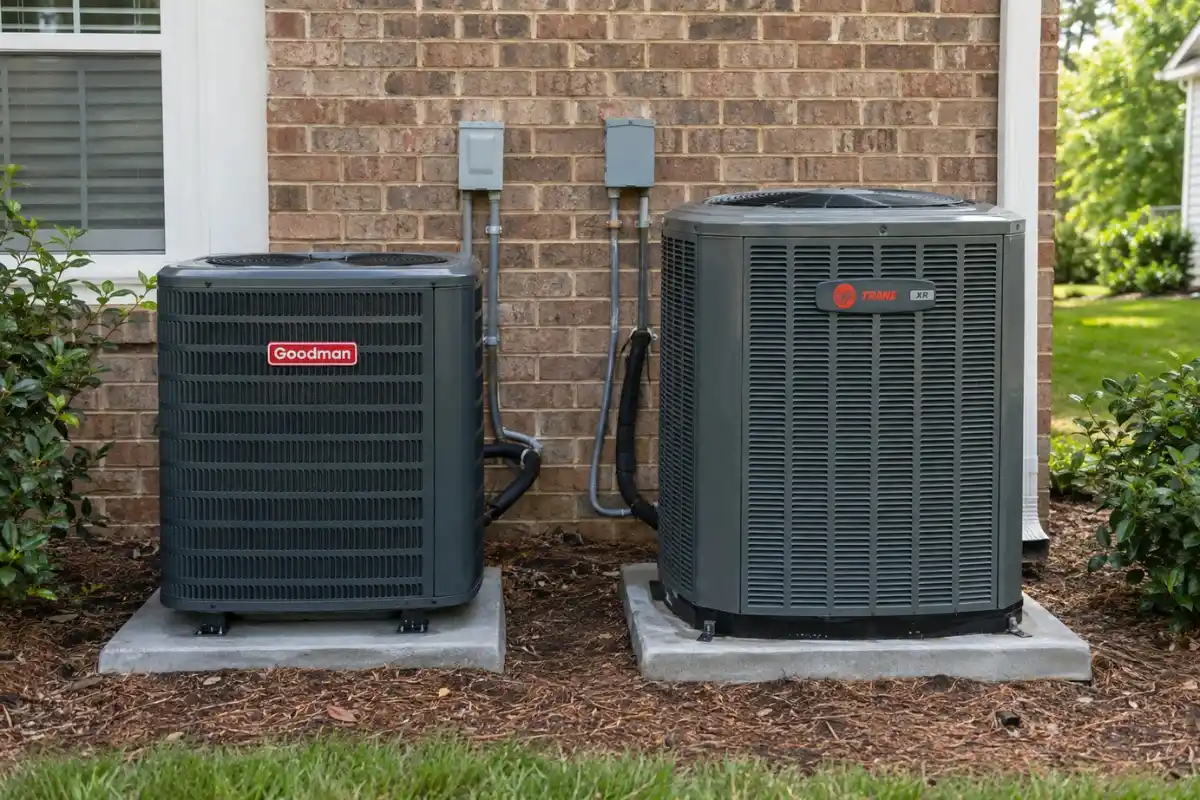
- A Weatherproof Disconnect: A safety switch located near the outdoor unit that allows a technician to cut power instantly for service.
- Proper Wire Gauge: Copper wiring sized specifically to handle the system’s minimum amperage (MCA) without overheating.
- Plan Wiring with Outdoor Unit Placement: Plan wiring alongside outdoor unit placement. Shorter runs reduce voltage drop and support reliable system operation. Placement decisions also affect drainage and long-term performance, which ties naturally into pad preparation, condensate routing, and line set layout for a clean install.
Whether you are installing a brand-new system or replacing an old air conditioner, these basics ensure the system starts reliably and operates within National Electrical Code (NEC) safety limits.
Why Do Heat Pumps Require Dedicated Electrical Circuits?
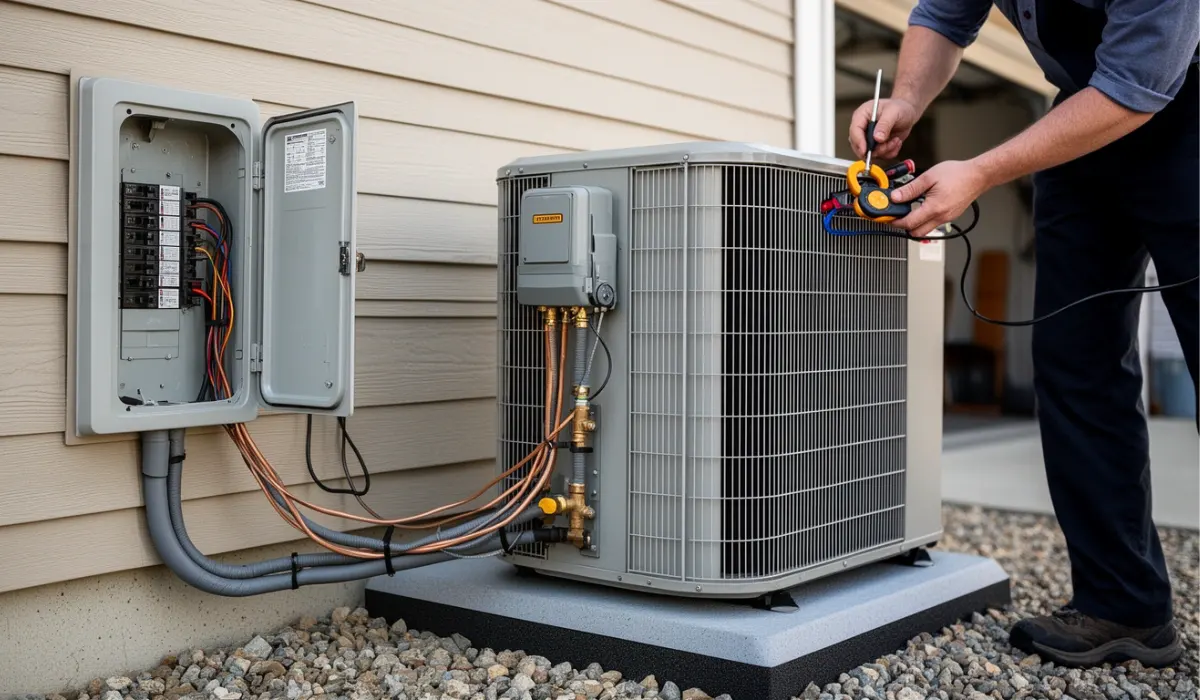
Heat pumps require a dedicated circuit because they pull a significant surge of electricity the moment the compressor and outdoor fan kick on.
This initial draw is much higher than the power used during steady operation. If a heat pump shared a circuit with other appliances, that sudden surge would likely overload the wires, causing the breaker to trip or creating a voltage drop that dims the lights in your home.
Beyond just preventing nuisance trips, a dedicated line protects the equipment’s sensitive inverter boards and variable-speed motors from power fluctuations.
When you prepare the work area inside your home, identifying the electrical panel’s location early helps the team plan the most direct path for this new, high-voltage line. Clear access is especially important in tight spaces like attics and crawlspaces, where thoughtful preparation can make installation faster and smoother.
By giving the heat pump its own lane in your electrical system, you ensure it receives the consistent power needed for both peak summer cooling and the high-demand defrost cycles of winter. Shared circuits are one of the most common reasons inspectors fail heat pump installations.
Heat Pump Breaker Sizing: Understanding MCA vs. MOCP
Selecting the right breaker is not about guessing or using a general chart; it is about reading the manufacturer’s nameplate correctly. This label acts as the ID card for your system, providing two critical values that electricians and inspectors use to verify safety.
Minimum Circuit Ampacity (MCA)
The MCA represents the minimum amount of current that the wiring must be able to carry safely during continuous operation.
This value is used specifically to determine the wire thickness. If the wire is too thin for the MCA, it can overheat, causing the insulation to melt and creating a fire hazard.
Maximum Overcurrent Protection (MOCP)
The MOCP defines the largest circuit breaker size allowed for the unit. Because compressors draw a heavy starting current, the breaker must be large enough to allow that brief surge without tripping, while still being small enough to protect the internal components from a short circuit.
Inspectors verify these numbers directly against the nameplate. If the breaker or wire does not match, the installation will not pass.
By following the MOCP exactly, we ensure the system has the breathing room it needs to start up during extreme weather without sacrificing safety.
What is your Electrical Panel Capacity For A Heat Pump?
A common concern for homeowners is whether their current electrical service can handle the addition of a heat pump. While many assume a 200-amp service is mandatory, the real answer depends on your home’s total electrical load and available physical space. Many homeowners assume a panel upgrade is automatic. In reality, many homes qualify without upgrades after a proper load review.
100-Amp Panels
Many older homes operate on a 100-amp panel. If your home uses gas for high-demand appliances like the water heater, stove, or clothes dryer, a 100-amp service is often perfectly capable of supporting a heat pump. The key is ensuring the total simultaneous draw of your home doesn’t exceed the main breaker’s limit.
200-Amp Panels
A 200-amp panel provides significantly more room to grow. This is usually necessary if you have an all-electric home or high-draw modern luxuries.
We often see the need for 200-amp service when a heat pump is installed alongside an electric backup heat strip kit or an EV charging station.
How Breaker Size Fits In
Beyond the total amperage, your panel must have physical slots available. A heat pump requires a double-pole breaker, which takes up two adjacent spaces in the panel.
If your panel is full, even if it has the amperage capacity, you may need to install a sub-panel or use tandem breakers to create the necessary space.
Typical Electrical Ranges for Heat Pumps
The table below provides general guidance on what to expect based on the size (tonnage) of your system.
| Heat Pump Size (Tons) | Typical Breaker (MOCP) | Min. Circuit Ampacity (MCA) | Est. Wire Gauge (Copper) |
| 1.5 – 2 Tons | 20 – 30 Amps | 15 – 20 Amps | 12 AWG |
| 3 Tons | 30 – 45 Amps | 25 – 35 Amps | 10 AWG |
| 4 – 5 Tons | 50 – 60 Amps | 40 – 50 Amps | 8 or 6 AWG |
[Note: Cooling-only air conditioners often require slightly smaller breakers than heat pumps of the same tonnage because they lack the high-demand heating and defrost components.]
What is NEC Code Compliance for a heat pump?
Municipal inspectors use National Electrical Code rules to determine whether your heat pump can be legally operated.
To pass a municipal inspection, every heat pump installation must adhere to the NEC. These rules are safety standards that ensure your system operates without the risk of electrical shorts or fire.
Inspectors focus on these codes to verify that the high-voltage electrical work was performed to professional standards.
Outdoor Disconnect Location and Line-of-Sight Rules
The most strictly enforced NEC rule for heat pumps is the requirement for a local disconnect switch. This is a small, weatherproof box mounted on the exterior of your home, typically right next to the outdoor unit.
- Line-of-Sight: Code requires the disconnect to be within “Line-of-Sight” of the unit. This means a technician must be able to see the shut-off handle clearly while standing at the heat pump.
- Safety First: This prevents someone from accidentally flipping the breaker back on at the main panel while a technician is servicing the unit’s internal components.
How Inspectors Verify Electrical Safety
During the final inspection, the official will verify that the breaker size in your panel matches the MOCP on the unit’s nameplate. They also check that the wire gauge is heavy enough to handle the MCA rating.
If an inspector cannot access the area to verify the wiring or the electrical connections, they may withhold approval. A code-compliant installation ensures your home remains safe and your manufacturer’s warranty remains valid.
Electrical Issues That Commonly Delay Heat Pump Installations
Most heat pump installation delays are not caused by the equipment itself, but by the electrical infrastructure. Identifying these issues during the planning phase is the best way to ensure your installation stays on schedule.
- Breaker Tripping During Startup: If a breaker is sized solely on running power rather than the MOCP (Maximum Overcurrent Protection), it may trip the moment the compressor tries to start. This nuisance tripping is usually a sign that the breaker cannot handle the initial startup surge.
- Voltage Drop from Long Wire Runs: If your electrical panel is on the opposite side of the house from the heat pump, the electricity must travel a long distance. If the wire gauge isn’t increased to compensate for this distance, the unit may receive low voltage, leading to inefficient operation or motor failure.
- Inadequate Panel Space: The area around your electrical panel must be clear. You should know what to move or protect inside the home. If the crew arrives and finds the panel is full or inaccessible, the installation must stop until a sub-panel is added or the area is cleared.
By reviewing these details early, we avoid the “re-work” that often leads to failed inspections and extra costs.
What Homeowners Should Confirm Before Installation Day

Installation day preparation focuses on access, safety, and workspace readiness, not electrical design decisions. Before the crew arrives, please confirm:
• Panel Access: At least three feet of clear space in front of the electrical panel
• Dedicated Status: Existing outdoor equipment is clearly identified on the panel
• Crawlspace or Attic Access: Pathways are clear and accessible
• Work Area Safety: Pets secured and fragile items protected. See what to move or protect inside the home before the crew arrives for a full checklist.
Conclusion
Electrical readiness is determined long before installation day. Breaker space, panel capacity, and future electrical loads must be reviewed during planning to avoid inspection delays and last-minute surprises.
At Alternative Aire, we take the guesswork out of the process by auditing your electrical setup before the first wire is ever pulled.
FAQ
Why does the breaker sometimes look larger than the wire size?
Because heat pumps need extra power at startup. The wire follows MCA for heat safety. The breaker follows MOCP to handle compressor surge.
Can a heat pump or condenser share a circuit with other equipment?
No. Heat pumps need a dedicated 240-volt circuit. Shared circuits often cause voltage drop, breaker trips, and inspection failures.
Can GFCI or AFCI protection cause nuisance tripping on heat pumps?
Yes, sometimes. Some protection devices react to normal heat pump operation. Final approval follows local rules set by the AHJ.
When is an electrical panel upgrade required for a heat pump?
When the panel can’t support the load. Low service amperage, no breaker space, or added heat strips can trigger an upgrade.
Does installing a new condenser require a panel upgrade?
Not always. A panel upgrade is only needed if your electrical panel doesn’t have enough capacity or space for a new breaker.