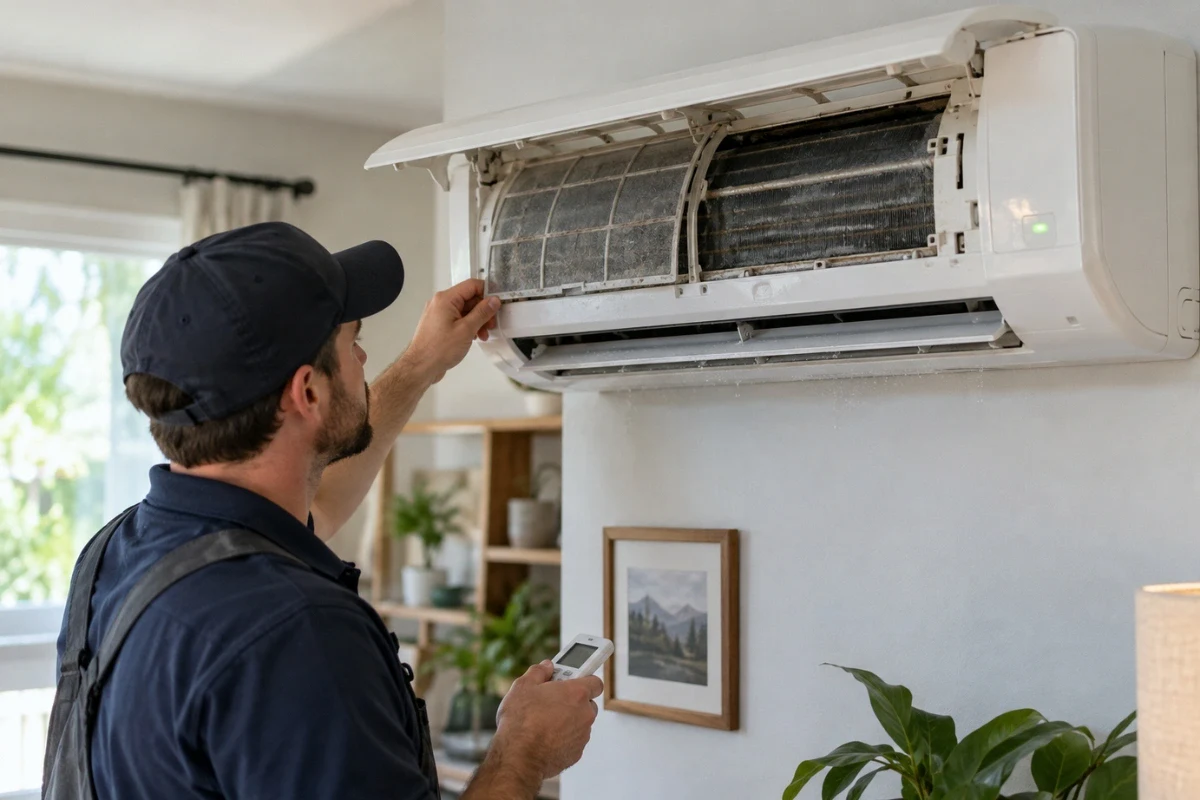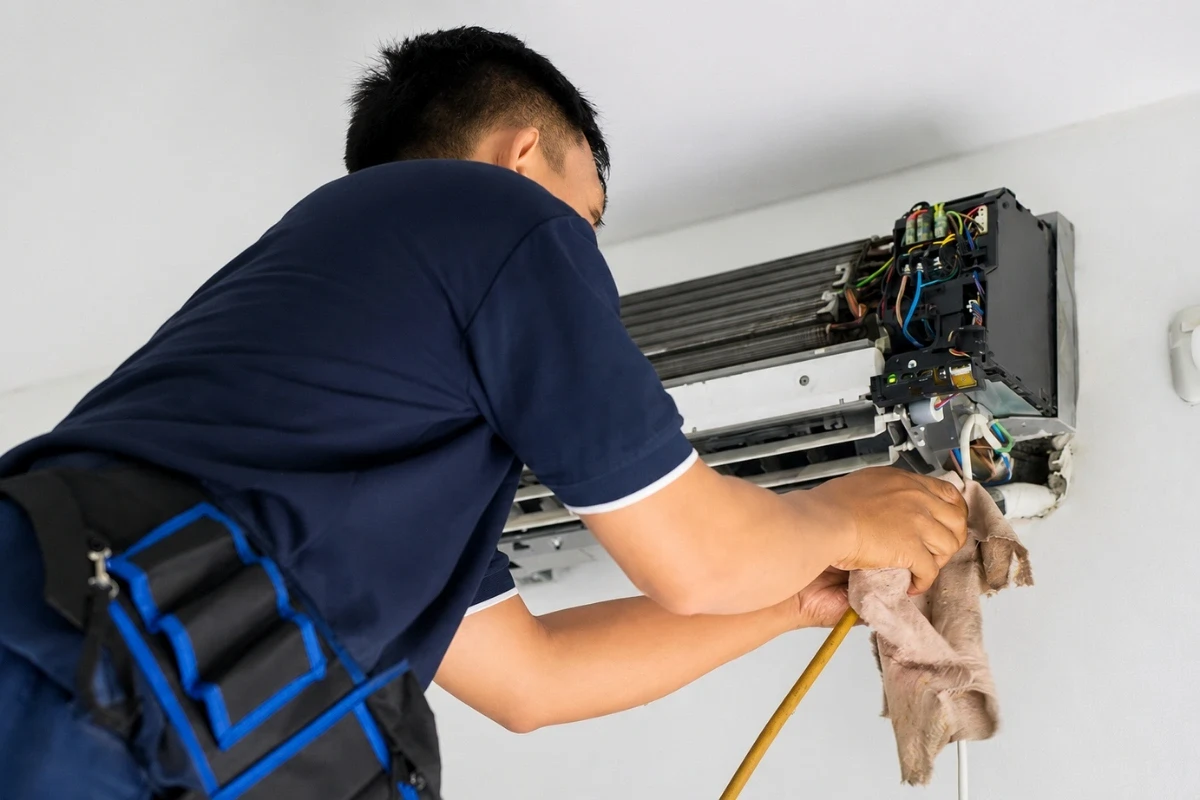
Before your HVAC installation, ensure there’s approximately 3 feet of clear space around both the indoor and outdoor units. Secure pets in a separate room to keep them safe and out of the way.
Those help in both ways, in your way and experts way too. When you handle installation-day prep in advance, the HVAC professional can focus entirely on your home comfort. Following a home preparation checklist for the AC installation team helps the team work faster and keeps your property safe.

|
TL;DR
|
12 Things to Move or Protect Before HVAC Installation Day
Preparation is the secret to a smooth experience. By taking these twelve steps, you help our Alternative Aire team deliver the best results while keeping your home in pristine condition.
1. Clear Access Paths for the HVAC Crew

You should clear a path from the entry door to the indoor unit for the HVAC crew to move heavy equipment safely. A wide, open walkway prevents delays and keeps our technicians safe.
Our teams carry heavy units, such as the air handler, which can weigh over 150 pounds. You should clear a 3 to 4-foot-wide path to allow for dolly movement.
Please remove trip hazards like rugs or shoes and keep stairways clear of any decorations. Professional hallway and stairway protection for hvac installation starts with an open entryway and a clean hallway.
2. Move Furniture Away From Work Zones
You must move furniture away from the furnace or air handler before installation to provide the crew with sufficient space to work. Technicians require room to use tools and maneuver large components.
The indoor unit work zone is often tight. We need furnace closet clearance to reach the plenum and the evaporator coil.
According to industry standards, technicians need at least 3 feet of “elbow room” around the air handler access point to perform a high-quality install. This space ensures we seal every connection perfectly.
We want your system to run at peak efficiency from minute one. Providing ample space helps us reach every bolt and wire easily. Also, attic and crawlspace access tips speed up the installation. They help technicians reach the work area faster and avoid delays.
3. Professional Floor Protection: Hardwood, Tile, and Carpet
You should use floor runners and drop cloths to protect your floors from scratches and debris. High-traffic areas require additional layers to remain pristine during installation.
Heavy equipment can dent wood or crack ceramic. To protect hardwood floors during hvac replacement, we recommend a layer of rosin paper topped with Ram Board floor protection. For heavy dolly traffic, Masonite sheets provide the best impact resistance.
If you want to protect tile floors during hvac install, thick drop cloths or floor runners work perfectly. We always ensure our teams wear clean shoe covers to protect your rugs and carpets.
Our teams also bring basic protection. However, adding extra layers ensures peace of mind for your specific flooring.
4. Cover Furniture and Household Items From Dust

You should cover couches and beds for dust during ac replacement to keep your living spaces clean. Modern AC installations in Durham are much cleaner than in the past, yet some particulates remain unavoidable.
Using dust-control tips during HVAC installation in the home helps maintain indoor air quality. We suggest using plastic sheeting or a ZipWall dust barrier to isolate the work area.
In fact, roughly 20% of homeowners report dust as their main post-install concern. Using a hepa vacuum or an air scrubber during the process further reduces airborne debris.
5. Remove Fragile Items and Wall Decor
You must remove wall art near the furnace closet before hvac install to prevent items from falling. The vibrations from power tools can travel through the studs and shake nearby walls.
Vibrations are common when working on ductwork or in the utility closet. Removing mirrors and wall decor protects your fragile items from accidental breaks.
It is much easier to sweep up a picture than to clean up broken glass later. We handle your home with care, but moving these items first is a smart safety step.
6. Protect Door Frames and Corners
You should protect door frames and corners from hvac equipment by using padded barriers. Corners are prone to scuffs when we move the old furnace out and install a new furnace.
Temporary corner guards and moving blankets are effective tools for protecting corners and door frames. These soft barriers absorb impacts and keep your paint looking fresh.
Our technicians are careful, but extra padding provides an essential safety net in narrow homes. Our goal is a “zero-impact” installation, where the only change you notice is an improved temperature.
7. Secure Pets, Children, and Valuables
You must secure pets and children during HVAC installation to protect them and the crew. An open door or a stray tool can lead to accidents if little ones or furry friends wander into the work zone.
Keep your pets in a pet gate or kennel in a quiet room. You should also decide what to do with valuables before hvac contractors arrive.
Placing small electronics or jewelry in storage bins or locked rooms keeps them out of the high-traffic areas. National safety data shows that nearly 50% of home service accidents involve pets or children underfoot.
8. Prepare Indoor Access Points (Vents and Grilles)
You should clear space around the return grille and supply vents for testing before the crew arrives. We must access these points to balance the airflow and check the system’s performance.
Our technicians check every part of your ductwork to ensure comfort in every room. We need return grille clearance to measure static pressure. Please ensure no furniture blocks the supply register protection or the plenum area. Proper access to the ductwork is vital for a successful startup.
9. Make Electrical and Thermostat Areas Accessible
You must make the breaker panel accessible for hvac installation so the team can manage the power safely. We also need you to prepare the thermostat wall location for the smart thermostat upgrade by clearing any nearby clutter.
The technician requires at least 3 feet of space in front of the breaker box or electrical panel. We will install a new service disconnect and wire your new smart thermostat.
Having the thermostat area clear allows us to show you how to use your new tech without any obstacles. Electrical and breaker requirements for new condensers often involve updates to the circuit. It makes the breaker panel access even more important.
We make sure your electrical connections are safe and up to code, protecting your home from future power issues.
10. Prepare Attic, Crawlspace, and Mechanical Room Entry
Prepare the attic access hatch for hvac installation by clearing the area beneath it. If your system is in a crawlspace, you also need to prepare the crawlspace access for ductwork installation. You can do that by removing any storage items near the door.
Accessing the attic hatch often requires a pull-down ladder. Ensure there is enough room to extend the ladder fully. If you have a garage mechanical room, move your car and any flex duct pathway obstructions.
A clear crawlspace access door ensures our team can check the entire system for leaks. These small preparations can save up to two hours of labor time.
11. Protect the Outdoor Work Zone & Landscaping
Please unlock the gates and exterior access for the condenser replacement before we arrive. Clearing the driveway, parking, and loading space for the HVAC installation truck ensures we have quick access to our tools.

Your outdoor condenser requires a clean area for proper installation.
You should protect landscaping and sprinklers near the outdoor condenser pad by flagging them or covering them with buckets. Keeping the backyard access and side gate clear allows us to move the heavy outdoor unit without damaging your plants.
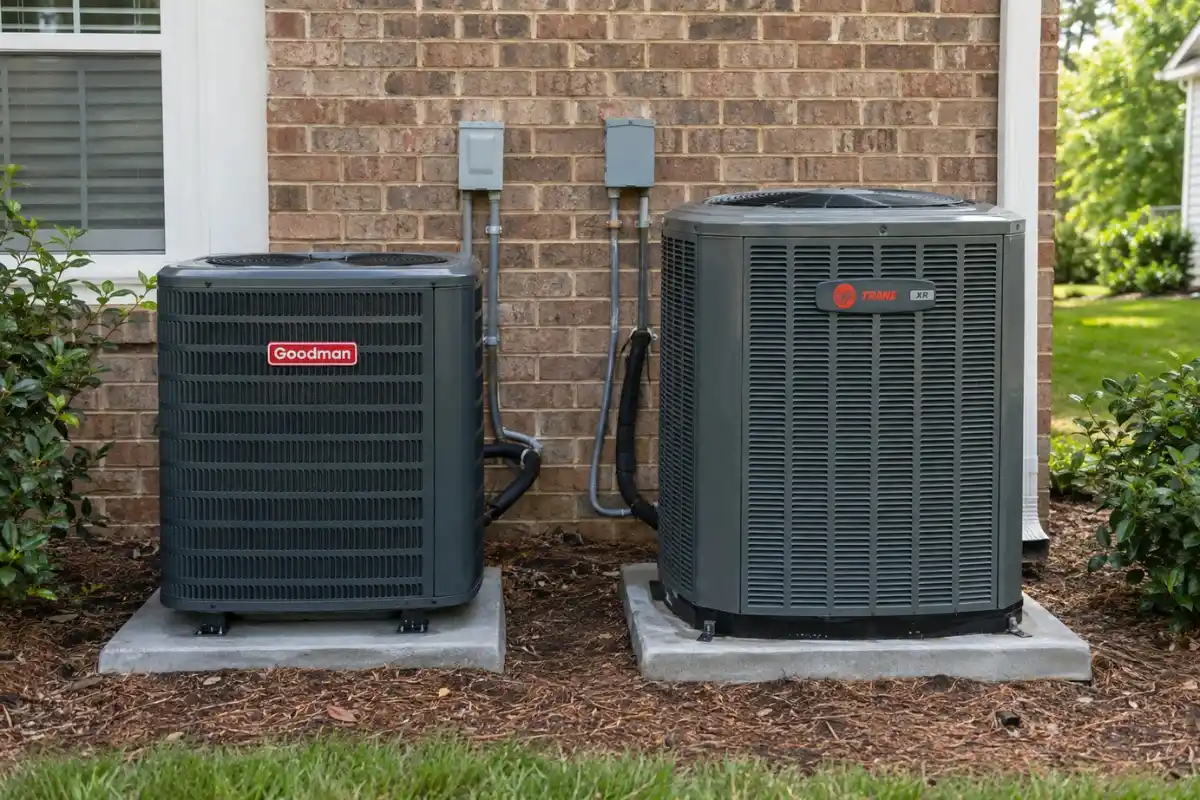
Outdoor unit placement rules for airflow require significant clearance around the unit to ensure proper ventilation.
12. Digital & Electrical “Soft” Prep (Surge Protection)
You should consider installing an HVAC surge protector to protect your new system. Modern communication systems and post-2015 models are highly sensitive to power surges.
An electrical surge can fry a control board in seconds. Installing a protector at the service disconnect provides a vital shield. During the equipment registration process, having these safety features can sometimes even help with warranty claims.
According to recent data, power surges cause millions of dollars in appliance damage every year. Clean install basics like pads and line sets are important, but protecting the “brains” of the unit is just as vital.
Bonus Tips for Jobsite Protection During HVAC Installation
A few extra steps can make a big difference in the quality of your experience.
- I always suggest that homeowners take a “before” photo of their existing setup. This helps with equipment registration and serves as a reference for the HVAC professional during the installation day prep.
- You should have painter’s tape and masking film ready if you want to add extra layers of protection to your baseboards.
- Ensure you have trash bags available for any small debris, although our team handles the major cleanup.
- Providing a clear parking and staging area in your driveway is the single best way to speed up the work.
Small details like these show that you are a smart shopper who values a professional jobsite protection strategy.
Conclusion
You can get your home ready by making clear paths, using Ram Board to protect your floors, and keeping your pets safe. This helps create a space where good work can be done quickly.
We talked about how to protect your hardwood floors, control dust, and make sure the HVAC team can reach your breaker box and air handler. Don’t forget to move fragile items and prepare the area around the outdoor unit to avoid accidents and keep your yard safe.
At Alternative Aire, we think that a well-prepared home makes the installation easier and makes homeowners happier. Following these steps helps your new system start in a safe, clean, and professional way.
Frequently Asked Questions
1. How long does the preparation process usually take for a homeowner?
Most homeowners spend about one to two hours clearing paths and covering furniture to ensure the HVAC installation starts on time.
2. Can I leave my furniture in the room if it is covered in plastic?
You can keep large furniture in the room, but you must move any items within a 3-foot radius of the air handler or furnace to allow for tool clearance.
3. Will the crew need to use my bathrooms or kitchen sinks?
Our HVAC professional team usually brings their own water, but providing access to a sink helps if they need to clear a condensate drain line during the install.
4. Do I need to turn off my existing system before the crew arrives?
Yes, you should turn off your old unit at the thermostat at least one hour before the arrival of the ac installation crew to allow the components to cool down.
5. What happens if I have heavy furniture that I cannot move by myself?
Please inform us when you schedule your appointment. We can discuss the installation day prep and make sure we have the right tools to help you with large obstacles.
6. Does the installation crew bring their own floor protection?
While our crew brings standard drop cloths, we recommend that you place Ram Board or Masonite on delicate hardwood floors for maximum protection.
7. Should I clear my driveway even if I have street parking available? Yes, keeping the driveway clear allows our heavy truck to stay close to its tools, which can save up to an hour of labor time.