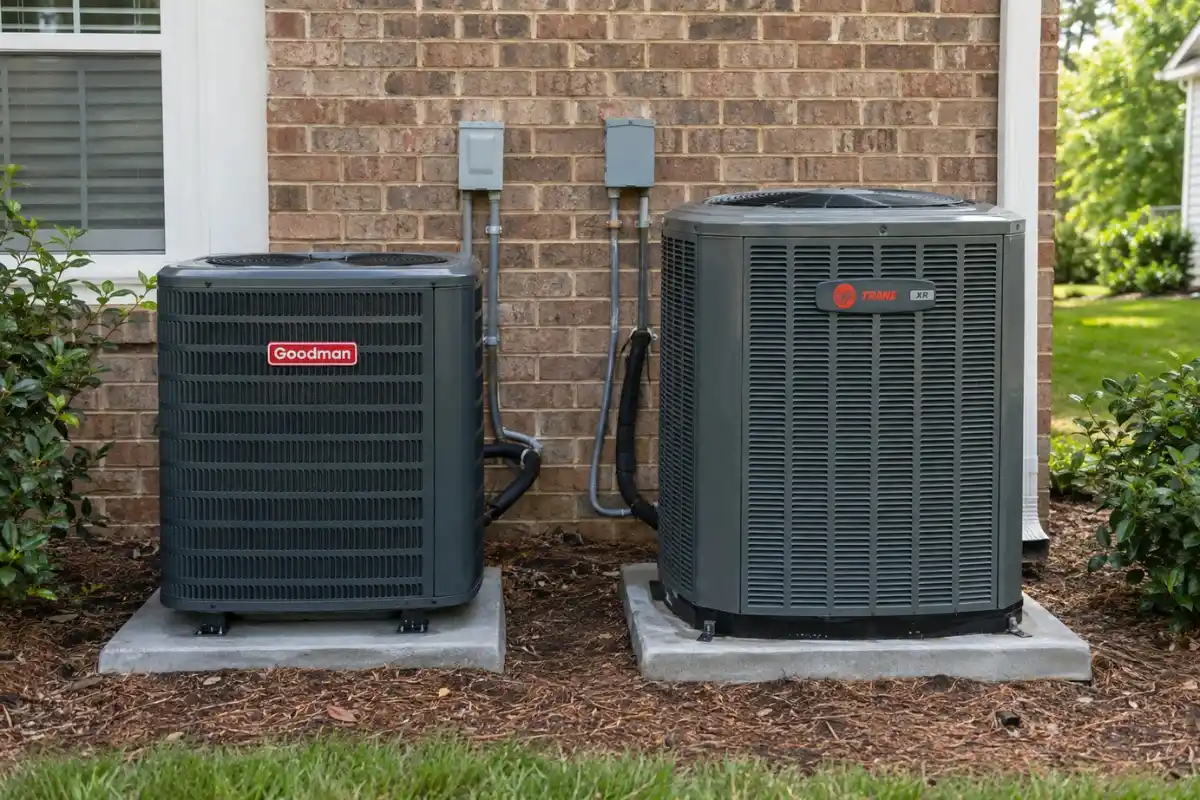
Outdoor AC or heat pump units need at least 1–2 feet of space on all sides and about 5 feet of clearance above. This ensures proper airflow and keeps the system running efficiently. It keeps your system running efficiently and reduces your energy bills.
While working on Alternative Aire, we’ve seen how small placement mistakes can affect a system’s performance. In this guide, I’ll break down everything you need to know about where to place your condensing unit for optimal clearance and performance.

You will get to learn from the minimum spacing requirements to understanding the key factors affecting airflow. I’ll also cover simple checks and strategies that will keep your indoor airflow smooth and consistent over time.
Note: Before installation, confirm that your electrical panel and breakers meet the requirements for your new outdoor AC or heat pump to ensure safe and efficient operation.
|
TL;DR
|
Why Does the Outdoor Unit Placement Really Matter for Proper Airflow and Clearance
Outdoor unit placement, also known as AC or heat pump condenser placement, ensures proper airflow around the unit. This enables your system to efficiently reject heat, maintain comfort, and operate at peak efficiency.
When you put your outdoor unit in the wrong position, airflow gets restricted. It also causes heat buildup and places extra strain on your compressor. This additional strain shortens system life and reduces energy savings.
In simple terms, your outdoor AC or heat pump unit needs space to breathe. Here’s what happens when you give your outdoor condenser enough space to breathe:
- Prevents airflow restriction by keeping the condenser clear of walls, fences and landscaping.
- Reduces air short-circuiting, where discharge air gets pulled back into the unit
- Avoids discharge air recirculation, which traps heat around the system
- Improves efficiency by allowing consistent heat rejection
- Protects the compressor from overheating and frequent shutdowns
- Supports even heating and cooling throughout the home
These benefits directly affect comfort and monthly costs. Correct placement is not about convenience; it is about protecting your HVAC system and ensuring reliable comfort for years to come, rather than struggling from day one.
Good placement planning also reduces disruption inside the home. Clear outdoor access limits the frequency of work in interior spaces during service or future repairs.
The Clearance Requirements of Your Outdoor Unit for Proper Airflow
Understanding clearance requirements means leaving enough open space around your outdoor AC or heat pump. So air can flow in and out without any restrictions. Proper clearance not only helps the condenser to release heat efficiently but also ensures safe access for service.
Outdoor unit placement also affects the ease with which refrigerant lines and wiring reach the indoor system. Installers plan clearance so they can access the attic or crawlspace without problems.
Minimum Side and Front Clearance requirements

You need minimum side and front clearance so your outdoor unit can pull in fresh air and push hot air out without getting blocked. When your unit has a clear airflow path, the condenser can dissipate heat effectively and operate at the correct pressure.
Most manufacturers recommend keeping at least 12–24 inches of space on the sides. 2–3 feet of space on the front side of your outdoor unit.
You can obviously measure side and front clearance. Though it is mainly the contractor’s or your installer’s responsibility to get it right. You can do a simple check using a tape measure.
Measure from the side and front panels of the outdoor unit to the nearest wall, fence, gate, siding or masonry surface. Look for at least 12–24 inches of open space. This quick check will help you determine whether your outdoor unit’s front and minimum clearances are maintained.
When to call Professionals: Call a professional if your outdoor unit is within 12–24 inches of walls, fences, gates, or masonry.
Mounting the Outdoor Unit
You should place your outdoor AC or heat pump unit on a stable and level base pad. So you can avoid water, frost, and ice problems simultaneously.
This matters because the condenser is heavy and sensitive to movement and moisture. A solid equipment pad keeps the system level, protects internal parts and allows proper drainage. Make sure the stable level pad, condensate lines and refrigerant connections are properly set for a clean and reliable installation.
If your unit sits too low or on uneven ground, water pooling, frost heave or ice buildup can stress the system. It can shorten its life too. This is even more important for heat pump elevation because winter operation increases the risk of ice blocking airflow.
Again this is not your job to design or install. That is the contractor’s responsibility. What I tell my clients to follow through after installation are:
- Make sure your unit stays on a graded and level base over time.
- Watch for soil erosion around the concrete pad
- Keep mulch, dirt or gravel from building up against the equipment pad
- Avoid placing the unit in low spots where flooding happens after rain
Benefits they get:
- Prevention of water damage and rust
- Ice buildup reduction under and around the unit
- Keeps the compressor aligned and running smoothly
- Lowers vibration and operating noise when paired with rubber feet or isolators
When to call a professional:Call a professional if the unit is sinking, tilting, sitting in water or showing signs of flooding, frost or ice buildup. But move or protect inside the home before the crew arrives.
Avoiding Obstructions Around the Unit
Your outdoor unit needs open space on all sides so the condenser coil face can pull in fresh air and release heat without restriction.
Obstacles around your outdoor unit prevent air from carrying your house’s heat. When shrubs, trees, decks, walls or walkways sit too close, hot air gets trapped around your unit.
That leads to overheating, short-cycling and higher energy use. Even partial blockage can reduce efficiency over time. As it is not your installation task, here’s what you can do in this matter:
- Keep a clear landscaping trim zone around your unit
- Trim shrubs and tree branches before they touch the condenser
- Avoid placing storage items, grills or furniture near the unit
- If screening is used, choose screening without blocking air, such as open slats or spaced panels
The benefits you will get by doing these:
- Maintains proper airflow and heat rejection
- Prevents outdoor unit overheating
- Reduces system short-cycling and wear
- Helps the system cool and heat more evenly
When to call a professional: Call a professional if bushes, plants, decks, or walls block the condenser coil face or trap hot air.
Best Place Your Outdoor AC or Heat Pump Outdoor Unit
We usually recommend placing out ac/heat pump around those places:

1. Along the Side of Your House
Placing your outdoor unit along the side of your house is one of the most common choices. This location keeps your unit close to your indoor HVAC system, which means shorter refrigerant lines or ductwork, helping the system run more efficiently.
It’s important to leave 12–24 inches of clearance from walls to ensure the unit has sufficient airflow to operate properly. Avoid placing it where water runoff, gutters, or sprinklers can drip directly onto the unit, as moisture can reduce efficiency and cause rust or electrical issues. This place also meets all electrical and breaker requirements.
2. In the Backyard
Your backyard can be a great spot, especially if you want the unit out of sight from the street. Backyards usually offer more space, allowing you to place the unit on a level concrete pad or vibration-dampening base.
It reduces noise and prevents shifting. Keep in mind that proper airflow is crucial, so don’t let fences, patios, or large landscaping block the unit.
3. Near a Driveway or Walkway
Some homeowners place the unit near driveways or walkways for easy access during repairs or inspections. This location is convenient but carries a risk of accidental damage from vehicles, bikes, or foot traffic. Installing a small protective barrier or cage can prevent dents or scratches while still allowing technicians to work easily.
It is best for people who prioritise maintenance accessibility over hiding the unit and are willing to install protective measures.
4. Roof Mount (for Certain Homes)
For homes with limited yard space or unique layouts, a roof-mounted unit can be an excellent solution. It keeps the equipment out of sight and minimises noise on the ground level.
However, this option requires careful planning: the roof must support the unit’s weight, and proper drainage and vibration pads are essential to prevent leaks or structural issues. Professional installation is highly recommended.
This placement works best for urban or space-limited homes where ground placement isn’t possible, and owners want to minimize visual impact.
5. Behind Landscaping or Fencing
Hiding your unit behind shrubs, decorative screens, or fencing helps it blend into your yard and improves curb appeal. But it’s critical to maintain 2–3 feet of clearance on all sides for airflow. Avoid using dense plants that shed leaves or needles, as debris can clog coils, reduce efficiency, and cause costly repairs.
Optimizing Airflow Strategy by Outdoor Unit Placement
Though you can’t do the technical installation job of placing your AC condenser or heat pump unit, you can optimize airflow from the placement of your outdoor unit. The following two strategies will help you optimise airflow from the placement of your outdoor unit:
Directing Air with Fans, Walls or Screens
You can use walls, screens or windbreaks to guide airflow. Ensure they do not block the coil intake or the fan discharge path.
When you use this strategy correctly, these features help push hot exhaust air away from the unit rather than letting it recirculate. This improves airflow by preventing hot air from being recirculated into the condenser. As a result, your unit stays cooler. It also helps with stabilizing head pressure and efficient system operation.
We often see outdoor units placed in side yards with a fence nearby in many client’s houses. When the fence is too close, hot air strikes it and recirculates into the unit.
After we space the fence farther away or use a louvred screen, airflow improves and the system stops overheating on hot afternoons.
Maintaining Fresh Air Flow and Return Paths
To optimize airflow, you have to make sure your unit always has access to fresh air intake and a clear return path for airflow. Nothing should block the space where air enters the condenser or where hot air exits the fan.
When return paths stay open, the unit avoids static pressure at the condenser inlet. This keeps the compressor from working too hard and prevents sudden shutdowns caused by high pressure.
We have helped many homeowners who stacked patio furniture or storage bins near the outdoor unit. Their system started tripping on hot days. Once the area was cleared and airflow returned to normal, the unit cooled properly and ran longer and steadier cycles.
I added a graph for you to look at the strategies improving airflow overtime:

Graph: Degree of Airflow vs time period
4 Factors Affecting Airflow When Placing Outdoor Unit
Where you place your outdoor AC or heat pump outdoor unit, It can have a big impact on the airflow system of your entire house. Working with Alternative Aire for many years, I have seen 4 factors that affect airflow solely depend on your outdoor AC condenser or heat pump outdoor unit placement.
I want to walk you through these four key factors that really affect airflow while placing your outdoor unit:
1. Environmental and Site Conditions
2. Heat and Draft Zones
3. Local Climate Considerations
4. Noise, Vibration and Comfort
From my experience, a homeowner put his outdoor AC near a bedroom wall to cut noise. The vibrations echoed inside and hot air kept returning into the unit. That made the house unevenly cooled and increased electricity use.
Final Checklist: Outdoor Unit Placement for Proper Airflow
Here’s a proper airflow checklist for your outdoor unit placement:
| Check | Recommendation |
| Side Clearance | 12-24 inches minimum |
| Top Discharge | 2-3 feet above obstacles |
| Rear Clearance | At least 12 inches from walls |
| Obstruction & Access | Ensures service panel access and technician access space |
| Pad & Elevation | Concrete pad, graded base, raised if snow/flood risk |
Optional: You can trim nearby bushes or move light screens for extra airflow, but the main focus should be on proper placement done by a professional.
Conclusion
Proper placement of your outdoor AC or heat pump unit isn’t just a technical detail. It directly affects your home’s comfort, energy use and the life of your system. You already know enough about clearance to avoid mistakes and use smart strategies to maintain airflow balance.
At Alternative Aire, we’ve seen firsthand the correct placement prevents overheating, short-cycling and uneven cooling. Small adjustments like keeping a clear path for airflow and ensuring the unit sits on a stable base, make a big difference over time.
FAQs
- What is the minimum distance between two outdoor AC units?
Four feet minimum with 60 inches vertical clearance. - How much clearance is needed around an AC unit?
1–2 feet minimum; 2–3 feet ideal for airflow. - Can I put a fence or screen around my AC unit?
Yes, allow 16–24 inches clearance for proper airflow. - How far should an outdoor unit be from the house?
Minimum 12–24 inches; 2–3 feet preferred. - What happens if my AC unit does not get enough airflow?
Reduced cooling, higher energy use, increased wear, potential compressor damage. - Do smart thermostats improve outdoor unit efficiency?
Yes, they optimize runtime, airflow, and energy savings.