You usually need a 6,000 to 12,000 BTU (British Thermal Unit) for a 200 to 500 square foot room. At Alternative Aire, we see many homeowners struggle with this exact choice. That’s because the right choice isn’t as straightforward.
Finding the right-sized mini-split for a small space is crucial for Durham’s hot and humid summers. A system that is too small runs constantly, while a system that is too big leaves your room feeling wet and sticky. In this guide, we will help you find the perfect size for your specific room.
| TL;DR You generally need a 6,000 to 12,000 BTU mini-split for a 200 to 500 square foot room, but choosing the exact size based on your room type is the key to beating Durham’s heavy summer humidity. |
How Many BTUs Do You Need?
You need roughly 6,000 BTUs for 200 sq ft, 9,000 BTUs for 300 sq ft, and 12,000 BTUs for 500 sq ft. However, this number changes depending on your home’s condition, insulation, occupancy, and other essential things.
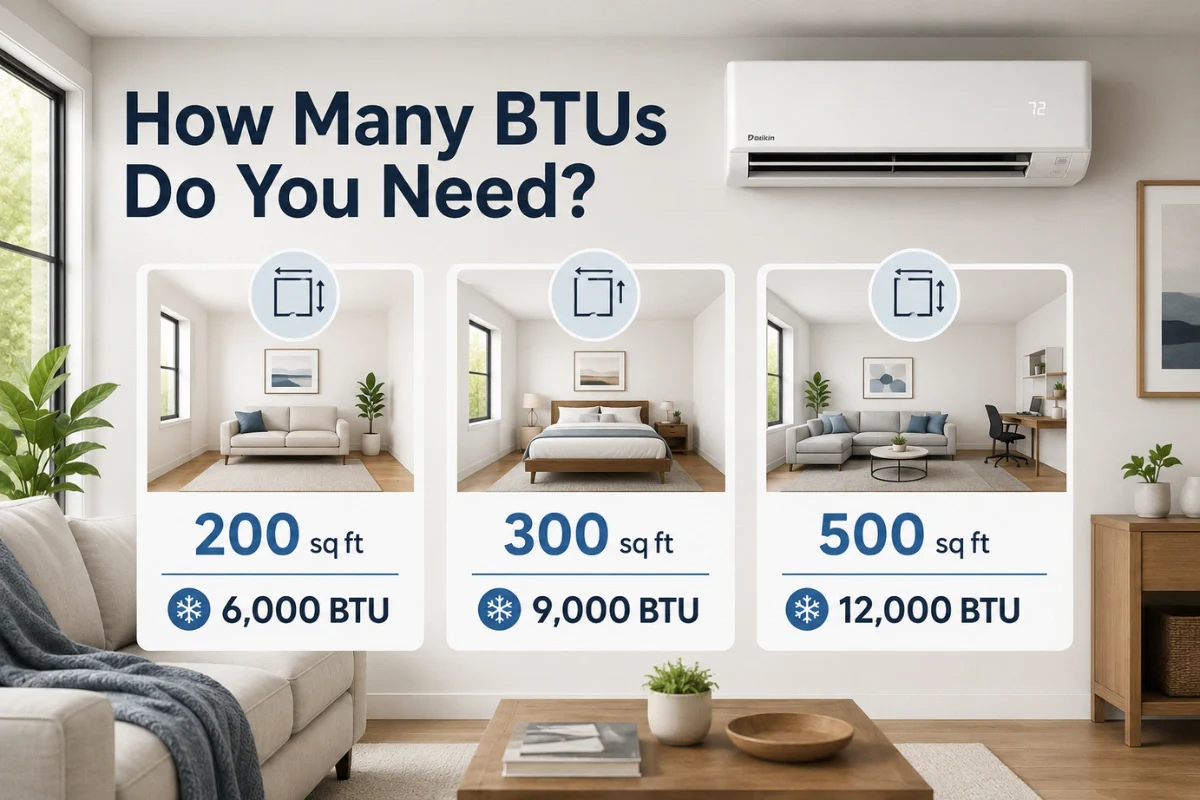
When you use a basic BTU calculator, the math is usually simple. For a well-insulated room, here is the cooling capacity you will need:
| Room Size | Recommended Capacity (BTUs) | Notes for Your Space |
| 200 sq ft | 6,000 BTU | Perfect for a standard space. This can be your best choice for a 200 sq ft bedroom. |
| 250 sq ft | 6,000 to 9,000 BTU | This range gives you great results for a 250 square foot space. |
| 300 sq ft | 9,000 BTU | For 300 sq ft, you will want to look at this system size. |
| 400 sq ft | 9,000 BTU | A 9,000 BTU ceiling cassette works wonderfully here. |
| 500 sq ft | 12,000 BTU (1 Ton) | You will likely need a 12,000 BTU unit for large rooms or open additions. |
This covers the basic cooling load per square foot. However, a true HVAC load calculation requires looking at more than just the floor space.
How Does Durham Weather Affect Sizing?
Durham’s high humidity means you must size your unit perfectly to remove moisture, rather than just cooling the air. We live in a humid subtropical climate zone. This means your AC does two jobs:
- It lowers the temperature (sensible heat load)
- It removes the humidity (latent heat load).
When planning for summer heat, humidity is the biggest factor.
If you buy a unit that is too powerful, you face severe oversizing consequences. The room gets cold too fast, and the unit turns off before it can dry the air. This causes a short-cycling issue. It leaves your room cold and clammy. You must choose the exact right size so your system runs long enough to effectively use its dehumidification modes and set points for Durham summers.
On the other hand, undersizing consequences mean your system runs all day, and your electric bill skyrockets. It simply fails to keep you comfortable.
Why the Type of Room Changes Everything
Sunrooms and garages need much more cooling power than interior bedrooms because of extra windows and less insulation.
Every room is different. A standard single-zone mini-split sizing guide might say 9,000 BTUs is enough for 300 square feet. But that changes based on the room type:
- Mini-split for sunroom in Durham, NC: Sunrooms have high window area heat gain. A 300 square foot sunroom might need 12,000 BTUs instead of 9,000.
- Mini-split for garage: Garages usually lack good R-value insulation. When sizing a mini-split for a converted space, you must account for the uninsulated walls.
- Mini-split for high ceiling: Vaulted ceilings mean you are cooling a larger volume of air. You will need a ceiling height adjustment in your calculations.
What Works Best: Single Unit or Multi-zone Units?
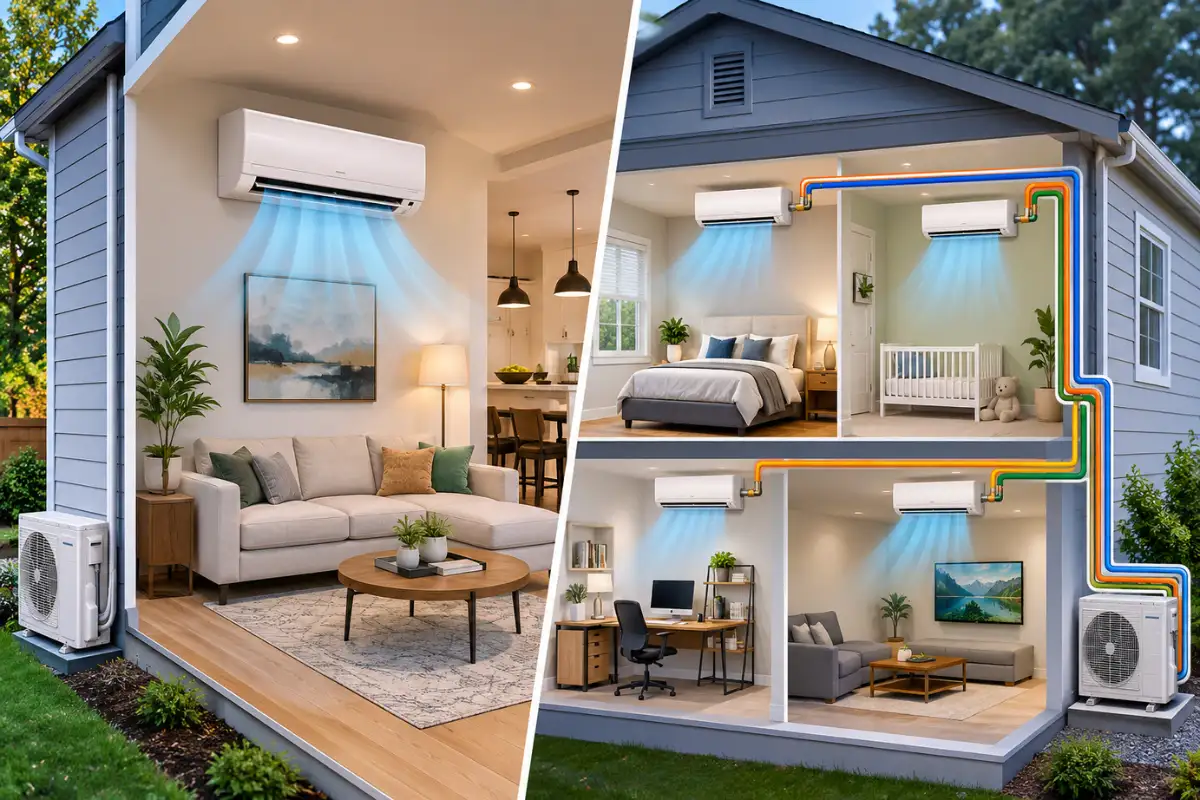
A single unit works best for one open room. But you need multiple indoor heads if walls divide your space.
If you have a 500-square-foot open basement, a single-zone ductless system is highly efficient. But if that 500 square feet includes a bedroom and a separate bathroom, you must think about how many zones you need.
One mini split can also cool 500 sq ft in a humid climate, as long as the air can flow freely. Usually, multi-zone units connect several indoor heads to one outdoor compressor. It gives you targeted comfort. So, choose between a single-zone and a multi-zone system wisely.
Installation Rules in North Carolina
You must get proper permits and follow building codes to ensure a safe, efficient, and legal installation. Many handy homeowners think about doing the installation themselves. While you can buy units online, a professional installation gives you peace of mind and full warranty coverage.
You must follow the NC Mechanical Code. The City of Durham Inspections Department requires permits for mechanical work. Getting this right is critical. Professional installers understand proper line set routing and condensate drainage considerations. This prevents dangerous water damage inside your walls.
They also know the best placement for indoor heads and outdoor units to reduce noise. This ensures your new space remains quiet and relaxing. We always recommend having an expert perform a proper Manual J load calculation in Durham, measuring your exact air changes per hour and infiltration rate.
Final Thoughts
Finding the right size mini-split for a 200 to 500-square-foot space requires looking closely at your specific room and our local climate. Choosing the right BTUs ensures your system runs efficiently, saves you money, and controls humidity perfectly.
A 6,000 BTU unit works wonderfully for a small bedroom, while a 12,000 BTU unit handles a larger, open addition. At Alternative Aire, we want your home to stay comfortable all year round.
Frequently Asked Questions (FAQs)
Is a $500 per month electric bill normal if I use a mini split?
A properly sized system keeps your utility bills very low. If you see a bill that high, your system is likely undersized and running constantly to keep up. Our team designs systems to save you energy and money every single month.
Are cheap online units a good idea for my home?
Buying budget units online frequently leads to quick breakdowns and zero warranty support. Finding replacement parts or a technician to fix off-brand equipment is incredibly difficult. We strongly suggest investing in reputable, professionally installed equipment for true peace of mind.
Will this system also heat my room during North Carolina winters?
Yes, these systems are powerful heat pumps that provide fantastic heating. Even on cold January nights in Durham, they easily pull warmth from the outside air to keep your space perfectly cozy.
How often should I clean the filters on my indoor unit?
You should wash the reusable air filters every two to four weeks. During our heavy spring pollen season, checking them more often keeps the air flowing perfectly. Clean filters ensure your system runs smoothly and keeps your indoor air fresh.
Do I still need a separate dehumidifier in my room?
A correctly sized ductless unit manages the humidity entirely on its own. It continuously pulls moisture from the air while cooling your space, allowing you to put your loud, portable dehumidifier away in storage.
Can I hide the indoor unit if I dislike the wall-mounted look?
Yes, you have several beautiful alternatives available. You can choose a ceiling cassette that sits completely flush with your drywall or a low-profile floor unit. We help you find a style that blends perfectly into your room’s design.
How long will my new system last?
You can expect your new system to last 12 to 15 years with regular checkups. Scheduling a simple annual tune-up with Alternative Aire protects your investment and keeps the equipment running efficiently year after year.
Can I install a ductless unit in an older historic home safely?
Absolutely, these systems are the absolute best choice for older homes without existing ductwork. We only need to drill a tiny three-inch hole through the exterior wall, keeping your original plaster, brick, and historic trim completely intact.