AC starts blowing musty or stale air through the house, it usually means something inside the system is not as clean as it should be. In many homes, bad AC smells come from dust buildup in air ducts, excess moisture around the HVAC system, clogged filters, or even mold growing in hard-to-see damp areas.
We handle those cases a lot while working at Alternative Aire. HVAC odors are clear signs of poor indoor air quality. In this guide, I will show you how to identify these smells, explain what causes them, and help you fix the problem.
|
TL;DR Weird AC smells are a clear warning sign of poor indoor air quality, but identifying the root cause and upgrading your ventilation will quickly get your home smelling fresh and safe again. |
What is Indoor Air Quality (IAQ)?

Indoor air quality (IAQ) refers to the cleanliness and healthfulness of the air inside your home. Good IAQ means your home is free from dust, mold, and harmful gases.
The U.S. Environmental Protection Agency (EPA) and the CPSC study shows indoor air pollutants happen because of 4 kind of bacteria, like-
- Biological Contaminants (Like Mold Spores And Bacteria)
- Volatile Organic Compounds (Vocs From Cleaners)
- Particulate Matter (Dust)
- Gases (Like Carbon Monoxide And Radon).
When these build up, you experience symptoms of poor indoor air quality. Breathing in these indoor air pollutants can cause headaches, dizziness, and throat irritation. Moreover, bad air quality can cause dizziness. You can track the indoor air quality using a standards chart or a smart indoor air quality index monitor.
Why Does My AC Smell So Bad?
Your AC smells bad because dirt, moisture, or electrical problems are trapped inside the system. It pushes bad odors through your AC vents, and it can also smell because:
- Accumulated Mold
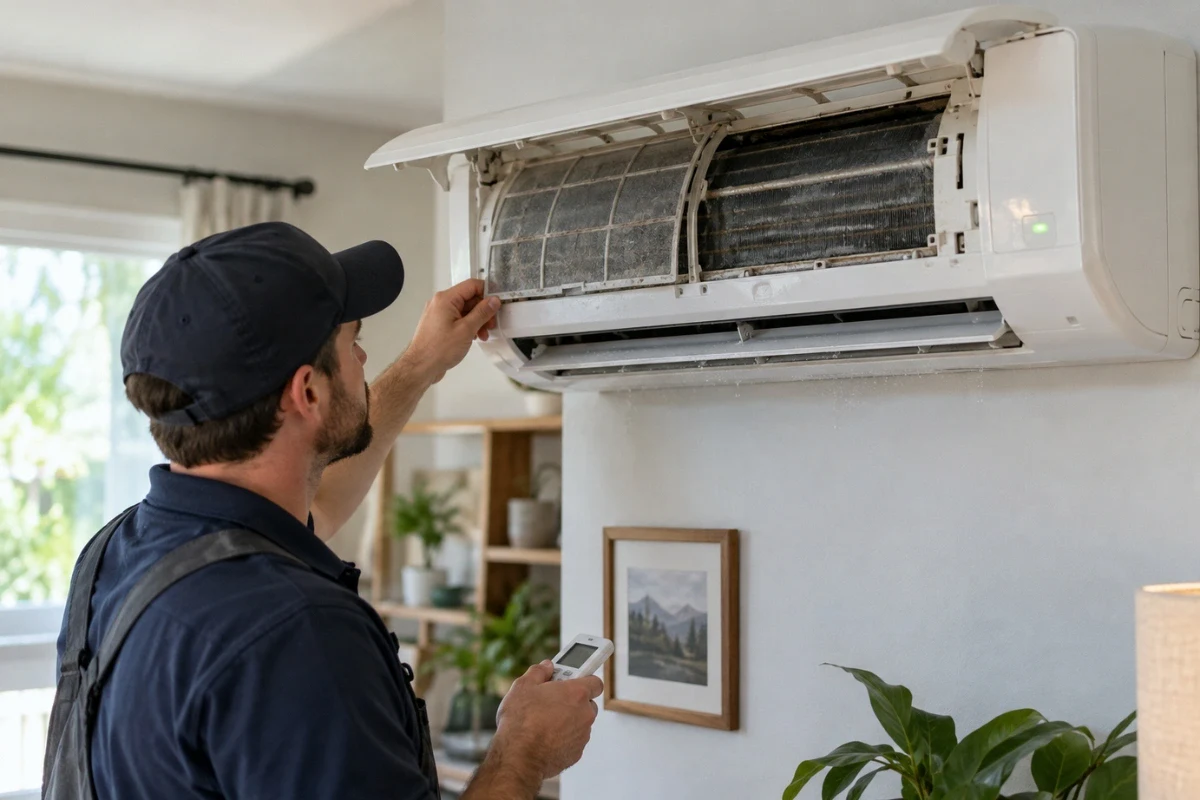
Almost always, a musty AC smell indicates accumulated mold. When your air conditioner runs, it pulls moisture from the air. This creates condensation. If your system has a moisture issue, standing water stays in the drain pan. This allows mold and mildew to grow.
Soon, you will notice a dirty-sock or gym-bag smell coming from your ductwork. You might even find mold in the air handler or on the evaporator coils.
Sometimes, this moisture freezes. So, check for frozen coils and lineset icing. Ask a professional to defrost it safely.
- System Failure
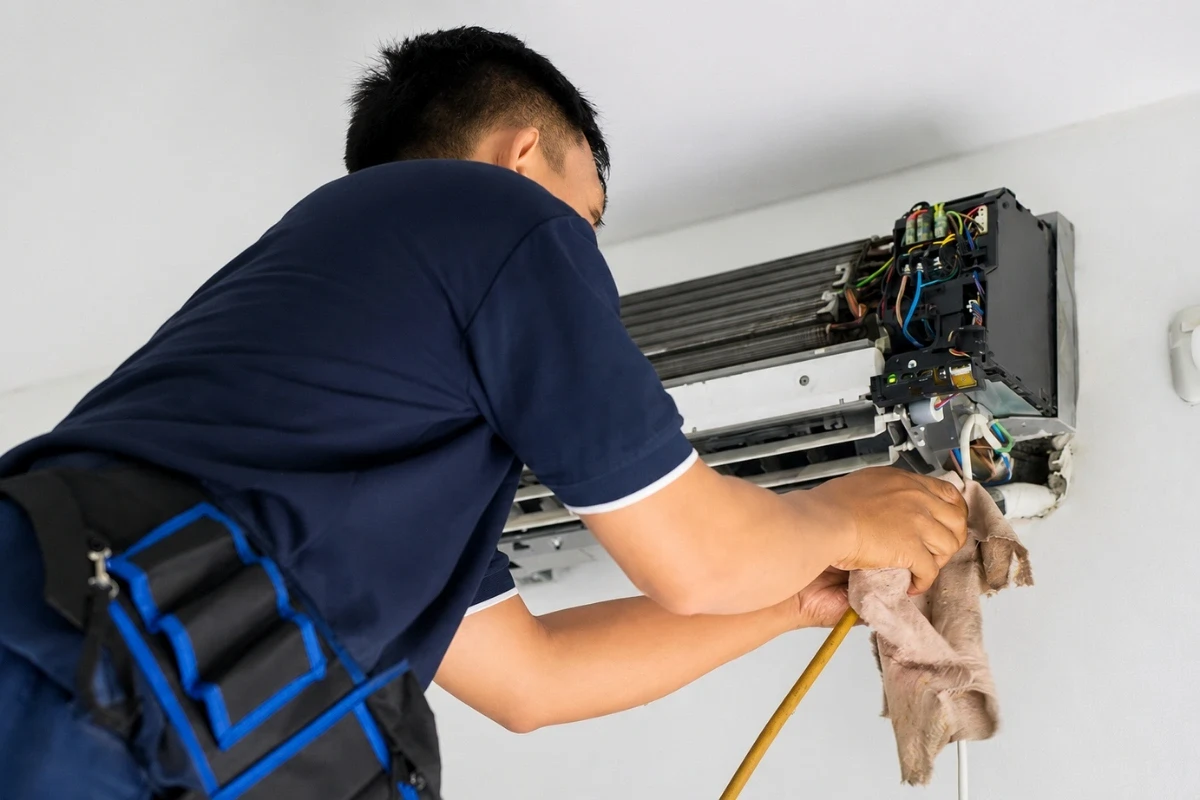
A burning smell from an AC is dangerous. If you smell burning plastic or an electrical smell, turn the system off immediately. This points to a failing motor or melting wires. Before calling a professional, check your thermostat settings, as digital thermostats sometimes don’t turn the heat on.
- Refrigerant Problem
A sweet, sharp chemical odor usually indicates a refrigerant problem. Modern refrigerants are mostly odorless. But the oils mixed with them smell like ether. If you smell this, consider it an AC refrigerant issue and call an expert.
- New AC
If your house smells like trash when the AC is on in a newly purchased house, or you smell rotten eggs, you might have a dangerous natural gas leak. Also, it can be a dried-out plumbing pipe pulling sewer gases into your vents.
Common AC Issues Affecting Your Home’s Air

Imbalanced airflow, short cycling, and dirty filters trap bad smells inside your house and make certain rooms uncomfortable.
- If your AC turns on and off too quickly, it is known as short cycling. In this case, the AC cannot properly filter the air.
- When the air is not moving well, odors settle in specific rooms. You might find your upstairs hotter than downstairs. You must practice source control. Clean your cooling coil and replace your dirty air filter to stop odors.
- If your system struggles to push air, go for immediate solutions like replacing the air filter, ensuring all vents are open, and clearing obstructions.
- Make sure to maintain your air conditioner to keep your unit running fresh.
Protecting Your AC and Air Quality
Protecting your AC from storms and fixing summer breakdowns keeps your indoor air quality safe and your home smelling fresh.
Severe weather forces dirt, leaves, and water into your outdoor unit. This creates biological contaminants. Protect your outdoor AC unit during storms and power events by turning off power at the thermostat and breaker. Always remember the golden rules of HVAC:
- Multiply the age of your equipment by the repair cost. If it is more than $5000, buy a new unit.
- Wait 3 minutes after turning your AC off before turning it back on to protect the compressor.
Following these rules helps prevent common summer HVAC issues. This will save you money and keep you healthy.
Conclusion
Bad AC smells are warning signs that your indoor air quality needs attention. Basically, advanced ventilation improves your home’s air quality. By keeping your system clean, fixing moisture issues, and using proper air cleaning tools, you ensure your family breathes safe, fresh air. Alternative Aire is always here to help you maintain a healthy and comfortable home.
Frequently Asked Questions (FAQs)
Test your indoor air quality at least once a year. You should also test it right after you finish a major home remodeling project, paint your walls, or install new carpets.
Plants do release oxygen, but you need a massive, unrealistic amount of plants to match the air-cleaning power of mechanical air cleaners or an in-duct air purifier.
Keep your home’s indoor humidity between 30% and 50%. This range keeps you comfortable while stopping mold and mildew from growing on your walls and windows.
Many scented candles release soot and chemical compounds into the air when you burn them. Using a diffuser with essential oils is often a safer choice for your lungs.
Cleaning your ductwork removes physical dust and pet hair. However, if the bad smell comes from a wet drain pan or a failing motor, duct cleaning alone will not solve the root problem.
During the summer, dust settles on the furnace components. When you turn the heat on for the first time in winter, that dust burns off safely, creating a temporary odor.
Using white vinegar is a much safer choice to clear a drain line. Bleach is a harsh chemical that can slowly eat away at the plastic pipes and the glue holding them together over time.
MERV stands for Minimum Efficiency Reporting Value. It measures how well a filter traps tiny particulate matter. A higher MERV rating means the filter catches more dust and allergens.