We all know how essential a working air conditioner (AC Unit) is when the summer heat and humidity hit. But how long can you really expect your cooling system to last? Is it 10 years? 20 years?
For your modern central AC systems, it is supposed to last between 15 to 20 years. However, that number can be much lower (sometimes as short as 10 years) if the AC unit isn’t properly installed or regularly maintained.
At Alternate Aire, we’ve spent years keeping North Carolina comfortable. We know exactly what causes an AC unit to fail too soon and how you can avoid those expensive surprises.

Key Takeaways
|
The Expected Lifespan of Your AC Unit
The lifespan of your Air Conditioner is not a guess; it depends on the type of system you own and how well you treat it. For most homeowners in North Carolina, a new AC unit represents a major investment, so knowing its expected service time is key to planning.

- Central AC Systems: These systems have the longest HVAC lifespan expectations in Durham. You can typically expect your central AC to last 15 years before needing a full replacement. With excellent AC maintenance every year, some high-quality AC units can last up to 20 years.
- Heat Pumps: Heat pumps usually last a bit shorter than air conditioners. Because it works all year long (cooling in summer and heating services in winter), it tends to have more wear and tear. Their average lifespan is around 15 years.
- Ductless Mini-Splits: This is the most common heating and cooling system in North Carolina for its zoning capabilities. These versatile systems often offer the longest lifespan, typically running for 20 years or more.
How North Carolina’s Climate Affects AC Longevity
The climate plays a big role in HVAC’s performance. North Carolina summers are not just hot; they are extremely humid. This high humidity makes your AC Unit work harder and longer to remove moisture from the air, increasing the strain on the compressor and other components. This increased usage shortens the lifespan of the AC Unit if it is not properly sized or maintained.
4 Crucial Factors That Shorten AC Lifespan
While the manufacturer’s quality matters, different issues can affect your AC’s longevity. However, some simple HVAC fixes for NC homes can solve that easily:
The Critical Role of Proper Installation and Sizing
Improper installation is the biggest cause of early AC Unit failure. If you are stuck with a too-large or too-small HVAC system, you will have problems.
- Oversized Systems (Too Big): Bigger units cool the home quicker, but insufficient runtime comes with excessive humidity. It will constantly turn on and off (short-cycling), causing extreme wear and tear on the compressor and blower motor. This is guaranteed to shorten the lifespan.
- Undersized Systems (Too Small): A small system will run non-stop, struggling to keep up. This puts excessive strain on the components and leads to early failure.
To prevent this, an HVAC professional must perform load calculations before installation to ensure you pick the correct HVAC size in NC.
Air Filter Neglect
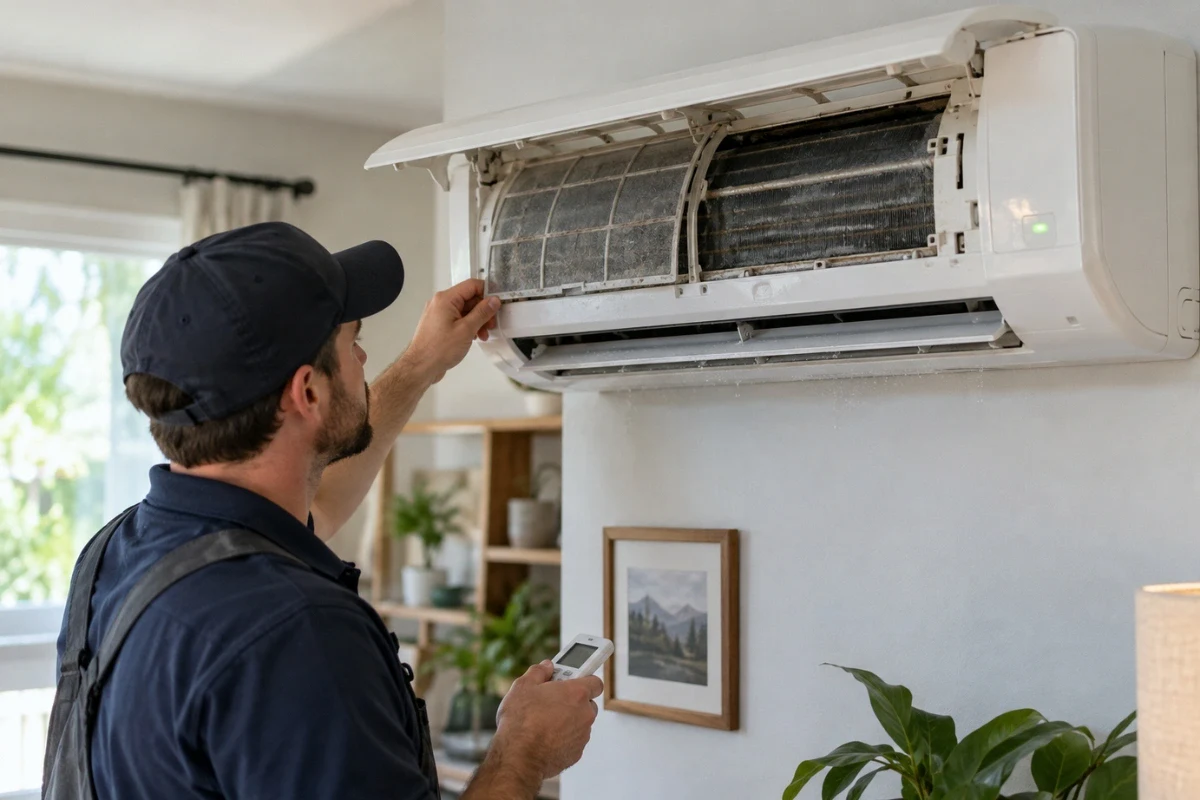
A dirty air filter is like putting a plastic bag over your mouth, where your system has to fight to breathe. This restricts airflow and causes the AC unit to overheat. Neglecting this simple AC maintenance step is a quick way to increase your repair costs and ruin your AC system.
Lack of Routine AC Maintenance
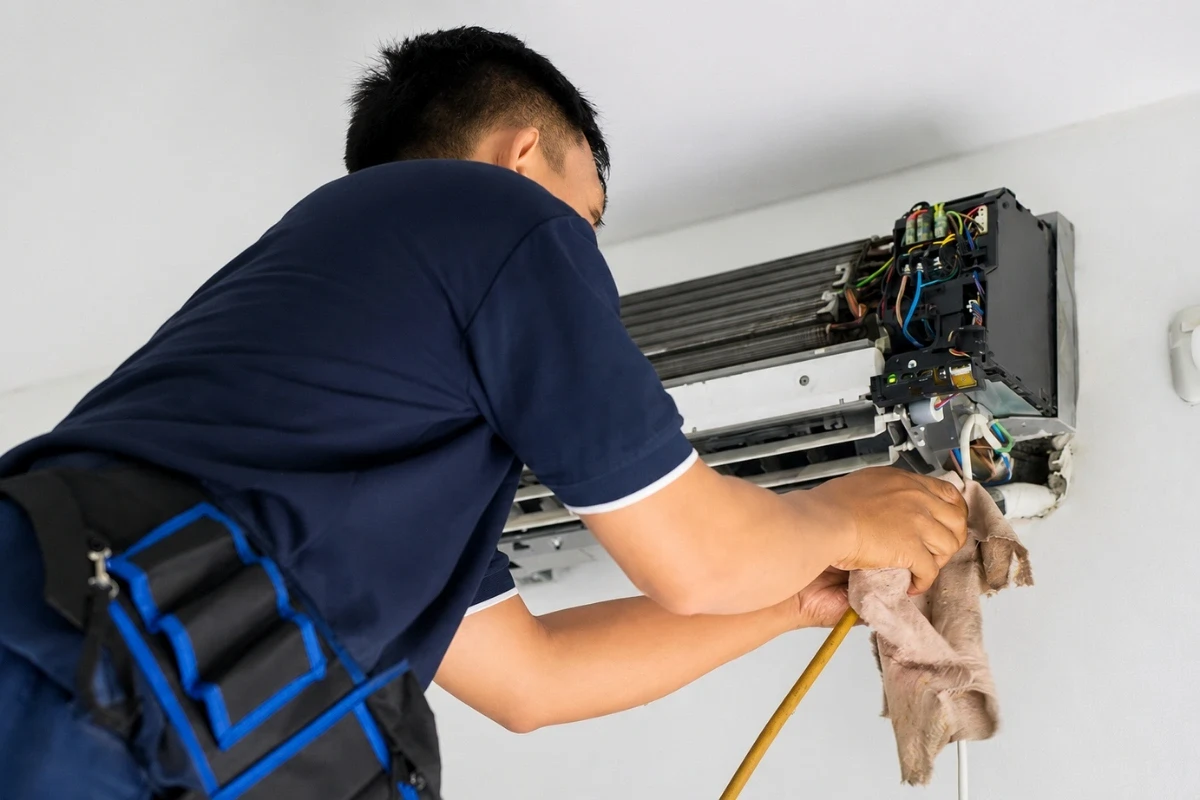
Your AC unit is similar to your car. You need to change the oil from time to time or the engine will fail. Routine annual AC maintenance by a certified HVAC technician is the most affordable way to extend the lifespan of your air conditioner.
How Proactive AC Maintenance Maximizes Longevity and Efficiency
Preventive AC maintenance is the secret weapon for every smart homeowner. It stops small problems from turning into expensive major repairs.
Your Annual AC Tune-Up Checklist
Once a year, before the North Carolina summer begins, you should get professional HVAC inspection services in Durham. A professional from Alternate Aire will perform a full inspection or diagnostic on your unit. This tune-up includes:
- Cleaning the Coils: Dirt and grime on the condenser and evaporator coils reduce energy efficiency. Cleaning them helps the system cool better.
- Checking Refrigerant Levels: Low refrigerant (like R-410A) is a sign of a leak and forces the compressor to work harder.
- Lubricating Moving Parts: Lubricating the blower motor and other moving components reduces friction and wear and tear, dramatically extending the lifespan.
- Crucial Filter Tip: For optimal airflow, avoid using overly thick electrostatic or hyper-allergenic air filters unless your system is specifically rated for them. They can restrict the air too much and damage your system.
The True Cost Savings of AC Maintenance
Routine tune-ups improve your system’s energy efficiency, which means lower energy bills. They also help the HVAC technician spot potential issues like a minor refrigerant leak or a failing capacitor before they cause a full system breakdown, cutting down on sudden, high repair costs.
The Legacy of Older Units: Built to Last
It’s a common saying that they “don’t make them like they used to.” Many homeowners have stories of 20- or even 30-year-old AC Units that are still running! However, this is rare and typically only happens with older systems that were over-built and received consistent, diligent AC maintenance throughout their lives.
While modern systems (like those with high SEER2 ratings) are far better for your energy bills, protecting your older unit with strict AC maintenance can buy you significant time and savings. Just keep saving up for the inevitable replacement!
6 Warning Signs: When to Repair vs. Replace Your AC System
If you notice any of these signs with your AC Unit, it may be time to call a professional to check for HVAC upgrade warning signs and a proper estimate.

| Warning Sign | Indication |
| 1. Age of the Unit | The unit is 10 years or older. It is close to dying out. |
| 2. High Energy Bills | A spike in your energy bills is the sign of lost efficiency and wasted money. |
| 3. Strange Noises/Odors | Loud grinding or clanking sounds (could be the compressor or blower motor). Mold is often responsible for musty smells from the ductwork. |
| 4. Frequent Repairs | It needs a repair every summer. The cost of frequent repairs adds up fast. |
| 5. Poor Cooling Performance | Weak airflow or some rooms staying warm, indicating a loss of cooling power or a ductwork problem. |
| 6. High Humidity Indoors | Your AC unit is struggling to dehumidify the air, a common problem in North Carolina. |
The 10-Year Rule
When facing a major repair on an older AC Unit, use the 10-year rule:
- If your AC Unit is less than 10 years old and the repair cost is minor, choose repair.
- If your AC Unit is over 10 years old and the repair cost is more than 50% of the cost of a new system, choose replacement. The low energy efficiency of the old system means a new one will save you money quickly.
The $5,000 AC Rule
Many HVAC professionals also use a quick math calculation to help homeowners decide:
- Multiply your AC’s age (in years) by the repair cost (in dollars).
- If the total number is greater than $5,000, it’s often smarter to choose replacement over repair.
This rule helps take the emotion out of fixing an aging unit that is likely on “borrowed time.”
Navigating the 2025 Refrigerant Transition
A major industry change is here: the phase-out of the common refrigerant known as R-410A. This is a key factor when deciding on an AC replacement.
The EPA Mandate and the Phase-Out Timeline
The R-410A refrigerant has a high Global Warming Potential (GWP). It impacts climate change heavily.
- Starting January 1, 2025, manufacturers were prohibited from producing or importing new AC systems that use R-410A.
What the Phase-Out Means for Your Existing R-410A System
Phased-out refrigerant doesn’t mean you have to replace your current AC Unit. You can still use it as long as it lasts. However, as production slows down, the cost of R-410A for a repair (like fixing a refrigerant leak and recharging the system) will likely become more expensive.
Introducing the Next Generation: New Systems
The HVAC industry is moving to new, eco-friendly refrigerants like R-454B and R-32. If you are purchasing a new system now, you will be investing in a modern system that is more environmentally conscious and future-proof.
The True Cost of Replacement: Pricing, Efficiency, and ROI
A replacement is a major decision, but the return on investment (ROI) is substantial due to huge gains in energy efficiency.
Understanding SEER2: The New Standard for Energy Efficiency
SEER2 is the current measure of an Air Conditioner’s cooling efficiency. Picking a higher number is one of the primary energy efficiency tips for Triangle HVAC owners. Choosing a unit with a higher SEER2 (like 16 or 18) will save you more money over the lifespan of the unit.
Cost Breakdown: New AC Installation in North Carolina
The total cost of a Central AC replacement in North Carolina typically ranges from $2,700 to $6,400 for a standard system, but can go up to $9,500 or more for larger homes or high-efficiency brands. This price includes the AC Unit, labor, and installation.
Factors that affect the cost:
- System Size: Larger units cost more.
- SEER2 Rating: Higher energy efficiency means a higher initial cost.
- Ductwork: If your existing ductwork needs extensive repair or replacement, that will add to the total cost.
- Brands: Premium brands like Lennox may cost more than others.
Choose Your Trusted Partner: Alternate Aire
Whether you need a quick repair or are ready for a full AC replacement, you need an HVAC professional you can trust.
Alternate Aire is North Carolina’s most trusted partner for all residential and commercial cooling needs. Our certified HVAC technicians have the knowledge and experience to ensure your new AC unit is sized correctly (proper sizing is key!) and installed perfectly for maximum lifespan and energy efficiency.
We provide:
- Expert diagnostics and lasting repairs.
- Accurate load calculations for perfect installation.
- Annual AC maintenance plans to protect your investment.
- 24/7 emergency service.
Don’t let the summer heat catch you off guard. Contact Alternate Aire today to schedule your AC maintenance or get a free, no-pressure replacement estimate.
Frequently Asked Questions (FAQs)
How often should air conditioners be replaced?
While the average lifespan is 15 to 20 years, you should start thinking about replacement when your AC unit is 10 years old. You should replace it immediately if you need constant repairs, your energy bills spike, or your system uses the phased-out R-22 refrigerant.
Can an AC unit last 30 years?
Yes, an AC Unit can last 30 years or even longer! However, this is rare and typically only happens with older systems that were over-built and received consistent, diligent AC maintenance throughout their lives. While amazing, these old systems are extremely inefficient and will cost you much more in energy bills than a new system.
What is the $5,000 AC rule?
The $5,000 AC rule is a guideline to help you decide whether to repair or replace. It works by multiplying the age of your unit (in years) by the cost of the needed repair. If the resulting number is over $5,000, most experts recommend replacement as the smartest long-term financial decision.