
Mini splits are widely used in 2026 for their energy efficiency, quiet operation, and room-by-room control. You expect them to keep your home cool and dry.
But here’s the real question: do they actually dehumidify in summer? The answer is yes: mini splits remove humidity as they cool, through a process called latent heat removal, where moisture is pulled from the air.
However, there’s a catch. In real conditions, many people notice that even when a room feels cool, the air can still feel slightly damp. While mini splits do remove moisture, they don’t always handle high humidity perfectly.
In this guide, we’ll explain how they work and when a dedicated dehumidifier may be necessary.
| TL;DR Mini splits remove humidity while cooling, but they often don’t run long enough in summer to fully control moisture, so if humidity stays above 55–60%, a dehumidifier is more effective. |
What Is a Mini-Split (Ductless Mini Split System)?
A mini split, also called a ductless mini split, is a heating and cooling system that works without traditional ductwork.
Instead of cooling the entire house through ducts, it uses an outdoor unit connected to indoor units that control the temperature of individual rooms or zones.
Ductless mini splits in Durham are commonly used in homes without existing ductwork, older houses, finished attics, sunrooms, and home additions.
They’re especially popular in this area because they handle hot summers efficiently while helping control humidity in smaller, targeted spaces. When choosing an indoor unit, options like wall-mounted or ceiling cassette systems usually come down to noise level, airflow distribution, and overall design preference.
Do Mini Splits Remove Humidity During Cooling?
Yes. Mini splits remove humidity as a natural part of the cooling process in specific spaces.
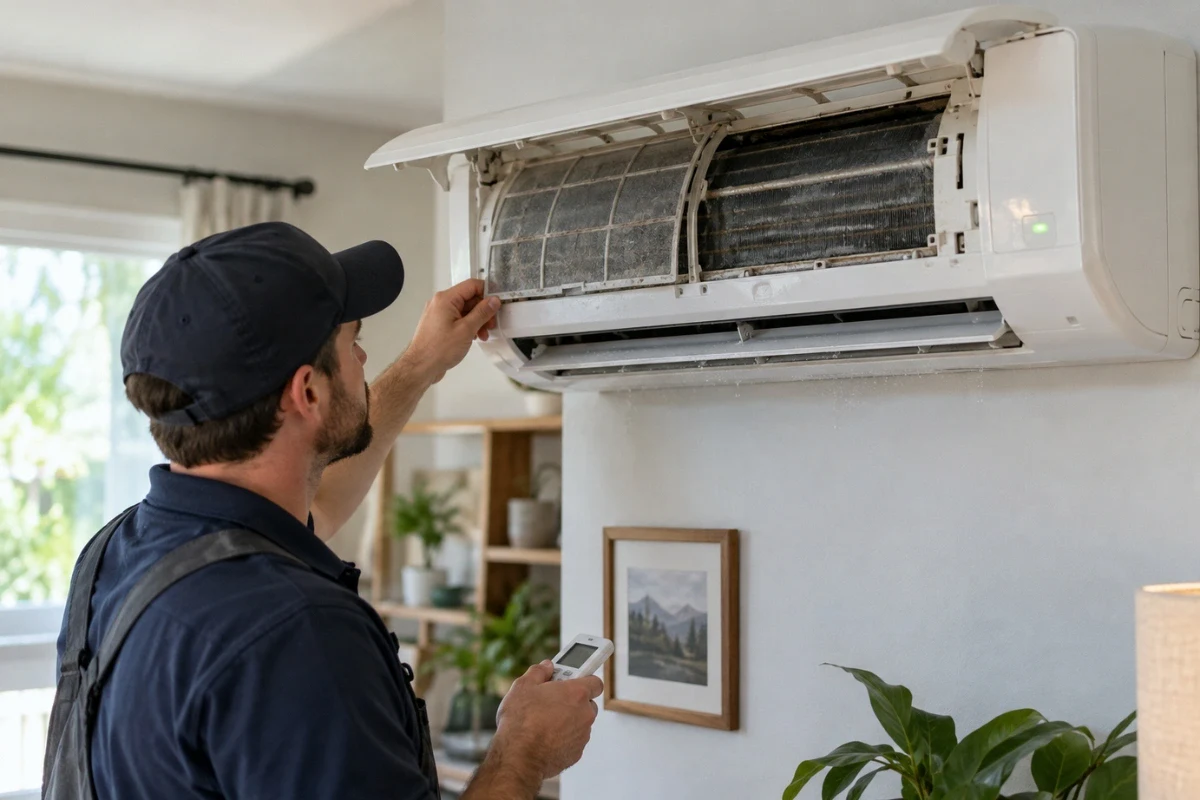
Warm indoor air passes over the system’s cold evaporator coil. As the air temperature drops, moisture in the air condenses into water droplets. These droplets collect on the coil and are drained outside through a condensate line.
This process reduces indoor humidity while the system is actively running.
Most modern mini splits also include a Dry Mode, which is designed specifically to enhance moisture removal. In this mode, the system reduces fan speed and adjusts operation so air spends more time on the cold coil, allowing more condensation to form.
Why Do Mini Splits Struggle With Humidity in Summer?
Even though mini splits remove moisture, indoor humidity can remain high during summer because real-world operating conditions are not ideal.
The issue is not a system failure; it is system behavior under varying load conditions. Most humidity problems with mini splits come down to insufficient runtime rather than lack of capacity.
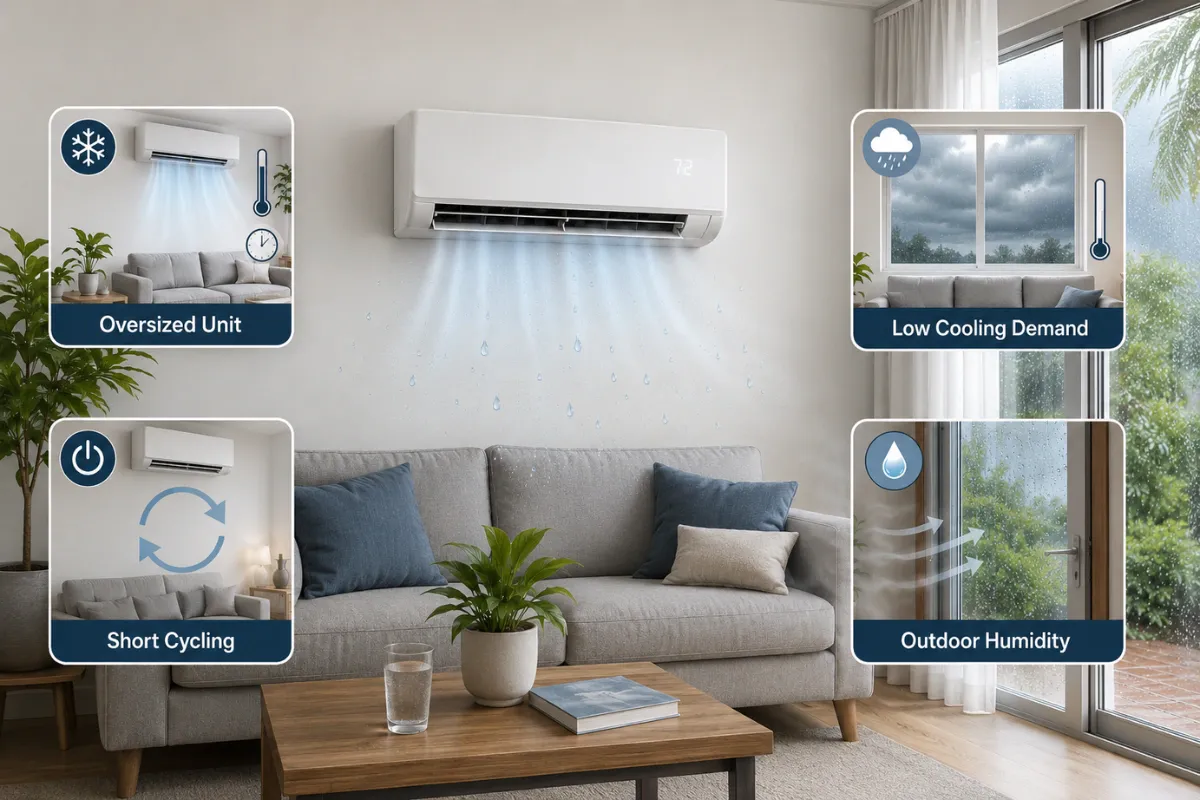
1. Oversized Systems Reduce Runtime
When a mini-split is larger than your space, it cools the room too quickly and shuts off early. This shortens the total runtime, limiting how much moisture is removed from the air.
As a result, the space feels cool but still humid.
2. Short Cycling Interrupts Moisture Removal
Short cycling happens when the system turns on and off frequently in short intervals. Since moisture removal depends on continuous coil operation, these interruptions reduce dehumidification efficiency.
Humidity problems become more noticeable when the runtime is inconsistent throughout the day.
3. Low Cooling Demand Reduces Dehumidification
During mild but humid weather, the system does not need to run long to maintain the temperature. This reduces overall runtime, which also reduces moisture removal.
This is common during rainy seasons or early summer when humidity is high but cooling demand is low. While mini splits can be effective for bonus rooms and certain spaces, these conditions often make it harder to maintain consistent humidity control.
4. Outdoor Humidity Continuously Enters Indoors
Indoor humidity is also influenced by external conditions. Moist outdoor air enters through small leaks, doors, ventilation gaps, and daily household activities.
This creates a continuous moisture load that the system must repeatedly remove.
Why Does Your Home Feels Cool but Still Sticky or Humid?
It happens when the temperature is controlled faster than the humidity is reduced; relative humidity remains high even after the air temperature drops.
Common signs include:
- Air feels slightly sticky or heavy
- Comfort drops during early morning or nighttime
- The system cycles on and off frequently
- Indoor humidity stays above 55–60%
Even when the thermostat shows the correct temperature, high humidity makes the air feel warmer and less comfortable. This is because humidity directly affects perceived comfort, not just temperature.
How Does a Mini Split Compare to a Dehumidifier?
A mini split and a dehumidifier both reduce humidity, but they are designed for different purposes.
A mini-split removes moisture indirectly during cooling. Its performance depends on temperature demand and runtime.
A dehumidifier removes moisture directly from the air and operates based on humidity levels rather than temperature.
Mini Split vs Dehumidifier Comparison
Here’s a direct comparison of how each system handles humidity:
| Feature | Mini Split | Dehumidifier |
| Purpose | Cooling | Moisture removal |
| Humidity Control | Indirect | Direct |
| Control Basis | Temperature | Humidity level |
| Performance in Mild Weather | Limited | Strong |
| Stability | Variable | Consistent |
Which Mode Removes More Humidity: Cool or Dry?
The effectiveness of each mode depends on weather conditions.
Cool Mode
Cool mode is more effective during hot and humid summer conditions. It runs continuously, allowing steady moisture removal over time.
Dry Mode
Dry mode is better for mild, humid conditions when cooling demand is low. It prioritizes moisture removal without aggressive temperature reduction.
Simple rule:
- Hot + humid weather → Cool Mode
- Mild + humid weather → Dry Mode
When Is a Mini-Split Enough and When Do You Need a Dehumidifier?
A mini-split is sufficient when it can maintain both temperature and humidity within a balanced range. However, when humidity remains high despite cooling, you need additional control. The key factor is not just temperature comfort, but overall air balance.
When a Mini Split Is Enough
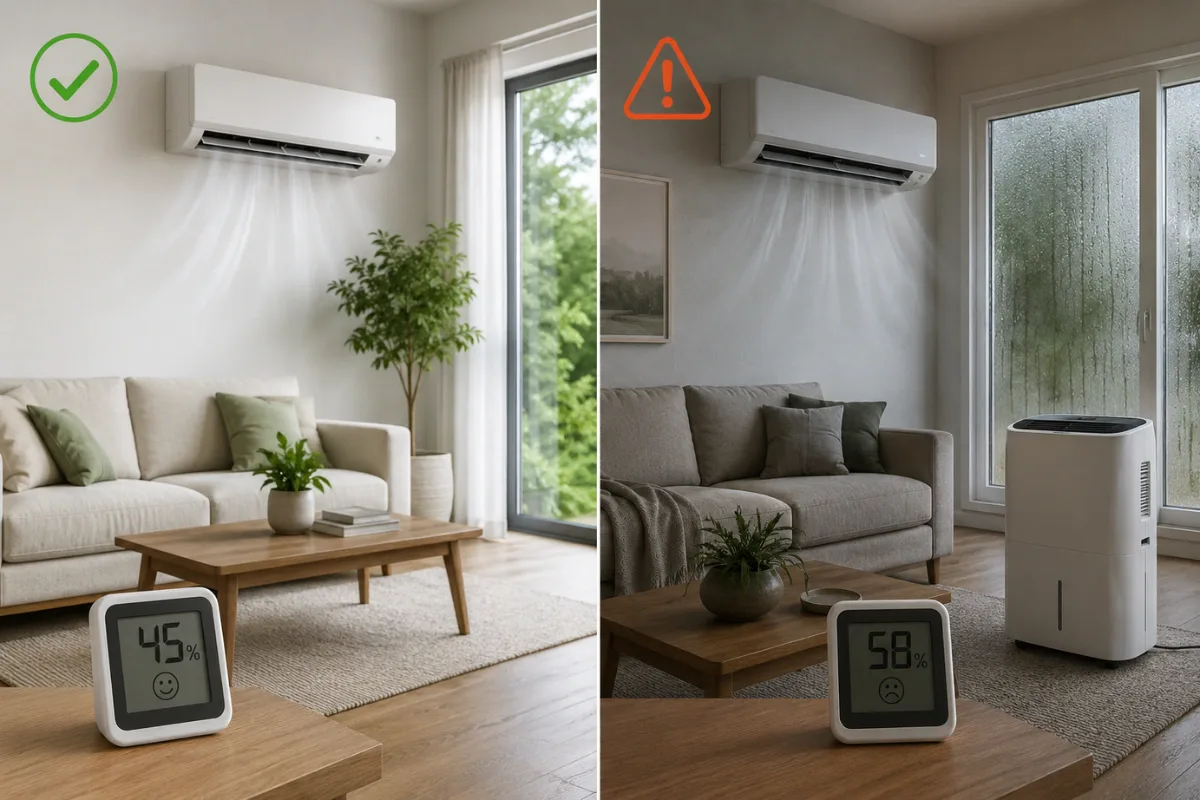
A mini split can handle humidity effectively when conditions are stable. It is sufficient when:
- Indoor humidity stays between 40–50%
- The system runs in steady cycles
- The home is properly sealed
- The unit is correctly sized
In these conditions, cooling and moisture removal remain balanced.
When You Need a Dehumidifier
A dehumidifier becomes necessary when humidity remains high even with cooling. This typically occurs when:
- Indoor humidity stays above 55–60%
- Air feels sticky or damp
- Moisture returns quickly after shutdown
- The space has high moisture sources (basement, laundry, poor ventilation)
- The system has short cycles or cannot run long enough
In these cases, a dehumidifier provides direct and stable humidity control independent of cooling demand. If humidity issues continue, it’s often worth checking how the system was sized and set up, since proper mini-split installation plays a major role in long-term moisture control.
What Is the Ideal Indoor Humidity Level?
The ideal indoor humidity level for comfort is 40% to 50%. This range is recommended for both comfort and indoor air quality.
In this range:
- Air feels lighter and more breathable
- Comfort improves even at the same temperature
- The risk of mold growth is reduced
When humidity exceeds 60%, the air feels heavier and less comfortable, even if the temperature is correct.
This is why humidity control is just as important as cooling performance.
How Can You Improve Mini-Split Dehumidification?
You can improve humidity control by optimizing system operation and reducing indoor moisture load.
Effective adjustments include:
- Using Auto or low fan speed for better coil contact time
- Avoiding very low temperature settings that cause short cycling
- Avoiding turbo or high-power modes during humid weather
- Reducing indoor moisture through exhaust fans and sealing air leaks
These adjustments help the system run longer and remove more moisture during each cycle.
What Are the Best Supplemental Humidity Control Options?
When a mini split cannot fully maintain comfortable humidity levels, adding a supplemental system can help create a more balanced and consistent indoor environment.
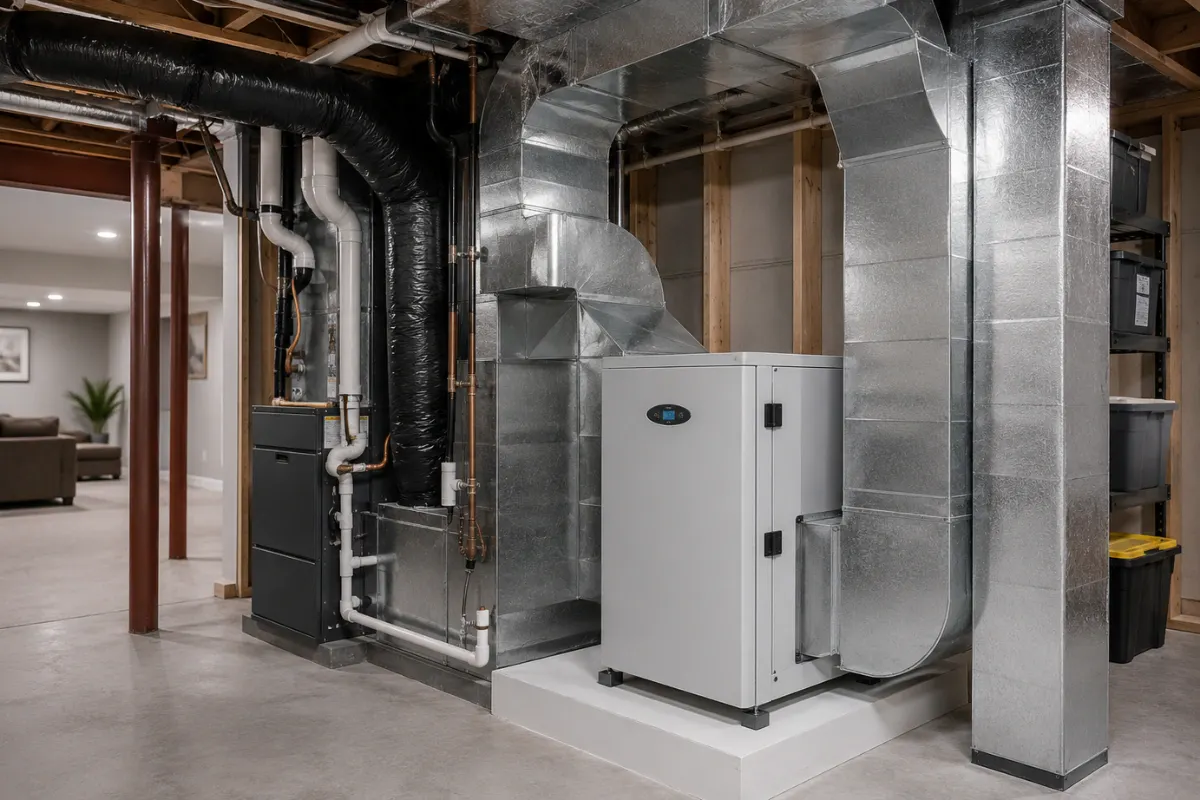
The right option depends on how widespread the humidity problem is and how much control you need.
Portable Dehumidifiers
Best for single rooms like bedrooms, offices, or basements.
These units remove moisture directly from the air in a specific space, making them a simple solution when humidity issues are limited to certain areas of the home.
Whole-Home Dehumidifiers
Best for homes where humidity is high throughout multiple rooms.
Instead of treating one space at a time, these systems help maintain more consistent humidity levels across the entire home by working alongside your existing cooling system. In some cases, upgrades like this may qualify for Triangle ductless rebates and IRA incentives, helping reduce overall installation cost.
Smart Humidity Controls
Best for homeowners who want automatic comfort management.
These systems monitor indoor moisture levels and adjust operation as needed, helping maintain a more stable and balanced indoor environment without constant manual changes.
Integrated HVAC Solutions
Best for advanced comfort and efficiency setups.
These systems combine cooling and humidity control into one coordinated approach, helping improve overall efficiency while maintaining more consistent indoor comfort in humid conditions.
Conclusion
If your home feels cool but still humid in summer, the issue usually comes down to short runtime, oversized equipment, or high outdoor moisture. Mini splits remove humidity, but they are not designed for precise moisture control.
In many cases, optimizing system settings improves comfort, but when humidity stays high, adding a dehumidifier is the most reliable solution.
At Alternative Aire, we help homeowners in Durham balance cooling and humidity control, so comfort matches real conditions, not just thermostat readings.
FAQ
Do mini splits work well in high-humidity climates?
Yes, but only if they run long enough to remove moisture effectively. In very humid climates, mini splits often cool quickly but may not dehumidify enough unless they operate in longer, steady cycles. In many cases, additional humidity control is needed.
Do mini splits remove as much humidity as central air conditioning?
No, mini splits usually remove less humidity than central AC systems. Central systems run longer cycles across larger areas, which improves moisture removal. Mini splits prioritize fast, efficient cooling in smaller zones, so humidity control can be less consistent.
Can a mini split make humidity worse?
Yes, if the system is oversized or runs in short cycles. When the unit cools too quickly and shuts off early, it doesn’t remove enough moisture. This can leave the space feeling cool but damp.
Should you run a mini split longer to reduce humidity?
Yes, longer runtime improves humidity removal. Continuous operation allows the coil to remove more moisture from the air. Frequent on-off cycles reduce this effect and can lead to higher indoor humidity.
What size mini split is best for humidity control?
The correct size is one that matches your room’s actual cooling load. Oversized systems reduce humidity control because they cool too quickly and shut off early. Proper sizing ensures longer runtime and better moisture removal.
Does Dry Mode replace a dehumidifier?
No, Dry Mode does not replace a dehumidifier. It helps reduce humidity in mild conditions, but in high summer humidity, it does not provide enough capacity for consistent moisture control.