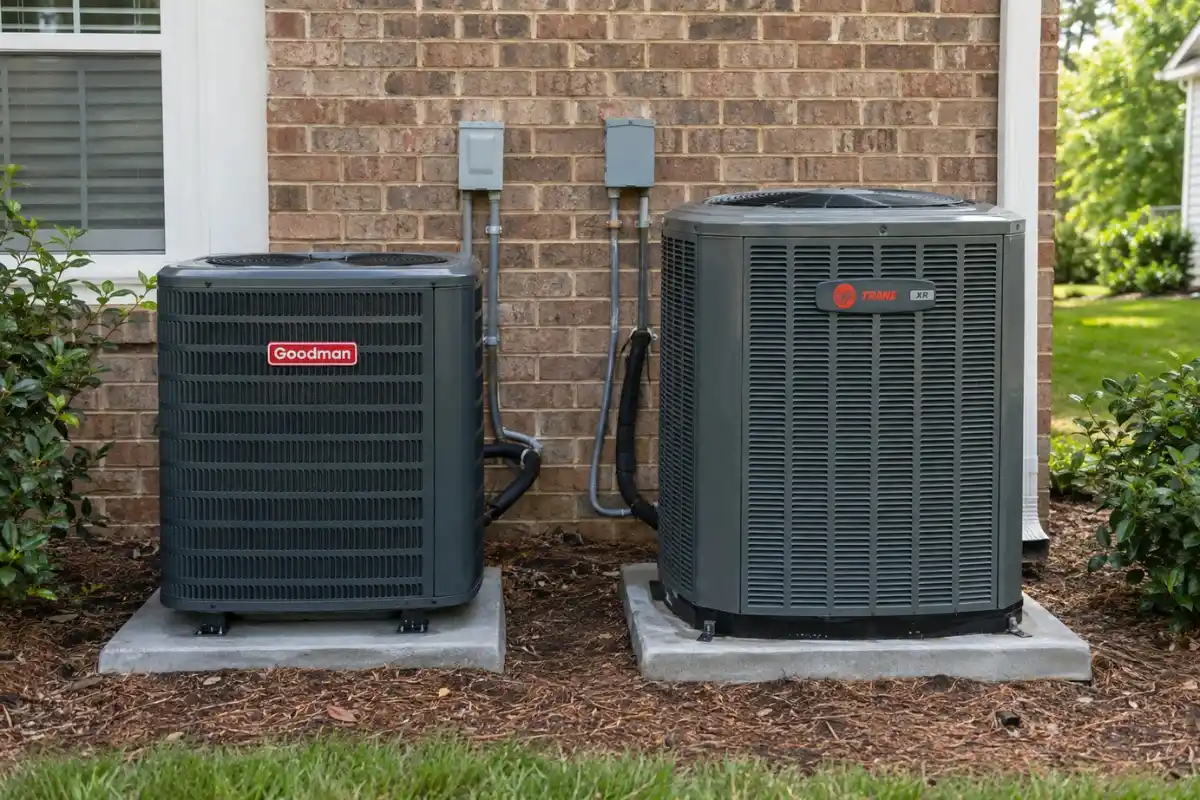
If you’re choosing between a single-zone and multi-zone mini split, here’s the quick answer. Single-zone systems work best for one or two rooms and cost less upfront. Multi-zone systems can handle multiple rooms with one outdoor unit, but they cost more to install.
Many homeowners deal with rooms that never feel right. One is too hot, another too cold. Energy bills keep rising, but comfort still feels inconsistent. In many cases, the problem isn’t the equipment; it’s how the home is zoned.
In Durham, heat and humidity make this even more noticeable. The right setup depends on your layout, usage, and budget. This guide helps you choose with confidence.
|
TL;DR Single-zone systems control one room with full independence, multi-zone systems handle multiple rooms with one outdoor unit, and in many homes, multiple single-zone systems provide better comfort, control, and long-term reliability. |
What’s the Difference Between Single-Zone and Multi-Zone Mini Splits?
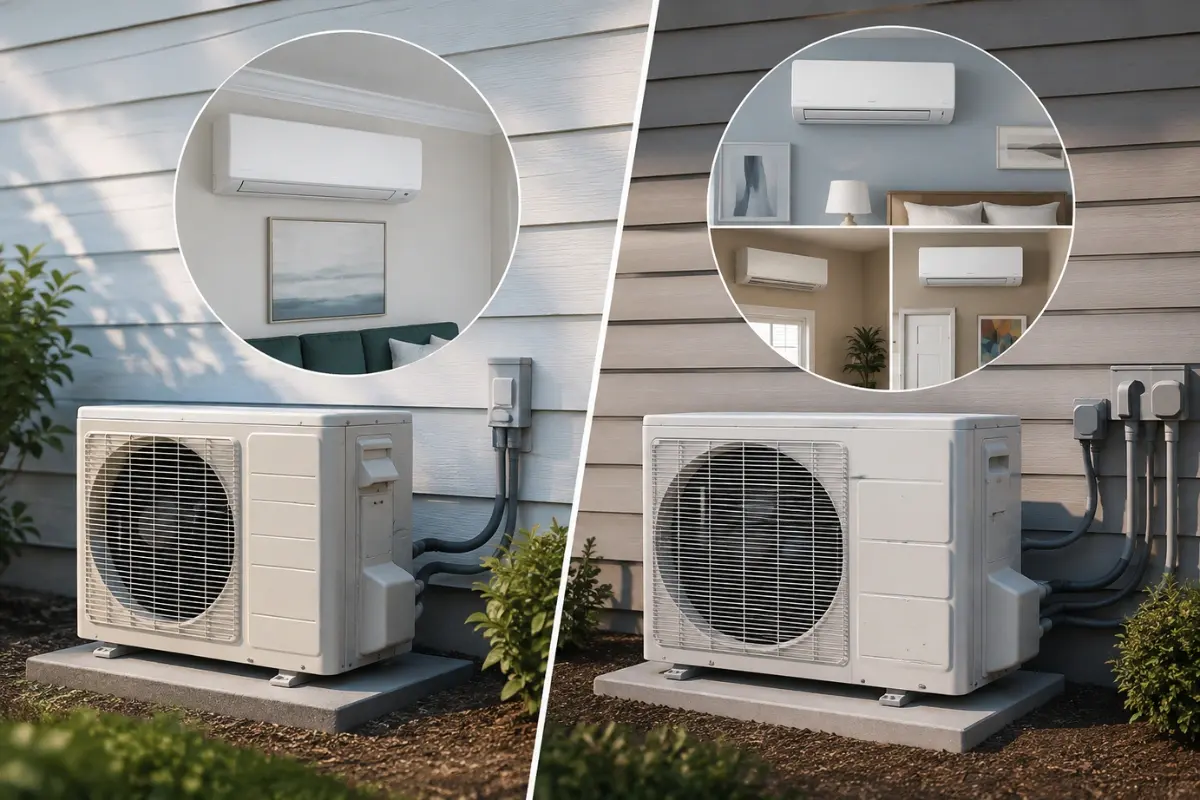
A single-zone mini split heats or cools one room using one indoor unit connected to one outdoor unit. A multi-zone system connects multiple indoor units to a single outdoor unit to control several rooms.
The difference comes down to scope: single-zone systems are built for one space, while multi-zone systems are designed to handle multiple rooms from a shared system.
Single-zone systems are simple and independent, making them ideal for targeted comfort. Multi-zone systems provide room-by-room control while sharing one outdoor unit, which requires more careful system design.
Quick snapshot:
- Single zone: 1 outdoor unit + 1 indoor unit = 1 room
- Multi-zone: 1 outdoor unit + multiple indoor units = multiple rooms
- Key difference: single-zone is independent; multi-zone shares one outdoor unit across several rooms
Single Zone vs Multi-Zone: Side-by-Side Comparison
Before choosing a setup, here is a clear side-by-side comparison based on cost, performance, and real-world use in Durham homes
| Factor | Single Zone | Multi-Zone |
| Upfront install cost (Durham, NC) | $2,800 – $5,500 | $6,000 – $18,000+ |
| Outdoor units needed | 1 per room | 1 shared unit |
| Outdoor unit clutter | Higher (multiple units) | Lower (one unit) |
| Rooms served | One per system | 2–5+ per system |
| Temperature control | Full control per room | Separate control, but shared system limits |
| Failure risk | Lower (systems are independent) | Higher (one unit affects all rooms) |
| Maintenance | More units to service | Fewer units, but more complex |
| Expansion | Easy to add another system | Limited by system capacity |
| Best use case | Single rooms, additions, garages | Whole-home or multi-room setups |
| Permits required (Durham) | Yes | Yes |
| Rebate eligibility | Yes (Energy Star) | Yes (Energy Star) |
When a Single-Zone Mini Split Is the Better Choice
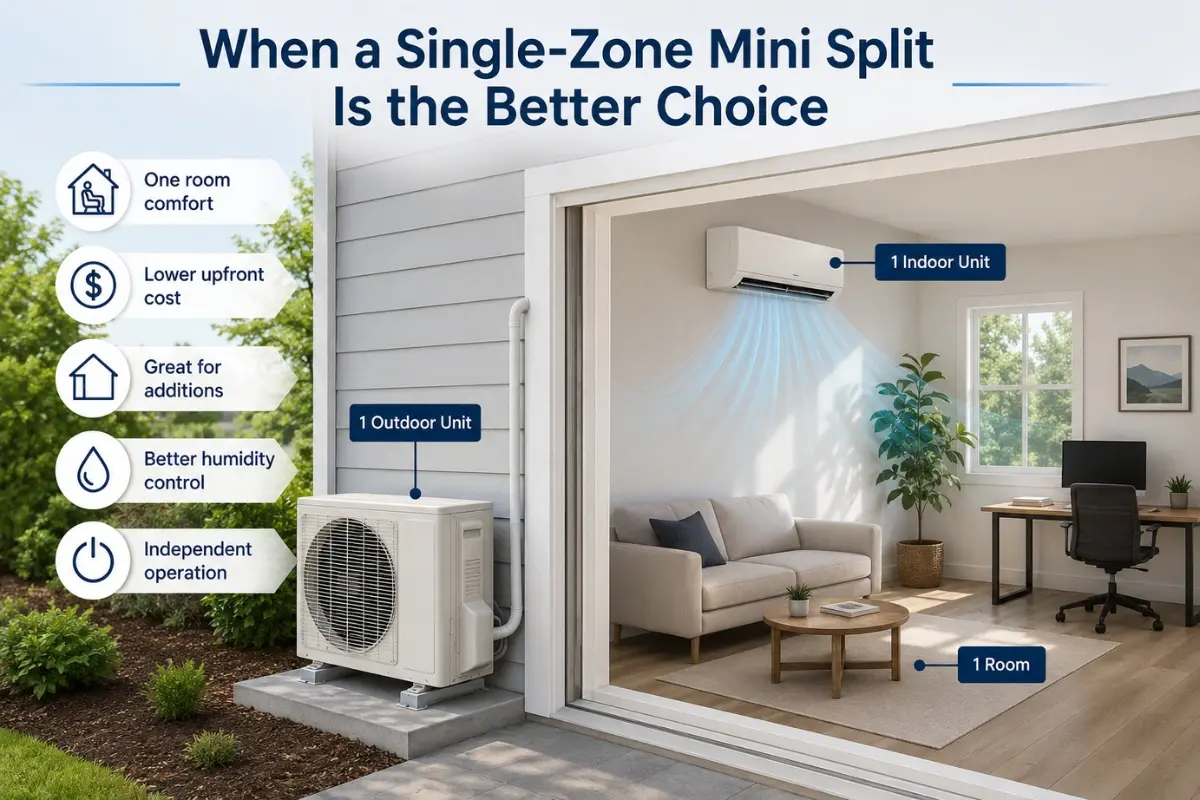
A single-zone mini split is the best choice when you need to control one specific room or solve a targeted comfort problem. It delivers better efficiency, stronger humidity control, and lower upfront cost for smaller spaces.
Best for One or Two Problem Rooms
If one room never feels right, a single-zone system fixes the issue directly without affecting the rest of your home.
Common situations include sunrooms that overheat in summer, bedrooms that run 5–10°F hotter (especially above garages), or bonus rooms where central air barely reaches.
Getting the sizing right for small rooms (around 200–500 sq ft) ensures a correctly sized unit (typically 6,000–12,000 BTU) delivers steady, even comfort without overcooling.
Ideal for Additions and Converted Spaces
Single-zone systems are a natural fit for new or separate spaces like additions, garages, basements, or home offices. These areas usually have their own heating and cooling needs and don’t connect well to existing ductwork.
With a single-zone setup, you avoid major duct modifications and get a faster, cleaner installation while matching the exact load of that space.
Higher Reliability with Independent Operation
With right-sized ductless systems, each single-zone system runs on its own. This means a failure in one unit does not affect the rest of your home.
In real terms, that reduces risk during peak summer. Instead of losing cooling everywhere, you only lose it in one room. That kind of built-in backup is something many homeowners only appreciate after experiencing a system failure.
Lower Upfront Cost for Targeted Fixes
If you only need to fix one or two rooms, single-zone systems are the most cost-effective option. Most installations fall between $2,800 and $5,500 per room.
You also have flexibility. You can start with one unit and expand later, instead of committing to a larger system upfront.
Better for Small Rooms and Humidity Control
Small rooms are often oversized in multi-zone systems. That leads to short cycling, where the system turns on and off quickly without removing enough moisture.
A single-zone unit runs longer and more consistently, which improves humidity control and makes the room feel more comfortable, not just cooler.
When a Multi-Zone Mini Split Makes More Sense
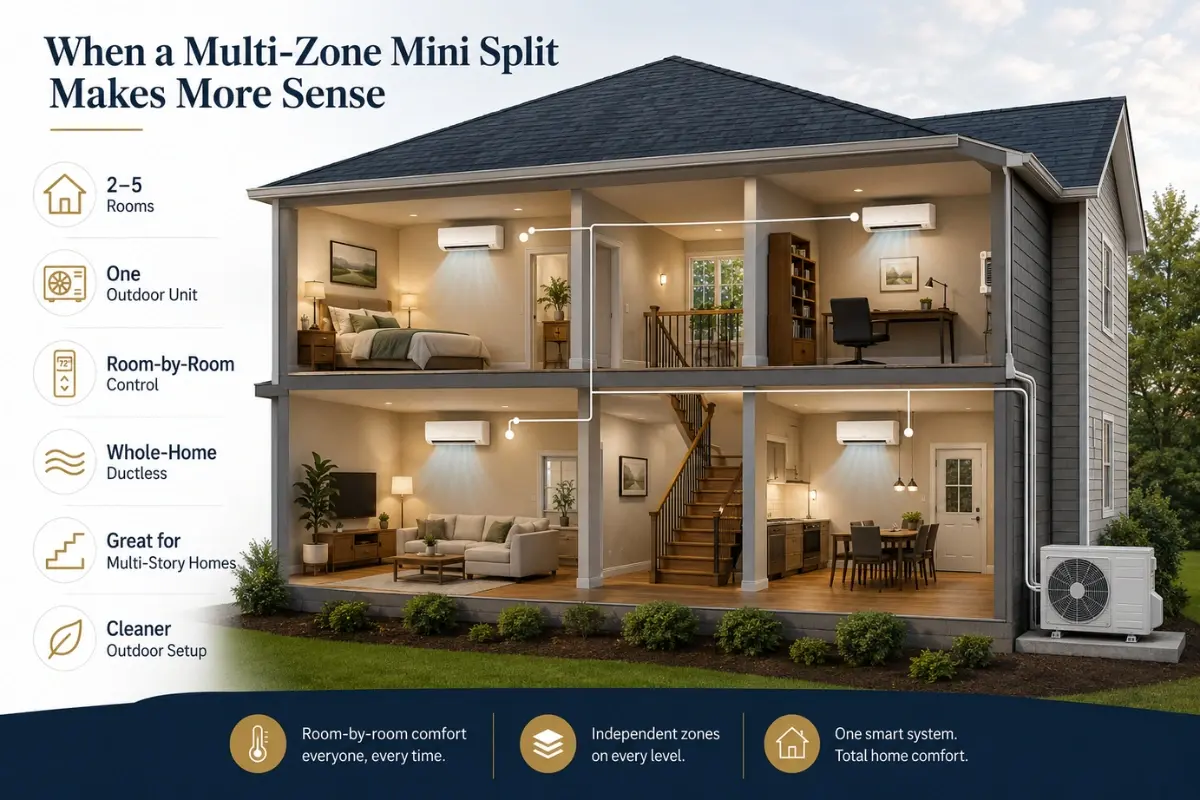
A multi-zone mini split is the better option when you need to control multiple rooms or replace a full-home system without ducts. It offers a centralized design with room-by-room flexibility.
Best for Whole-Home Coverage Without Ductwork
If your home doesn’t have ducts or the existing ductwork is inefficient, a multi-zone system can act as a full replacement.
It can cover 2–5 rooms (typically 18,000–48,000 BTU total capacity) and eliminate the need for expensive duct installation. For homes around 1,500–2,000 sq ft, this is often the most practical ductless solution, especially when each room is sized correctly from the start and installed with noise and layout in mind
Ideal for Multi-Story Homes with Uneven Temperatures
In many homes, especially those with two-story layouts, temperature differences are hard to manage. Upstairs rooms can run 8–15°F hotter during summer, while downstairs stays cooler.
A multi-zone system allows each level to have its own indoor unit and setpoint, helping balance comfort across the home.
Cleaner Outdoor Setup (Less Clutter)
Instead of installing multiple outdoor units, a multi-zone system uses a single condenser.
This keeps the exterior cleaner, saves space, and simplifies installation, something many homeowners value, especially in tighter lots or visible exterior walls. With proper placement of the indoor unit and the outdoor unit, it can also reduce noise and improve overall system performance.
Better for Different Room Usage and Preferences
Not every room is used the same way. Bedrooms, offices, and living spaces all have different schedules and comfort needs.
A multi-zone system allows each room to have its own temperature setting, reducing conflicts and improving overall comfort throughout the day.
Energy Efficiency for Larger Layouts
In larger homes, running a full system for unused rooms wastes energy.
With a multi-zone setup, you can focus cooling or heating only where it’s needed. The system adjusts output based on active zones, which can reduce unnecessary energy use when designed properly.
Simplified Full-System Replacement (With Proper Design)
If you’re replacing your entire HVAC system, a multi-zone setup provides a single integrated solution with one outdoor unit and multiple indoor units.
However, performance depends on correct design. Proper load calculation, zone sizing, and system balance are critical. Without that, you may face uneven cooling, humidity issues, or reduced efficiency. That’s why a room-by-room approach matters more than system type.
Cost Breakdown: Single vs Multi-Zone in Durham 2026
Cost is where most homeowners make or break their decision. In most cases, people make the mistake of using vague national ranges. Here are realistic Durham-area install costs based on current market conditions:
Typical Installation Costs by Number of Zones
In Durham, pricing is fairly consistent, but your final number still depends on layout, access, and system design. For a single room, most homeowners spend between $2,800 and $5,500 installed. As you add more rooms, the cost increases based on equipment size and installation complexity.
Here’s a simple breakdown to compare:
| Setup | Typical Installed Cost | What Drives the Price |
| Single zone (1 room) | $2,800 – $5,500 | Size, line-set length, and access |
| 2-zone multi-zone | $6,000 – $10,000 | Shared condenser, 2 indoor units |
| 3-zone multi-zone | $9,000 – $14,000 | Larger system, more labor |
| 4–5 zone multi-zone | $13,000 – $20,000+ | Complex install, max capacity |
| Multiple single zones (2 rooms) | $5,600 – $11,000 | Two systems, simpler performance |
What Drives Installation Cost (Equipment, Line Sets, Labor)
Two homes with the same number of rooms can have very different prices. Here’s why:
- Line-set routing and condensate drainage: Longer or more complex runs increase material and labor, especially when routing and drainage become more complicated.
- Home layout: Multi-story homes increase installation difficulty
- Electrical upgrades: Older homes may need panel or wiring updates
- Access: Attic, crawlspace, or tight installs add labor time
- System sizing: Larger BTU systems cost more and require bigger condensers
In real projects across Durham, these factors can increase the cost by $500 to $2,500 or more. That’s why two similar homes rarely get identical pricing.
Rebates, Permits, and Local Factors (Duke Energy, Energy Star)
Mini Split Installation in Durham County also requires permits, which usually cost $150 to $400, depending on system size and scope. Most contractors handle the permitting process, but it still adds to the total project cost.
Homeowners may also qualify for rebates. Programs from Duke Energy can offer $200 to $600+ in savings when installing qualifying high-efficiency systems that meet Energy Star standards.
The Comfort Difference Most Homeowners Miss
Most homeowners think comfort is just about temperature. In real homes, especially in Durham, it also depends on humidity, airflow, and how consistently your system runs. This is where the difference between single-zone and multi-zone setups becomes noticeable.
Humidity Control in Durham’s Climate
Durham summers are not just hot; they’re humid. We get that “sticky” indoor feeling without the proper dehumidifier settings for summer. Single-zone systems often perform better here because they run longer, steady cycles in one space, pulling more moisture out of the air.
In multi-zone systems, several rooms share one condenser, so capacity gets divided. This can lead to shorter run times in some rooms, reducing moisture removal even when temperatures feel fine.
Oversizing and Short Cycling
Bigger is not always better. When a system is too large for a space, it cools quickly and shuts off before removing enough moisture. This is called short cycling, and it often leads to uneven comfort.
This issue shows up more in multi-zone setups when smaller rooms are connected to a larger shared system. A properly sized single-zone unit avoids this by closely matching the room’s actual load.
Shared Capacity and Room Imbalance
In multi-zone systems, all rooms draw from the same outdoor unit. When multiple zones run at once, the system splits its output.
That’s why one room may cool quickly while another takes longer to reach the same temperature. This is not a defect, but it can affect comfort, especially during peak summer or in transitional seasons.
Why One Room May Not Feel Right
When a room never feels comfortable, the issue is usually not the equipment; it’s the system design. Common causes include too many rooms on one system, incorrect BTU allocation, or higher heat load from sunlight and insulation differences.
Single-zone systems avoid this by giving each room full dedicated capacity. Multi-zone systems can work well, but they depend on accurate room-by-room sizing and proper load calculations to maintain balance.
What You Need to Know Before Choosing Single or Multi-Zone
Some differences don’t show up in basic comparisons but can impact real-world performance. Here are the key ones to understand before you decide.
- Single point of failure
In a multi-zone system, all rooms depend on one outdoor unit. If it fails, the entire system stops. With single-zone systems, each room runs independently, so an issue only affects one space. - Heating vs cooling flexibility
Most multi-zone systems operate in a single mode at a time, meaning all connected rooms must either heat or cool together. This can be limiting during spring and fall when different rooms have different needs. Single-zone systems avoid this since each unit operates independently. - Efficiency with partial use
Multi-zone systems perform best when multiple zones are running. When only one room is active, efficiency can drop. Single-zone systems are designed for individual spaces, so they typically maintain more consistent efficiency. - Maintenance and complexity
Multiple single-zone units mean more individual filters and maintenance points. Multi-zone systems reduce outdoor equipment but are more complex, and issues can impact multiple rooms.
Most professional installations rely on ACCA Manual J load calculations to size each room correctly. Skipping this step often leads to uneven temperatures and humidity issues over time.
If you’re unsure how your home should be sized or zoned, a quick room-by-room assessment can help you avoid oversizing and inconsistent cooling. At Alternative Aire, we handle this with a layout-based approach.
Can You Add More Zones Later?
Yes, but it depends on how your system was set up from the start. This is one of the most common questions, and the answer is not the same for every home.
Here is how it works:
- If you started with a single-zone system
You cannot expand it. Each system is built for one indoor unit only. If you want to cover another room, you will need to install a separate system. This is simple and flexible, but it means adding equipment each time. - If you started with a multi-zone system
You may be able to add more indoor units later. Many systems come with extra connection ports. If those are unused and the system has enough capacity, additional zones can be added. - If your system is already at full capacity
You cannot add more zones without upgrading the outdoor unit. Every system has a limit based on total BTU capacity. Once that limit is reached, expansion is no longer possible. - Planning can save money later
If you think you may need more zones in the future, it is better to plan for it during installation. Choosing a system with extra capacity or unused ports can make future upgrades easier and less expensive.
In most cases, adding zones later is easier with a multi-zone setup, but only if it was designed with expansion in mind.
Is a Multi-Zone System Worth the Extra Cost?
In many cases, yes, but not for every home. A multi-zone system is worth the extra cost when you want better control, efficiency, and comfort across multiple rooms.
Even though the upfront price is higher, it often delivers better long-term value in the right homes.
- Targeted efficiency: You can cool or heat only the rooms in use, which helps reduce wasted energy.
- Better comfort control: Each room can have its own temperature, helping eliminate uneven comfort in the home.
- Reduced system strain: Since you’re not conditioning the entire house at once, the system often runs more efficiently and may last longer.
- Cleaner outdoor setup: One outdoor unit can support multiple indoor units, reducing exterior clutter.
In short, it’s worth it when you need multi-room comfort control, energy efficiency, and a cleaner installation setup in one system.
Which One Should You Choose Based on Your Home Layout?
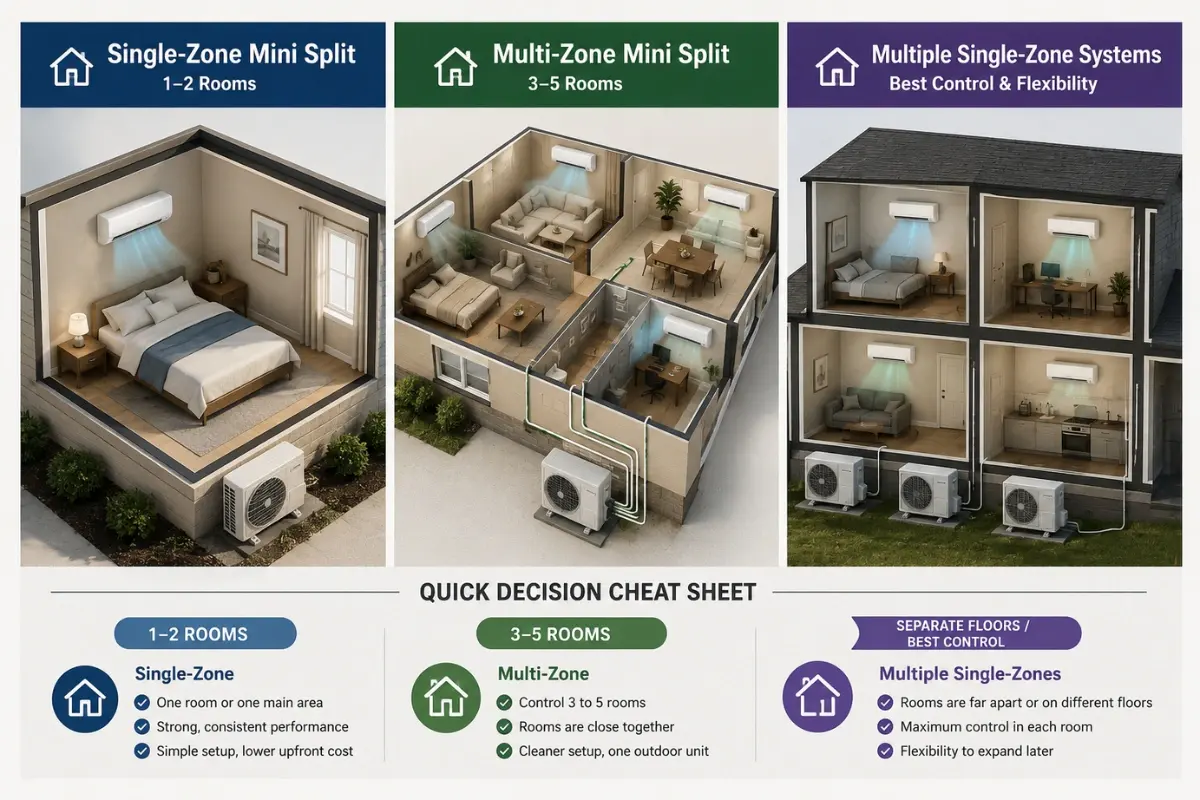
- Choose a single-zone mini split if you only need to control one room or one main area, want strong and consistent performance, and prefer a simple setup with lower upfront cost.
- Choose a multi-zone mini split if you need to control 3 to 5 rooms, your rooms are close together, and you want a cleaner setup with one outdoor unit. It also works well for full-home replacements.
- Choose multiple single-zone systems if your rooms are far apart or on different floors, you want maximum control in each room, or you prefer flexibility to expand later while keeping each system independent.
Quick Decision Cheat Sheet
- 1–2 rooms → single-zone
- 3–5 rooms → multi-zone
- Separate floors / best control → multiple single-zones
Final Thought
The right mini split setup depends on your layout, room distance, and how each space is used. A properly designed system keeps temperatures consistent, controls humidity, and avoids wasted energy.
In Durham, getting the design right up front matters more than the equipment itself, and a room-by-room evaluation helps match the right capacity instead of guessing and fixing issues later.
If you want it done right the first time, Alternative Aire can size your home properly and recommend a setup that delivers balanced comfort without overbuilding or overspending.
FAQ
Is it cheaper to install single-zone or multi-zone mini splits?
Single-zone mini splits cost less for one or two rooms. Multi-zone systems become more cost-effective for three or more rooms. In many homes, installing multiple single-zone systems ends up costing about the same while providing better comfort and reliability.
Can one mini split cool multiple rooms effectively?
Yes, but only with a multi-zone system. It connects multiple indoor units to one outdoor unit. Performance depends on proper sizing and system design; otherwise, some rooms may cool more slowly.
Are multiple single-zone mini-splits better than a multi-zone system?
In many cases, yes. They provide full capacity per room, independent operation, and lower risk if one system fails. The trade-off is more outdoor units and slightly more installation work.
Can you run a mini split in multiple rooms at different temperatures?
Yes, with a multi-zone system. Each indoor unit can have its own temperature setting, but all rooms must run in the same mode, either heating or cooling.
Is a multi-zone mini split less powerful per room?
It can be. A multi-zone system shares total capacity across active rooms, so each room may receive less output compared to a dedicated single-zone unit.