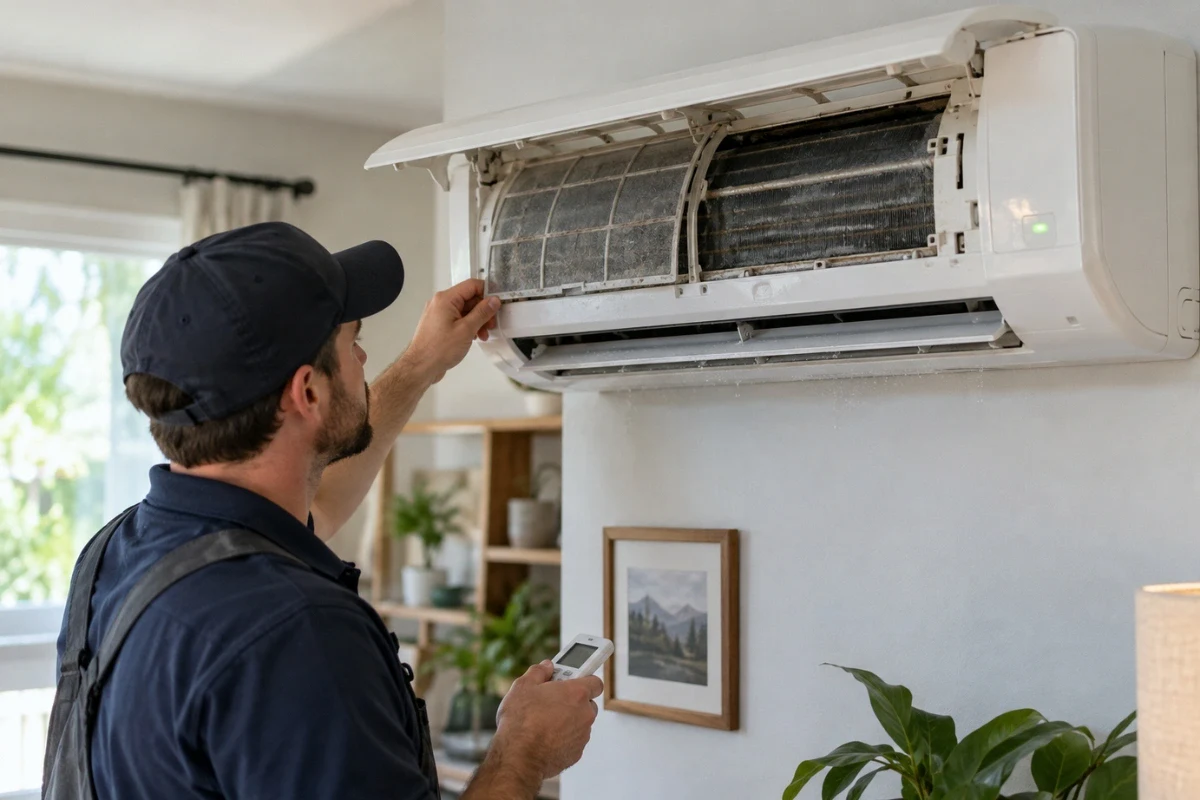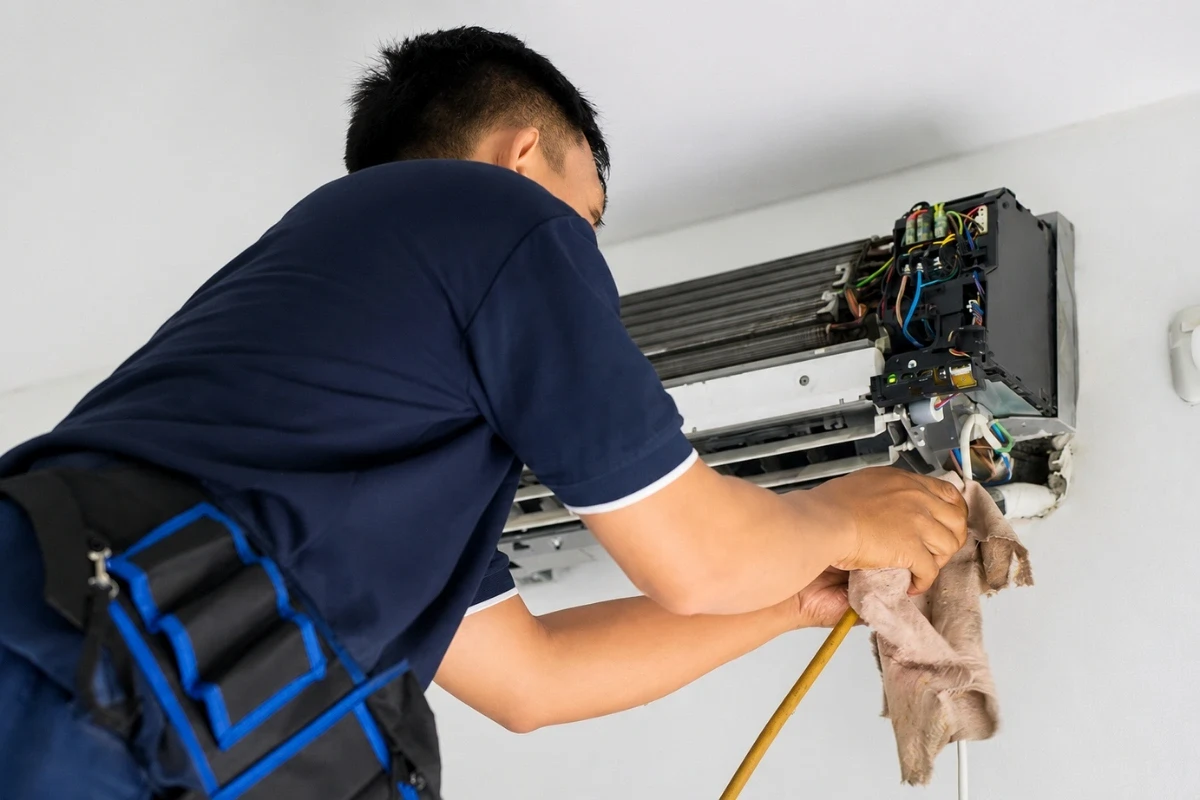
Is your air conditioner too loud? To quiet a noisy HVAC system, you need to identify the sound, secure loose parts, add sound blankets, and schedule regular maintenance. At Alternative Aire, we know that a quiet space brings peace to your day.
This guide answers how to reduce AC sound at home and at work. We will walk you through easy steps to find the noise source and fix it fast.

|
TL, DR You can silence a noisy AC by identifying the exact sound, tightening loose parts, adding simple sound barriers, and performing regular maintenance before calling a professional. |
1. Match the Noise to the Timing
Find the exact noise and match the noise to the timing of the system to know what is broken. You must take a baseline noise reading with a meter. This helps you track your progress. Listen closely. A normal, single startup click is fine. But a rapid, buzzing contactor chatter points to electrical issues with the main switch.
If you hear a squealing noise when turning on, it is usually a bad fan belt or condenser fan motor. You can find a way to reduce such noise by starting with a good diagnosis. If your AC is clicking over and over while running, the cause is often a failing contactor. Sometimes, these electrical clicks mean the system is trying to work but failing. If you find your AC running but not cooling at night, it becomes your next major concern to fix the main switch.
2. Fix Loose Outdoor Parts
Tighten loose screws and level the concrete pad to stop loud rattling outside. If your outdoor unit is vibrating, start by looking at the metal cabinet. A rattling sound from the outdoor unit usually comes from a loose access panel.
If you want to fix this rattling noise, tighten all the mounting screws that are loosened over time. Check the compressor mounting bolts as well. If the unit pad is not on the level, the whole box will shake. Also, remember the timing rule. Wait three full minutes before turning a system back on to protect the compressor. This helps you quiet down a noisy air conditioner fast.
3. Use Sound Blankets and Fences
Wrap the compressor in a special blanket and build a wooden fence to block the sound. This is the best way to block condenser noise.

A compressor blanket installation works great. It is worthwhile, as it wraps the noisy part to muffle the sound. You can also soundproof the outdoor AC unit by installing an acoustic fence around it or using a noise-deflecting panel.
This is the best way to reduce noise from outdoor AC Units. When you combine a simple wooden barrier with other expert tips for eliminating air conditioner noise, you block the sound completely.
4. Install Anti-Vibration Pads
Place thick rubber pads under the unit to stop vibrations. Many homeowners wonder if these pads actually work. Yes, they absorb the shaking before it hits the ground. Use vibration isolation pads for the AC condenser to stop the humming.
Slide anti-vibration feet for the outdoor unit under the corners. These rubber isolation feet prevent your AC from making noise through the wall. This is an easy way to eliminate such noise in the home and offices.
5. Clean the Fan and Check Motors
Remove leaves from the fan and replace worn motor bearings to stop grinding noises. When you check your outdoor unit, listen closely. If you hear a sound like debris hitting the condenser fan blade, you need to turn off the power and do a thorough fan blade cleaning to remove leaves and twigs.
Sometimes, dirt builds up unevenly on the blades. This makes the whole metal box wobble. If you ignore that shaking, it ruins the motor. I always recommend routine upkeep. Some maintenance tips include cleaning the blades, lubricating the moving parts, and ensuring your filters are clear. If you avoid this basic maintenance, you might find your AC is freezing up.
6. Fix Popping and Whistling Ductwork

Seal air leaks and wrap your metal ducts to stop whistling and loud popping sounds. When cold air rushes in, the sudden temperature drop makes the metal expand. It creates a loud duct oil canning pop or duct expansion popping. You can easily quieten these noisy ducts by wrapping the outside with acoustic duct wrap. Once the popping stops, listen for high-pitched leaks.
If you find whistling from the return vents, it is simply an airflow restriction whistle. Basically, a whistling noise means your system is fighting against trapped high static pressure. Many people accidentally cause this pressure themselves, trusting the closing vent myths. I always warn my clients to keep the vents open.
Shutting room vents forces air to squeeze out of tiny metal leaks. You should never keep windows open while the AC is on, as this pulls in heavy, wet air. To fix the issue, fully open all your vents and seal the leaky duct joints with UL 181 foil tape for duct sealing.
7. Check the Indoor Air Handler
Change your air filter and secure the closet door to reduce the loud indoor hum. When a system hums loudly inside the house, people often ask how to fix the air handler. Whether you are dealing with a noisy indoor AC unit in the ceiling or a loud air handler, the very first thing to check is the filter.
A dirty filter pressure drop results in the blower motor making a loud noise as it struggles to breathe. Changing your filter regularly stops this loud motor humming instantly. More importantly, keeping that air moving is the effective tip to prevent AC breakdowns in heatwaves.
8. Insulate Refrigerant Lines
Wrap your copper pipes in soft foam to stop hissing sounds and tapping noises. Hissing sounds aren’t always a refrigerant leak. While a sharp hiss points to a leak, a soft hissing near the indoor unit is just the normal gas moving through the pipes.
If your unit isn’t managing moisture correctly, you might notice your home feels sticky even when the air feels cool. However, if those pipes lack proper padding, the sound echoes loudly into your rooms.
The refrigerant lines can cause rattling, too. A steady liquid tapping the line kind of noise happens when the bare copper pipe vibrates against the wood studs inside your walls. To silence both the hissing and the tapping, check the black foam wrapping your pipes. Make sure your insulation of the refrigerant line is thick and secure along the entire length of the pipe to absorb all those vibrations.
9. Sound Dampening Open Office Spaces
Use acoustic foam and duct silencers to keep commercial meeting rooms quiet. When business owners ask how to reduce HVAC noise in a small office, I always point out the hard floors and bare ceilings. Commercial spaces naturally echo, which makes every machine sound twice as loud. If you want to sound-dampen your AC in the office conference rooms, try to absorb those bouncing sound waves.
You can effectively reduce HVAC noise in an open office layout by adding acoustic foam panels inside the utility closets or drop ceilings. If your main commercial unit sits on the roof, installing heavy-duty spring isolators underneath the equipment stops the deep motor vibrations.
10. Upgrade to a Quieter System or Portable Unit

Replace failing central ACs with variable-speed models or use thick weather stripping to quiet your window units. An AC humming louder than normal usually means the motor is failing. You might wonder, what is a normal dB level for a residential AC? Modern systems run between 50 and 60 decibels (dB) quietly.
For smaller rooms, knowing how to lessen or eliminate window air conditioner noise is as simple as adding thick weather stripping. The window or portable units are easy to move from room to room, achieving thermal comfort in whichever space you are using most. Remember, they bring the fan motor directly inside.
What If There Is Still Noise After Following the Tips?
If your system stays loud after cleaning and tightening parts, shut it down and call a professional to prevent hidden mechanical damage. Sometimes, adding rubber pads and cleaning the blades only fixes the surface issues. If you still hear a loud screeching or heavy metal grinding, shut the system off immediately at the thermostat. Running a broken system will cause permanent damage to your expensive system.
When simple fixes fall short, you need an AC noise diagnosis service near you. At Alternative Aire, we bring specialised tools to test your electrical loads and measure your exact airflow limits. We can easily find hidden vibrations inside the sealed compressor or locate the exact spot where your ductwork is failing. If the system is simply too old to fix, I suggest going for the quietest AC replacement options.
Final Thoughts
A quiet home and office bring peace to your daily life. By following the expert tips, you can create a calm environment for your family or your workers.
At Alternative Aire, we are ready to help you maintain that peace. You will get a same-day response during heat spikes. Keep your system maintained, and enjoy the cool, quiet comfort you deserve.
Frequently Asked Questions (FAQs)
A helicopter sound means a fan blade is hitting something or is out of balance. Check the outdoor unit to see if a stick or debris is striking the spinning blades.
Yes, thick shrubs act as a natural sound barrier. Keep the plants at least two feet away from the unit to ensure good airflow.
It costs between $50 and $300 to soundproof an AC. Simple rubber pads are cheap, while custom sound blankets and wooden acoustic fences cost a bit more.
A fence blocks airflow only if it is built too close. Leave a clearance of two to three feet around the entire unit so the system can breathe easily.
Yes, newer AC units are much quieter. Modern designs use special compressor insulation and variable-speed fans that run at a low, quiet hum.
The AC seems louder at night because your house is very quiet. However, if it makes a new rattling noise, the cooler night temperatures might cause metal parts to shrink and vibrate.
No, regular blankets trap heat and cause a fire hazard. Always use a manufacturer-approved compressor sound blanket designed for outdoor HVAC equipment.
Yes, a higher fan speed forces more air through the metal ducts quickly. This creates a whooshing sound or an airflow whistle at the vents.